 ultimate-guide
Commercial Roof Thermal Inspection Benefits Guide
Table of Contents
- How Thermal Imaging Works for Commercial Roofs
- Key Benefits of Commercial Roof Thermal Inspection
- Infrared Roof Moisture Survey: What It Reveals
- Thermal Drone Roof Inspection Cost: What to Expect
- ASTM C1153 Standard: Ensuring Quality and Compliance
- Thermal vs. Traditional Roof Inspections: A Comparison
- Post-Inspection Action Plan: From Findings to Repairs
- Frequently Asked Questions
Last Updated: September 18, 2026
How Thermal Imaging Works for Commercial Roofs
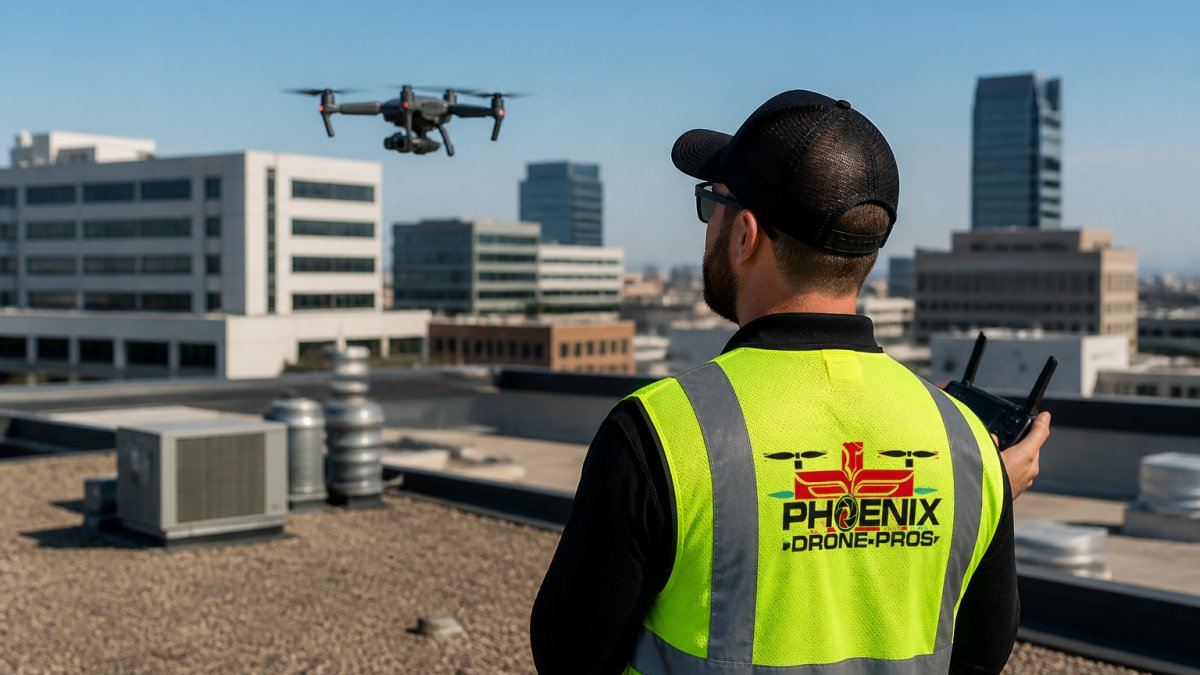
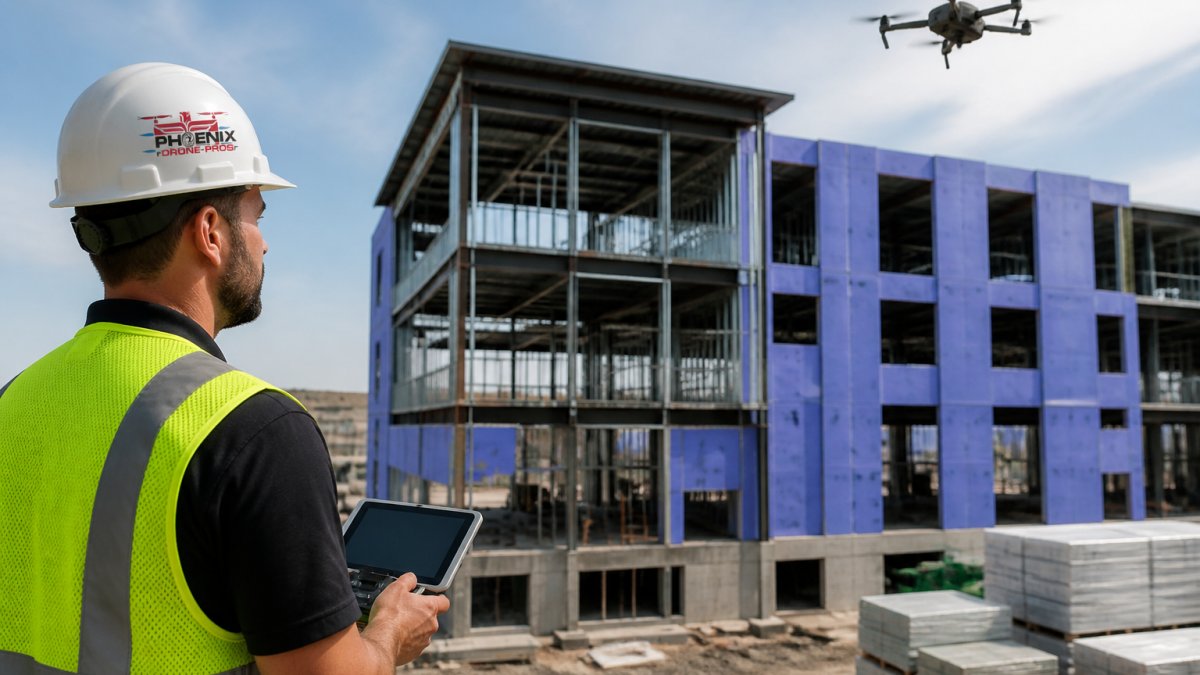
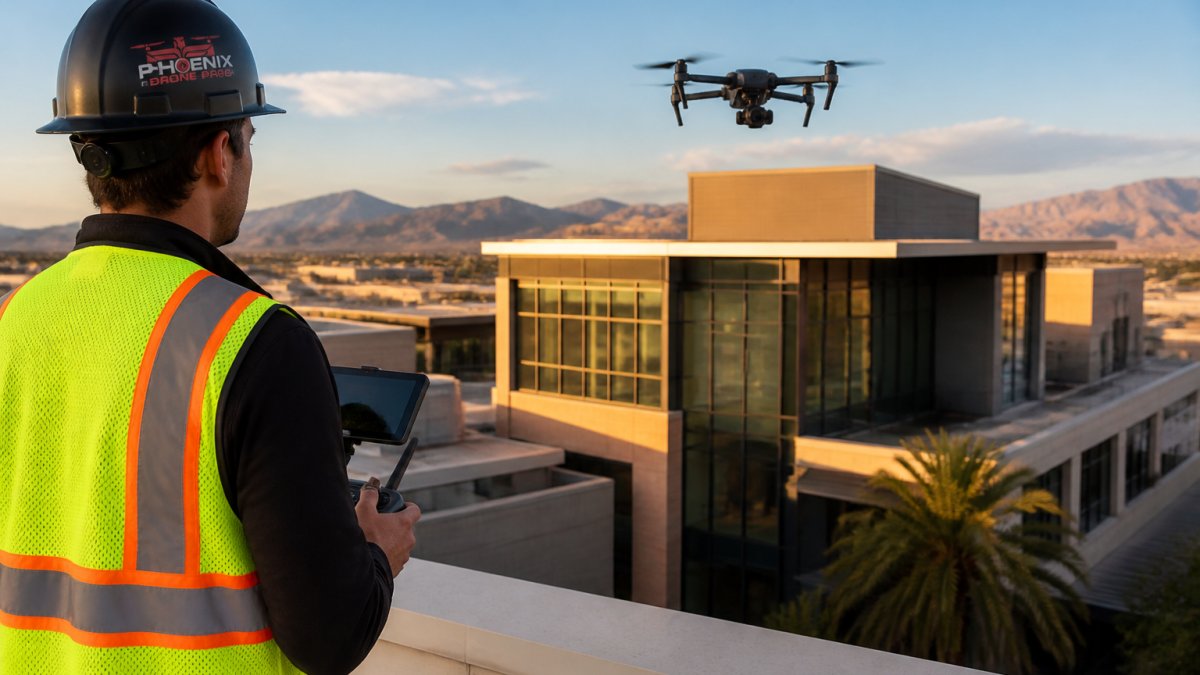
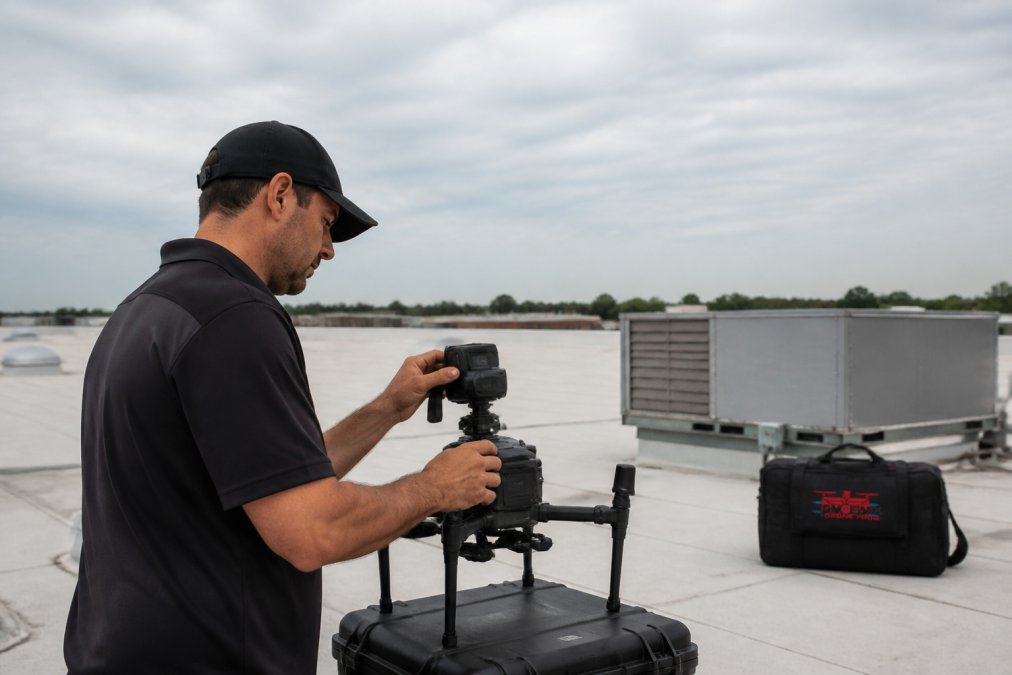
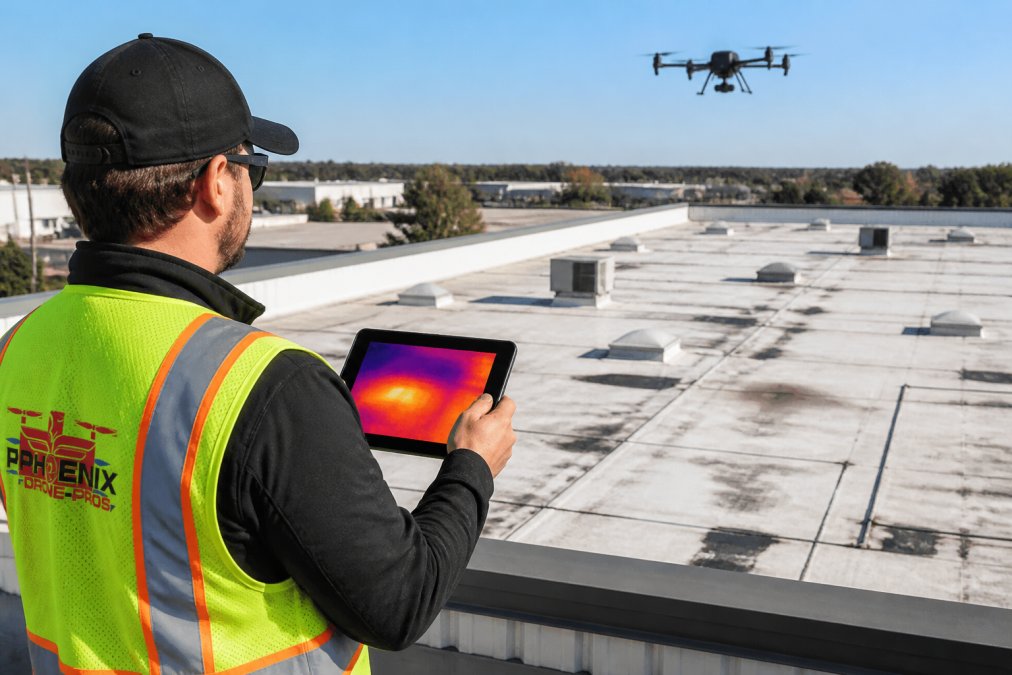
A commercial roof thermal inspection is a non-destructive diagnostic method that uses infrared thermography to reveal temperature differences across a roof surface, exposing problems the eye cannot see. At Phoenix Drone Pros, our FAA-certified pilots fly thermal imaging drone payloads over flat and low-slope commercial roofs to map those differences in real time.
The Role of Infrared Cameras and Emissivity in Roof Scans
Infrared cameras measure radiant heat, not color or light. Every material emits heat at a different rate, a property called emissivity, and roof membranes, gravel ballast, and metal flashing all read differently. A thermal camera with adequate resolution and a trained operator who understands emissivity can separate a real thermal anomaly from a reflection or a shadow. That distinction is the difference between a useful thermal imaging report and a confusing one.
Key Benefits of Commercial Roof Thermal Inspection
The core benefit is early detection. A commercial roof thermal inspection finds subsurface moisture and insulation gaps while they are still small, cheap problems. ASTM International standards for infrared roof inspections documents the accepted methods that make those findings defensible.
Detecting Hidden Moisture and Preventing Costly Roof Damage
Water infiltration rarely announces itself. It enters through a failed seam or flashing, spreads laterally through the insulation, and shows up as a ceiling stain months later. By then, the wet area is often several times larger than the visible leak. Thermal imaging maps the full extent of roof saturation, so a facility manager can target the actual wet zone instead of guessing.
Identifying Insulation Deficiencies and Improving Energy Efficiency
Wet or missing insulation loses its R-value, which drives up heating and cooling costs. Thermal bridging, where structural members conduct heat straight through the building envelope, also shows up clearly in a scan. Fixing these deficiencies improves energy efficiency and reduces load on HVAC equipment.
Infrared Roof Moisture Survey: What It Reveals
An infrared roof moisture survey reveals the location and rough extent of wet insulation, active water infiltration paths, and areas of degraded roof membrane. It does not measure moisture content directly; it shows thermal contrast, which a trained analyst interprets.
Thermal Drone Roof Inspection Cost: What to Expect
Thermal drone roof inspection cost depends on roof size, complexity, access, number of buildings, and reporting depth. Pricing is quoted per project rather than per square foot, because a single large roof and several small roofs require different flight planning and processing time.
What Actually Drives the Price
Most providers build a quote from five variables. Understanding them lets you compare bids apples to apples instead of chasing the lowest number.
- Total roof area and number of separate roof sections. A single 100,000-square-foot membrane is one flight plan. Ten smaller roofs across a campus are ten, even if the combined area is the same.
- Roof type and membrane material. Single-ply membranes such as TPO and EPDM read cleanly on infrared. Gravel ballast, reflective coatings, and ballasted systems scatter heat and require slower, lower-altitude passes to get usable contrast.
- Site access, obstructions, and airspace. Rooftop HVAC units, skylights, and parapet walls force multiple passes. If the site sits inside controlled airspace, the provider must obtain FAA authorization under Part 107, which adds lead time and administrative cost.
- Reporting depth. A basic anomaly map with flagged wet zones is the entry tier. A full thermal imaging report adds severity rankings, square footage of affected area, repair priorities, and re-scan scheduling.
- Time of year and weather windows. Scans must run within a few hours of sunset on a clear night. A provider who has to return three times because of cloud cover or wind will price that risk in.
How Pricing Is Typically Structured
Most commercial providers quote in one of three ways:
- Flat project fee, a single number for the whole roof, common on roofs under roughly 50,000 square feet.
- Tiered by area, a base fee plus a per-square-foot rate that drops as area increases, common on large industrial roofs.
- Retainer or annual program, a fixed fee for two scans per year (typically spring and fall) plus reporting, common for facility managers running preventative maintenance across multiple buildings.
For current pricing, request a quote directly from Phoenix Drone Pros.
ASTM C1153 Standard: Ensuring Quality and Compliance
ASTM C1153 is the standard practice for infrared thermographic inspection of roof insulation, and it defines the conditions under which a scan produces reliable results. It covers required temperature differentials, weather history, wind limits, and equipment performance. An inspection performed outside those parameters can produce misleading thermal anomalies. Adherence to these rigorous technical standards ensures that a thermal imaging inspection provides an accurate diagnostic baseline for residential properties as well.
Thermal vs. Traditional Roof Inspections: A Comparison
Traditional walk-through inspections put a person on the roof with a moisture meter and eyesight. They are effective for surface-level defects but slow, labor-intensive, and limited to what is visible or probed. Thermal inspections cover the same roof in a fraction of the time and find problems beneath the membrane.
| Method | Finds Subsurface Moisture | Speed | Safety Risk | Best For |
|---|---|---|---|---|
| Thermal drone inspection | Yes | Fast, whole roof in one flight | Low | Large flat roofs, preventative maintenance |
| Walk-through with moisture meter | Limited | Slow | Moderate to high | Small roofs, confirming thermal findings |
| Visual inspection only | No | Moderate | Moderate | Surface defects, debris, drainage |
Post-Inspection Action Plan: From Findings to Repairs
A thermal imaging report is only useful if it drives action. The workflow that works: review the anomaly map, rank findings by severity and cost exposure, confirm the worst areas with core samples, then schedule preventative repairs before the next rainy season. Re-scan after repairs to verify the fix.
How to Read the Report and Prioritize Repairs
A thermal report typically flags anomalies in three tiers. Treat them differently.
- Tier 1, Active moisture with spread. Wet insulation adjacent to a failed seam, flashing, or penetration. These get repaired first because the wet zone grows with every rain event.
- Tier 2, Isolated wet zones with no clear entry point. Confirm with a core sample before committing to repair. Some are old, stable saturation that is not actively spreading.
- Tier 3, Insulation gaps and thermal bridging. No water involved, but R-value loss is driving energy cost. These can be batched into a planned maintenance window rather than treated as emergencies.
Building an ROI Framework for Preventative Maintenance
- Cost of the scan and targeted repair. Get this from your inspection quote plus a repair estimate for the flagged areas.
- Cost of the deferred alternative. What would an emergency repair cost if the same wet zone spread for another season? Include interior water damage, displaced tenants or operations, and after-hours labor premiums.
- Remaining roof service life. Most commercial low-slope roofs are designed for a 15- to 25-year service life. A scan that catches moisture early can preserve years of that life. If a missed leak forces replacement five years early, the avoided cost is roughly the replacement cost divided by the original service life, multiplied by the years saved.
- Energy cost of degraded insulation. Wet insulation loses R-value. Compare the building's energy use before and after repair, or use the insulation manufacturer's rated R-value against the measured performance to estimate the gap.
The formula in plain terms:
ROI = (Avoided emergency repair + Avoided premature replacement + Energy savings) ÷ (Scan cost + Targeted repair cost)
A Realistic Timeline
- Week 0: Scan flown and report delivered.
- Week 1: Review report, rank findings, schedule core samples on Tier 1 and Tier 2 areas.
- Week 2-3: Confirm findings, get repair bids, approve scope.
- Week 3-6: Complete repairs, ideally before the rainy season.
- Week 8-12: Re-scan to verify. Document the result for your capital planning file.
Frequently Asked Questions
Is a thermal inspection worth it for commercial buildings?
Yes, a commercial roof thermal inspection can be highly worthwhile. It detects hidden moisture, insulation gaps, and thermal bridging that visual checks miss. Catching these early prevents water infiltration and structural damage, extending roof lifecycle and avoiding emergency repairs. For facility managers, the upfront cost often pays for itself through reduced energy bills and targeted preventative maintenance.
How much does a commercial roof inspection cost?
Costs vary based on roof size, complexity, and provider. Thermal drone roof inspection cost typically depends on square footage, number of buildings, and reporting detail. Many providers offer per-project or annual packages. For accurate pricing, request a quote from a qualified provider like Phoenix Drone Pros, who can tailor a plan to your property's needs.
What are the downsides of thermal imaging?
Thermal imaging has limitations: it requires specific weather conditions (e.g., sufficient temperature difference), cannot see through thick layers, and may miss shallow moisture. Emissivity variations can cause false readings. However, when performed by experienced thermographers following ASTM C1153, these downsides are minimized, and the technology remains a powerful non-destructive testing method.
What specific roof defects can infrared cameras detect?
Infrared cameras detect subsurface moisture, wet insulation, roof membrane breaches, thermal bridging, and areas of missing insulation. They reveal heat signatures that indicate water infiltration paths. This allows for precise leak detection and targeted repairs, preventing widespread roof saturation and degradation.
How often should a commercial building undergo a thermal roof scan?
Most commercial roofs benefit from a thermal scan annually, ideally before extreme weather seasons. Roofs over 10 years old or those with known issues may need scans every six months. Regular inspections help track changes, update preventative maintenance plans, and catch problems before they escalate, supporting better roof lifecycle management.
How does thermal drone technology improve roof inspection safety?
Thermal drones eliminate the need for inspectors to walk on fragile or steep roofs, reducing fall risks and liability. They access difficult areas quickly and provide high-resolution thermal data from a safe distance. This makes inspections faster and safer, especially for large commercial properties with multiple roof sections.