 how-to
Drone Photography Prep: The Property Checklist
Table of Contents
- Why Drone Photography Prep Decides the Shot
- The Real Estate Photography Pre-Shoot Checklist
- Yard, Landscaping, and Outdoor Amenity Prep
- Drone Photography Checklist for Real Estate Agents
- Best Time of Day for Real Estate Drone Photography
- Drone Photography Shot List for Real Estate
- Flight Coordination, Weather, and Neighbor Considerations
- Conclusion
- Frequently Asked Questions
Last Updated: October 19, 2026
Why Drone Photography Prep Decides the Shot
A drone can't fix a messy yard, it records it from above, in sharp detail, for every buyer to see. That's why drone photography prep matters more than the camera.
Aerial photos remove hiding places.
Below is a full property checklist, a realistic timeline, and the drone-specific details most guides skip. Prep isn't one big cleaning day, it's a sequence, and timing is half the job.
The Real Estate Photography Pre-Shoot Checklist
The real estate photography pre-shoot checklist works best split into zones (exterior, clutter, parking) with a time-based schedule on top. A drone shoot has a hard flight window, so tasks must land in the right order, nothing wet, half-done, or moved back into frame when the pilot arrives.
Use the three-phase schedule below, the same structure our pilots ask sellers to follow. It prevents the most common failure: a property that looks clean from the ground but cluttered from 200 feet up.
Phase 1, 3 to 5 Days Before the Shoot (Big Jobs)
These tasks take time, dry time, or a contractor. Do them first so the day-of list stays short.
- Power-wash the driveway, walkways, and any concrete pads. Concrete needs 24-48 hours to dry evenly; washing the morning of the shoot leaves dark wet patches that read as stains from the air.
- Wash exterior windows inside and out. Streaks and film show up as dull gray rectangles in aerial frames.
- Clear gutters and remove debris from roof valleys and around vents. Clogged gutters cast dark streaks down the fascia and read as neglect.
Phase 2, The Day Before (Move and Stage)
This is relocation day. Everything that shouldn't appear in an aerial frame comes off the visible lot.
- Move trash cans and recycling bins into the garage or behind a fence. If pickup is the morning of the shoot, ask the hauler to come after the flight or pull bins in immediately after pickup.
- Coil and store garden hoses, sprinklers, and hose reels.
- Pull kids' toys, bikes, sports gear, and lawn equipment off the lawn and driveway.
Phase 3, The Morning Of (Final Pass, 60-90 Minutes)
Keep this list short and physical. The pilot is arriving; you're doing a walkthrough, not a deep clean.
- Mow only if the lawn was cut more than three days ago and the grass is dry. Never mow the morning of a shoot, clippings and tire tracks show from above.
- Sweep the driveway, walkways, and patio. Blow off leaves and debris from the entry and roofline.
- Wipe down the front door, mailbox, house numbers, and light fixtures.
Exterior Cleanup and Curb Appeal
Start with the shell of the property: wash windows, clear cobwebs, wipe down the front door, sweep walkways, and blow off the driveway. Curb appeal is the first thing buyers judge, and the first thing the drone captures on approach.
Do this two to three days before the shoot, not the morning of, freshly washed concrete needs time to dry evenly.
Decluttering and Removing Visual Distractions
This step changes the most in aerial photos. From above, small clutter reads as big clutter, trash cans, garden hoses, toys, and tools all stand out against clean concrete and lawn.
Work through the property and pull out anything that doesn't belong in a listing photo:
- Trash cans and recycling bins (move them inside the garage)
- Garden hoses and sprinklers
- Kids' toys, bikes, and sports gear
If you can't remove something, hide it. A tarp over a woodpile beats a woodpile in frame. The goal is a clean, simple surface the drone can capture without distraction.
Driveway, Parking, and Vehicle Placement
Parking decisions shape the composition: too many cars looks crowded, none at all looks vacant.
A simple rule: keep one clean vehicle in the driveway if the property is occupied, and move the rest down the street or into the garage.
Also check the street. Neighboring cars, trash bins, and construction equipment can sneak into wide aerial frames.
Yard, Landscaping, and Outdoor Amenity Prep
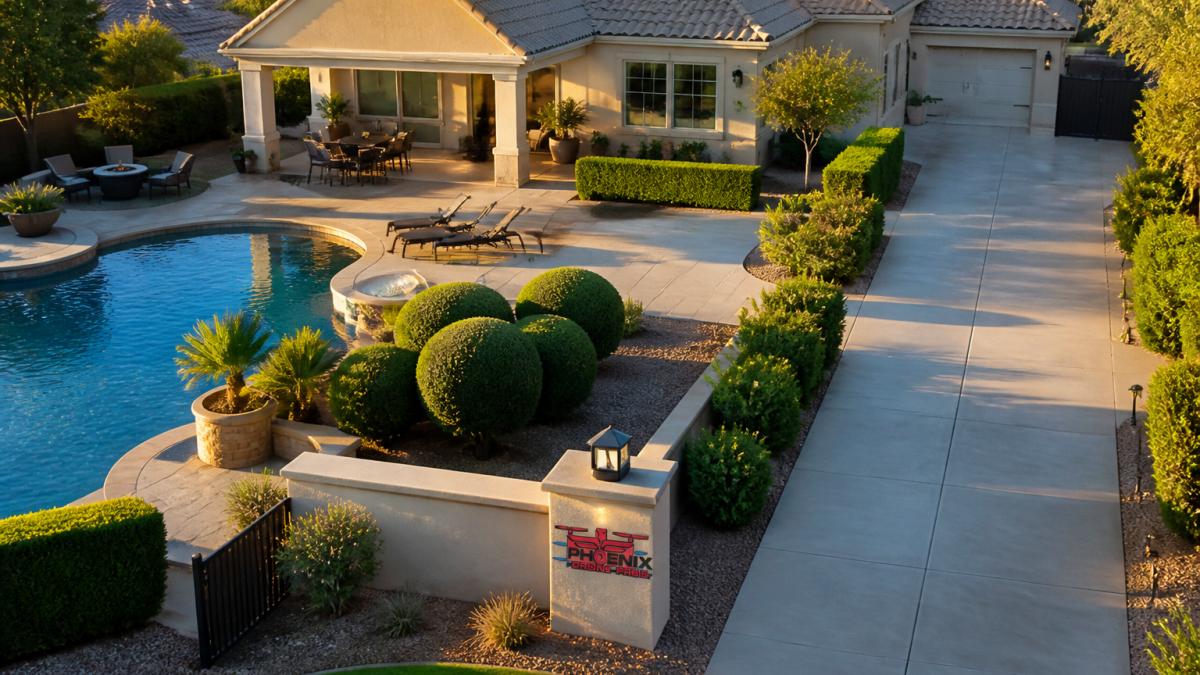
The yard is where aerial photography earns its keep. A well-kept lawn, trimmed hedges, and a clean pool read as instant value from above; neglect reads just as fast.
What Actually Shows From Above
A drone at 200-400 feet sees patterns, not details. Prioritize the tasks that change the pattern:
- Lawn edges and mowing lines. A freshly edged lawn reads as a crisp rectangle; an overgrown edge blurs the property line. Mow and edge 1-2 days before the shoot so the grass is dry and the lines are sharp.
- Hedge and shrub shapes. Trimmed hedges hold clean geometric shapes from the air; untrimmed ones look like green blobs. Shape matters more than height.
- Pool water clarity. Cloudy water reads as a green or gray rectangle. Skim, brush, and run the filter starting 48 hours out; test chemistry the day before.
Pool, Patio, and Outdoor Furniture Staging
Staging the outdoor space works like staging a living room: arrange furniture to suggest use, not storage. A clean table with chairs reads better than a jumble of loungers.
Checklist for the pool and patio: skim and brush the pool and check water clarity; remove pool toys, floats, and cleaning equipment; sweep and wash the patio surface; arrange furniture in a simple, inviting layout; wipe down tables and chairs; remove covers, umbrellas in disrepair, and worn cushions.
Roof, Gutters, and Visible Exterior Maintenance
Drones see the roof better than anyone. That's a gift and a risk. Clean gutters, clear debris from the roofline, and check for obvious damage before the flight.
From the ground, look for:
- Clogged or overflowing gutters
- Missing or damaged shingles
- Stains or streaks on the roof surface
If the roof has visible issues, fix what you can and note the rest. A professional aerial inspection can document the condition honestly, which is often better than hiding it. For fragile or steep roofs, a thermal drone inspection is safer than a ladder.
Weather, Timing, and the Reschedule Decision
Yard work and weather are linked. Mowing wet grass leaves clumps and tire tracks; washing concrete before rain wastes the effort; wind above roughly 15-20 mph blurs detail and can ground a consumer drone. Check the forecast 48 hours out and again the morning of, and build a backup date into the listing timeline. If rain is forecast within 24 hours, move power-washing and window cleaning earlier, or accept a re-do.
Privacy and Neighbor Considerations
Aerial photos often catch neighboring properties in frame. Before the shoot, walk the sightlines and note anything that shouldn't appear: a cluttered yard, a visible pool, a parked RV, a private deck. Let neighbors know a drone will be flying, keep the flight path over the subject property where possible, and avoid capturing private spaces.
Drone Photography Checklist for Real Estate Agents
The drone photography checklist for real estate agents should cover logistics, not just cleaning. A spotless property still fails if access, timing, or contact details are wrong.
Before the flight, confirm:
- Property address and gate or lockbox codes
- On-site contact name and phone number
- Drone takeoff and landing area (open, flat, clear of people)
Send this to the pilot 24 hours ahead. A short confirmation call the morning of the shoot catches last-minute changes.
Best Time of Day for Real Estate Drone Photography
The best time of day for real estate drone photography is early morning or late afternoon, when the sun sits low and shadows are soft.
Golden hour, the first hour after sunrise and the last before sunset, gives warm light and long, flattering shadows.
Weather matters too: high wind, rain, and haze hurt image quality and can ground the flight.
Drone Photography Shot List for Real Estate
A drone photography shot list for real estate keeps the flight efficient and the deliverables consistent. Without one, pilots improvise and agents get gaps.
Standard shot list:
- Wide establishing shot of the full lot from the street side
- Elevated front elevation showing curb appeal and roofline
- Angled side shot showing the yard and any amenities
- Overhead top-down shot of the pool, patio, or key outdoor feature
- Rear elevation showing the backyard and property line
- Context shot showing the neighborhood and nearby amenities
- Detail shots of key selling points (pool, view, acreage)
Add property-specific shots for anything unique: acreage, water features, outbuildings, or solar arrays. For commercial or construction clients, a video offering memorandum or progress documentation may replace the standard shot list entirely.
Flight Coordination, Weather, and Neighbor Considerations
Flight coordination is where amateur shoots fall apart. A clean property means nothing if the drone can't legally or safely fly the shot.
First, check airspace. The FAA regulates drone flights, and many areas near airports, stadiums, and sensitive sites carry restrictions. For the rules, see the FAA drone flight rules.
Second, plan the takeoff and landing area. It must be flat, open, and clear of people and vehicles.
Third, respect the neighbors. Aerial photos often catch neighboring properties in frame.
Weather is the final gate. High wind, rain, and low visibility all ground the flight.
Conclusion
Prepping a property for aerial photography is a sequence, not a scramble: clean the exterior, clear the clutter, stage the amenities, and confirm flight logistics days ahead.
If you'd rather hand the whole process to a team that flies these shots every week, Phoenix Drone Pros can help.
Get started with Phoenix Drone Pros and get aerial images that make your listing stand out. Contact us for scheduling and pricing.
Frequently Asked Questions
How do you prepare a property for drone photography?
Start with the exterior: clear the driveway, move trash cans and garden hoses out of sight, and clean windows and gutters. Trim overgrown landscaping and stage the patio or pool area so it looks maintained. Put together a shot list of the key selling points, confirm an on-site contact and property access, and check weather and flight restrictions the day before. A focused drone photography prep pass the morning of the shoot catches anything you missed.
What should be removed from a yard before aerial photos?
Pull trash cans, garden hoses, toys, tools, and portable sports equipment out of the frame. Cars parked on the lawn or blocking the driveway should be moved. Remove yard signs, tarps, and anything that reads as clutter from above. From 100 feet up, small objects still show as visual distractions, so walk the yard and imagine it as a flat image. Anything you would not want in a listing photo should go.
When is the best time of day for real estate drone photography?
Early morning and the two hours before sunset give the softest light and the longest shadows, which flatter rooflines and landscaping. Midday sun creates harsh shadows and blown-out highlights on pools and driveways. Overcast days work well for even lighting but can flatten curb appeal. Ask your operator to plan around the sun's position relative to the front of the house, and build in a weather backup date.
Do you need permission to fly a drone over a property?
The FAA governs airspace, but you should still get written permission from the property owner before any shoot, and coordinate with neighbors if the flight path crosses their property. Commercial operators must hold a Part 107 certificate and follow no-fly zones and local restrictions. Confirm the operator is FAA-certified and insured, and share the property address, on-site contact, and takeoff and landing area in advance so the flight stays within approved boundaries.
Sources:
- FAA drone flight rules and airspace guidance
- National Association of Realtors home staging guidance
- U.S. Department of Energy home exterior maintenance tips