 ultimate-guide
Drone Roof Inspection for Homeowners: A Complete Guide
Table of Contents
- What Is a Drone Roof Inspection?
- Drone Roof Inspection vs. Traditional Methods
- Thermal Roof Inspection Benefits
- How to Prepare Your Home for a Drone Inspection
- Drone Roof Inspection Cost and What Affects Pricing
- Types of Roof Damage Drones Can Detect
- Safety, Regulations, and Privacy Considerations
- Conclusion
Last Updated: August 28, 2026
What Is a Drone Roof Inspection?
A drone roof inspection is the process of using unmanned aerial vehicles equipped with high-resolution cameras to assess residential and commercial roofing systems. Unlike traditional methods requiring inspectors to climb onto the roof, drones capture detailed imagery from above, providing a comprehensive view of the entire roof surface without putting workers at physical risk.
Drone roof inspections have become essential for homeowners with steep, fragile, or hard-to-access roofs. The technology reveals damage patterns, structural concerns, and maintenance needs that might be missed during ground-level assessment. The data collected becomes actionable intelligence for repair planning, insurance claims, and long-term maintenance strategies.
Drone Roof Inspection vs. Traditional Methods
The choice between drone and traditional roof inspection comes down to safety, accuracy, and cost-effectiveness. Traditional inspections require a trained inspector to physically climb onto the roof, introducing safety risks, time constraints, and potential liability issues.
Traditional roof inspections rely on visual assessment from the ground and physical roof access. An inspector walks the roof, looking for visible damage, wear, and structural issues. This method exposes inspectors to fall hazards, weather risks, and physical strain on steep pitches.
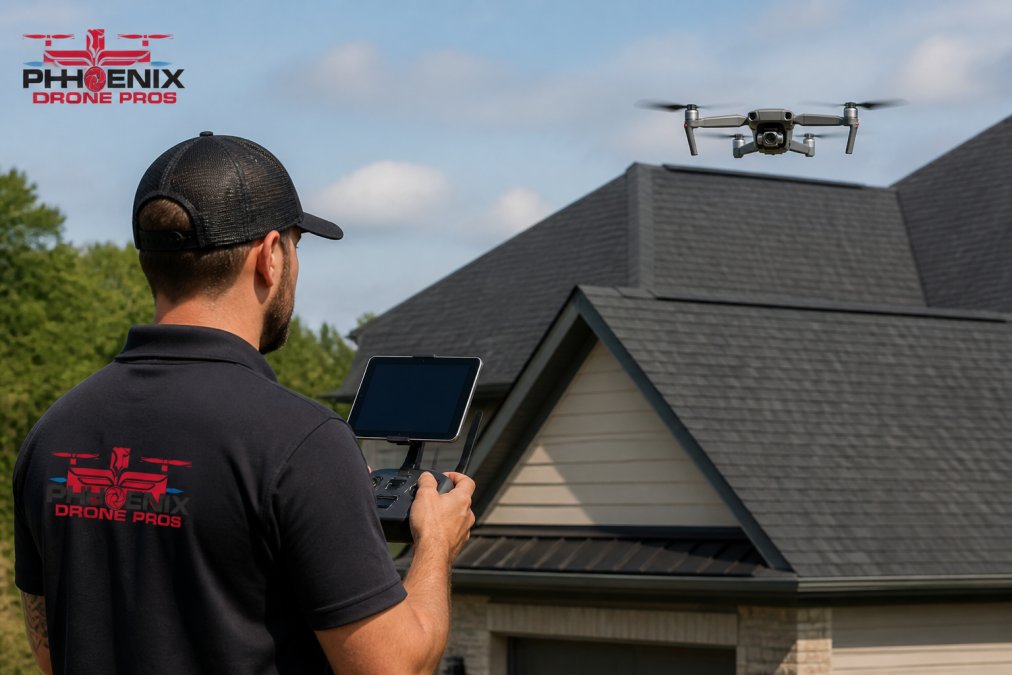
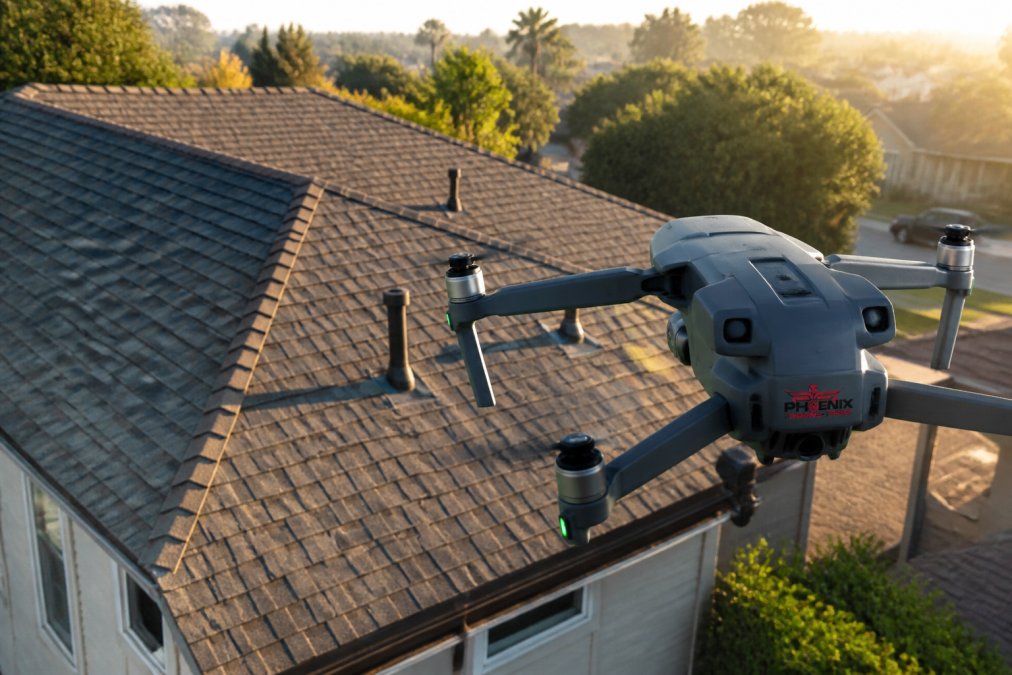
Drone roof inspections eliminate climbing entirely. A remote pilot operates the aircraft from the ground while the onboard camera captures high-resolution imagery, thermal data, and sometimes 3D mapping. The drone can hover at specific angles to inspect flashing, gutters, ridge lines, and valleys, areas particularly prone to leaks. Footage is recorded for permanent documentation of roof condition.
A drone inspection provides standardized, repeatable data. The same flight path can be flown again in six months or a year, allowing homeowners to track roof condition changes over time. Traditional inspections depend on individual inspector experience and attention to detail.
The safety advantage is substantial. According to the National Safety Council, falls from heights remain a leading cause of unintentional injury and death in residential settings. Drone inspections reduce this risk to near zero and eliminate liability concerns if something goes wrong during inspection.
Cost comparison requires nuance. A basic traditional inspection might cost less upfront for a small, single-story home with easy roof access. For complex roofs, steep pitches, or multi-story homes, drone inspection becomes more economical because it requires less time and eliminates specialized safety equipment needs.
Thermal Roof Inspection Benefits
Thermal imaging represents one of the most powerful applications of drone technology for roof assessment. A thermal camera mounted on a drone detects infrared radiation, revealing temperature variations that indicate moisture, missing insulation, or structural issues invisible to the human eye.
Water-damaged areas retain moisture longer than surrounding materials, and moisture has a different thermal signature than dry roofing. When a thermal camera scans the roof at dawn or dusk, when temperature differentials are most pronounced, wet spots show up as distinct thermal anomalies, pinpointing exactly where water intrusion occurs, even before visible mold or staining appears inside the home.
Missing or inadequate insulation creates another thermal signature. Areas with poor insulation transfer heat differently than properly insulated sections, helping homeowners concerned about energy efficiency identify problem zones.
The practical benefit is specificity. Instead of guessing where a leak might be, thermal inspection points to the exact location of moisture entry. This precision reduces guesswork during repairs and helps contractors prioritize immediate attention areas.
For insurance claims, thermal imaging adds credibility to damage documentation. Insurance adjusters understand thermal data, making claims with thermal imagery much harder to dispute. The data is objective and difficult to argue against.
Thermal inspections also catch problems before they become catastrophic. Small moisture intrusion detected via thermal imaging can be sealed before it spreads to roof decking or framing, preventing expensive structural repairs.
How to Prepare Your Home for a Drone Inspection
Preparing your property for a drone roof inspection requires minimal effort but ensures smooth operations and useful data.
First, ensure clear airspace around your home. Remove outdoor furniture, grills, or equipment from the yard that might obstruct the drone's flight path. Consider whether tree branches extending over the roof should be trimmed, as heavy coverage can obscure roof details.
Second, notify your neighbors. A brief conversation explaining the professional roof inspection typically resolves concerns, especially important in neighborhoods with homeowner associations.
Third, prepare access to the property. The drone pilot needs a safe, level area for takeoff and landing, a driveway or flat yard section works well. Ensure the area is clear of obstacles, vehicles, and people during inspection.
Fourth, document any specific concerns beforehand. If you've noticed water stains, soft spots, or suspected damage areas, communicate these to the inspection team so the pilot can focus on those locations.
Fifth, check the weather forecast. Drone inspections require calm conditions, typically wind speeds below 20 mph and no precipitation. Knowing the forecast helps you plan accordingly.
Finally, have property access ready. The pilot may need brief access to discuss findings or review footage on a larger screen. Ensure someone is home during the inspection window or provide clear access instructions. remove roof streaks.
Drone Roof Inspection Cost and What Affects Pricing
Drone roof inspection pricing depends on several factors. Understanding these variables helps homeowners anticipate costs and compare quotes.
The size and complexity of your roof is the primary cost driver. A small, single-story home with a simple gable roof costs less than a large two-story home with multiple roof planes, dormers, and skylights. More roof surface area means longer flight time and more footage to process.
Roof pitch and accessibility matter as well. A steep roof or one surrounded by tall trees requires more careful flight planning and potentially multiple passes. A flat or low-pitch roof with clear airspace is faster and less complex.
The type of inspection requested affects final cost. A basic visual inspection using standard RGB cameras is typically most affordable. Adding thermal imaging increases cost due to specialized equipment and detailed analysis. 3D mapping or orthomosaic imagery, which stitches together multiple photos to create a seamless overhead view, adds further complexity and cost.
The inspection report format also influences pricing. A simple PDF report with photos and basic observations costs less than a comprehensive written report with detailed damage assessment, repair recommendations, and maintenance timelines.
Location and travel distance can affect pricing. Areas with readily available drone services typically have more competitive pricing due to competition. Remote or rural areas may have higher costs due to pilot travel time.
For accurate pricing specific to your property, Phoenix Drone Pros recommends contacting your local provider directly for a quote. A reputable company will provide a transparent estimate before any work begins.
Types of Roof Damage Drones Can Detect
Drones excel at identifying many roof damage types, from minor wear to structural concerns requiring immediate attention.
Shingle damage is among the most common findings. Missing, cracked, curled, or lifted shingles are clearly visible in high-resolution drone imagery. Thermal imaging reveals areas where shingles have lost adhesive seal, even before visible separation occurs.
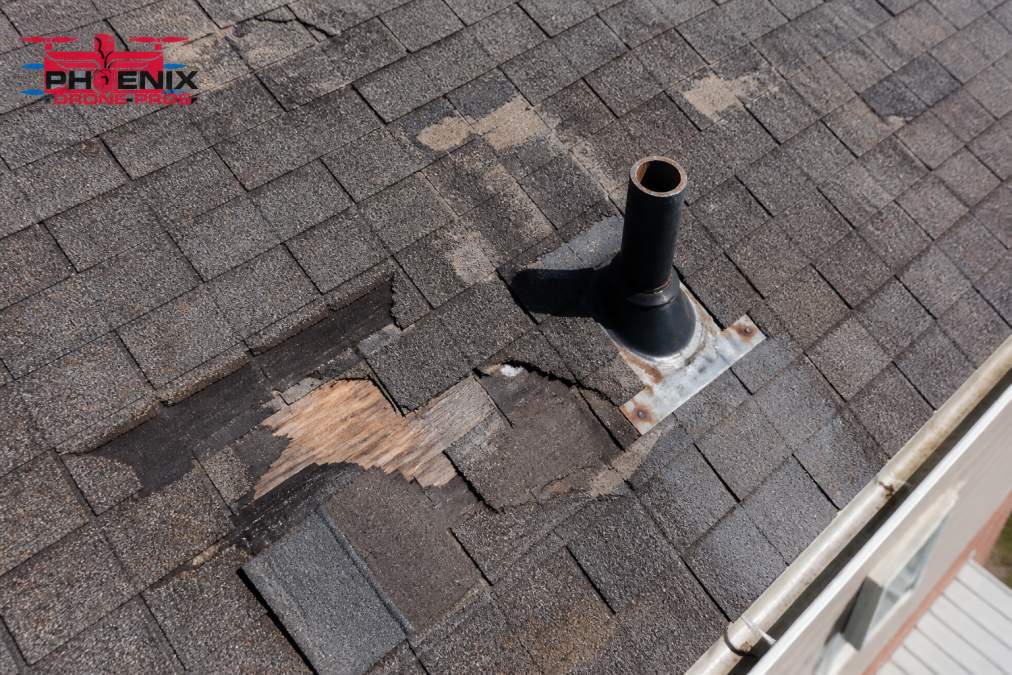
Flashing failures are critical. Flashing around chimneys, vents, skylights, and roof plane intersections is a primary leak source. Drones capture detailed imagery revealing gaps, corrosion, or separation from the roof surface. Because flashing is difficult to inspect from the ground, drone imagery provides crucial visibility into these vulnerable areas.
Soft spots and rot in roof decking show up in thermal imagery as areas where structure has begun deteriorating. Wood rot, water damage to plywood, and compromised decking all have distinct thermal signatures. Early detection prevents expensive structural repairs.
Gutter and drainage issues are visible from drone altitude. Clogged gutters, sagging sections, and fascia separation are documented in footage. Poor drainage causes many roof problems, and identifying these issues prevents water accumulation and damage.
Moss, algae, and biological growth appear clearly in high-resolution imagery. While often cosmetic, heavy growth can trap moisture against the roof surface and accelerate deterioration.
Cracks and fissures in flat or low-slope roofs are easily visible in drone footage. Small cracks can be sealed before becoming larger problems.
Structural issues like sagging roof lines, uneven surfaces, or roof shifts are apparent in drone imagery, suggesting deeper problems warranting immediate professional evaluation.
Safety, Regulations, and Privacy Considerations
Operating a drone for roof inspections involves regulatory compliance, safety protocols, and privacy considerations homeowners should understand.
The Federal Aviation Administration (FAA) regulates all commercial drone operations in the United States. Any drone flight conducted for business purposes, including residential roof inspections, requires the pilot to hold a Part 107 Remote Pilot Certificate, ensuring the pilot has passed knowledge and practical tests and understands airspace rules (faa.gov).
Reputable drone inspection companies verify pilot certifications and maintain current insurance coverage. Before hiring a service, ask to see proof of FAA certification and insurance documentation.
Safety protocols include maintaining visual line of sight with the aircraft, avoiding flights over people or property, and adhering to altitude restrictions. Commercial drone flights are typically limited to 400 feet above ground level (faa.gov). The pilot must maintain control and be prepared to land immediately if conditions deteriorate.
Privacy considerations matter in residential neighborhoods. While flying over your own property to inspect your roof is legal, the camera should not be directed at neighboring properties. Professional operators understand these boundaries and position flights to focus solely on the client's property.
Some homeowner associations restrict drone operations. Check your HOA rules before scheduling. In most cases, inspections for property maintenance are permitted.
Airspace restrictions apply near airports, military installations, or other sensitive locations. Professional drone operators check airspace restrictions as part of pre-flight planning and will inform you if your property is in a restricted zone.
Conclusion
A drone roof inspection provides homeowners with detailed, accurate information about roof condition while eliminating safety risks associated with traditional climbing inspections. Whether you're concerned about a potential leak, planning a sale, filing an insurance claim, or simply want to understand your roof's current state, drone technology delivers the data you need to make informed decisions.
Phoenix Drone Pros brings over a decade of commercial drone experience to residential roof inspections. Our FAA-certified team uses high-resolution imaging and thermal analysis to identify damage, document conditions, and provide comprehensive reports that guide repair planning and insurance claims. With fully insured operations and local pilots available in your area, we make professional roof assessment accessible and affordable.
Ready to see your roof from a new perspective? Contact Phoenix Drone Pros today to schedule your drone roof inspection and get the detailed property assessment your home deserves.
Frequently Asked Questions
Q: How much does a professional drone roof inspection cost?
A: Drone roof inspection cost depends on several factors, including roof size, complexity, whether thermal imaging is needed, and your location. Pricing varies by provider and project scope. Contact Phoenix Drone Pros for a detailed quote tailored to your property and inspection requirements.
Q: Can a drone detect roof leaks and thermal damage?
A: Yes. Drones equipped with thermal imaging sensors detect temperature variations that indicate moisture, insulation problems, and heat loss. This thermal data helps identify leak sources and structural issues that standard visual inspection might miss. Combined with high-resolution imagery, thermal imaging provides comprehensive damage documentation.
Q: Are drone roof inspections more accurate than manual inspections?
A: Drone inspections offer distinct advantages: high-resolution imagery captures fine details of shingle condition and flashing without climbing ladders, and thermal sensors detect hidden moisture and energy loss. However, accuracy depends on drone quality, pilot expertise, and weather conditions. Professional operators deliver orthomosaic mapping and detailed inspection reports that support insurance claims and maintenance planning.
Q: Do I need to be home during a drone roof inspection?
A: Typically, no. A professional drone pilot can complete the aerial survey and data collection without homeowner presence. However, you may want to be available to discuss any observed issues, provide property access if needed, and receive a preliminary overview of findings. Confirm scheduling preferences with your drone service provider.
This article was written using GrandRanker