 ultimate-guide
How to Choose Professional Drone Photography in 2026
Table of Contents
- Start With the Deliverable, Not the Drone
- Why an FAA Part 107 Certified Drone Pilot Matters
- Commercial Drone Photography Insurance Requirements
- Drone Photography Service Pricing Models Explained
- How to Vet a Drone Service Provider
- Matching Professional Drone Photography to Your Project
- Frequently Asked Questions
Last Updated: September 19, 2026
Start With the Deliverable, Not the Drone
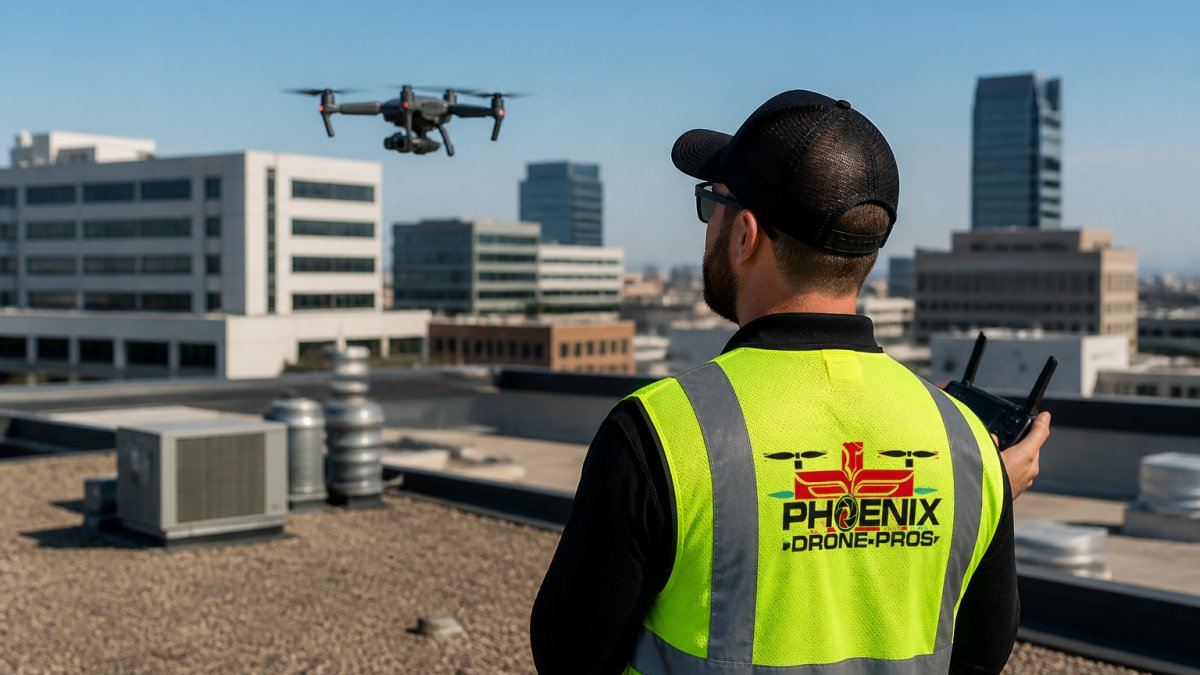
Most buyers approach professional drone photography backwards, comparing aircraft specs before defining the deliverable. The smarter sequence runs in reverse: define the deliverable first, then find the operator whose equipment and certifications match it. This guide from Phoenix Drone Pros walks through the full vetting process, from certification checks to pricing models.
Before you contact any operator, write down three things:
- The output format. Stills, video, 3D mapping, or thermal imagery. Each demands different hardware.
- The resolution and quality bar. Web-ready images tolerate smaller sensors; print or broadcast work does not.
- The timeline. A next-day listing shoot and a monthly construction progress package require different scheduling commitments.
Why an FAA Part 107 Certified Drone Pilot Matters
An FAA Part 107 certified drone pilot holds the Remote Pilot Certificate required to fly drones commercially in the United States. The FAA's commercial drone operations guidance makes this certification mandatory for any flight conducted for business purposes, including real estate marketing, construction documentation, and paid inspections.
How to Verify Part 107 Certification
Verification takes about two minutes. Ask for the pilot's certificate number, then confirm it through the FAA's public airmen registry. A legitimate operator will provide this without hesitation.
Watch for these red flags:
- The operator calls it a "license" and can't produce a certificate number
- They claim certification isn't needed for "small jobs"
- The certificate belongs to someone who won't be flying your job
Commercial Drone Photography Insurance Requirements
Commercial drone photography insurance protects both the operator and the property owner when a flight causes damage or injury. Most commercial clients, including property managers and general contractors, require proof of coverage before allowing a drone on site.
Drone Photography Service Pricing Models Explained
Drone photography service pricing models fall into three structures: flat-rate packages, hourly rates, and project-based quotes. Knowing which fits your project prevents overpaying for simple work or under-scoping complex deliverables.
- Flat-rate packages: A fixed price for a defined deliverable, such as a set number of edited stills or a short video. Best for standard real estate listings where the scope is predictable.
- Hourly rates: Billed for time on site, often with a minimum. Suited to inspections or shoots where the scope is genuinely unknown until the pilot is airborne.
- Project-based quotes: A custom price built around a defined deliverable and timeline. Common for construction documentation, 3D mapping, and multi-day productions.
What Actually Drives the Final Quote
A quote is a stack of line items, not a single number. Break each bid into the same categories so you compare like with like:
- Flight time and airframe count. A single drone covering a suburban lot is one line item. A two-pilot, two-aircraft shoot for a multi-building campus is another. More aircraft means more batteries, more setup, and more post-processing passes.
- Sensor and lens package. A 1-inch sensor handles most web and print listing work. Full-frame or Super 35 sensors with interchangeable lenses cost more to operate and are typically reserved for broadcast, film, and high-end architectural work.
- Deliverable volume. Ten edited stills is a different job than 60 stills plus a 90-second cut plus a 3D model. Ask for a per-image or per-minute rate so you can scale the scope up or down.
- Post-processing depth. Basic exposure and color correction is the baseline. Full color grading, sky replacement, HDR bracketing, and 3D model generation each add hours. Ask whether editing is included or billed separately.
- Travel and site logistics. Distance from the pilot's base, parking, site access coordination, and any required airspace authorization add time. A job inside controlled airspace can require a waiver or authorization request that adds days to the schedule.
- Turnaround speed. Standard delivery windows are typically several business days. Rush delivery compresses the edit schedule and usually carries a premium.
- Reshoots and weather holds. Ask in writing who absorbs the cost if wind, rain, or temporary flight restrictions scrub the shoot day.
How to Compare Bids Without Getting Burned
Request every quote in the same format: a line-item breakdown of flight time, deliverables, editing, travel, and turnaround. A lump sum with no breakdown is a red flag, you can't tell whether the operator is padding the edit or cutting corners on flight time.
A few practical rules of thumb:
- Cheapest is rarely cheapest. An operator quoting well below the local market is usually skipping insurance, editing, or both.
- Ask what is not included. Raw footage, source files, and licensing for paid advertising are commonly excluded from base quotes.
- Confirm usage rights. A quote for listing photos may not cover the same images being used in a paid ad campaign. Get the license scope in writing.
- Tie payment to delivery. A deposit plus a balance on delivery is standard. Full payment upfront is unusual for a first-time engagement.
| Pricing Model | Best For | Main Trade-off |
|---|---|---|
| Flat-rate package | Standard real estate listings | Limited flexibility if scope changes |
| Hourly rate | Inspections, uncertain scope | Final cost hard to predict upfront |
| Project-based quote | Construction, 3D mapping, film | Requires detailed scoping conversation |
How to Vet a Drone Service Provider
Vetting a drone service provider comes down to four checks: certification, insurance, portfolio relevance, and turnaround reliability. Run all four before signing anything. Skipping one is how clients end up with late footage or amateur results.
Portfolio Review: What to Look For
Look for work matching your project type, not just impressive scenery. A pilot with stunning landscape reels may never have shot a tight residential lot or a multi-building construction site.
Evaluate these specifics:
- Exposure control. Are highlights blown out in bright sky, or does the operator use ND filters and proper exposure?
- Stability. Smooth gimbal stabilization separates professional footage from shaky amateur clips.
- Consistency. A portfolio of ten similar-quality pieces beats one standout shot surrounded by mediocre work.
- Relevant subject matter. Property, construction, or inspection work that resembles your project.
Matching Professional Drone Photography to Your Project
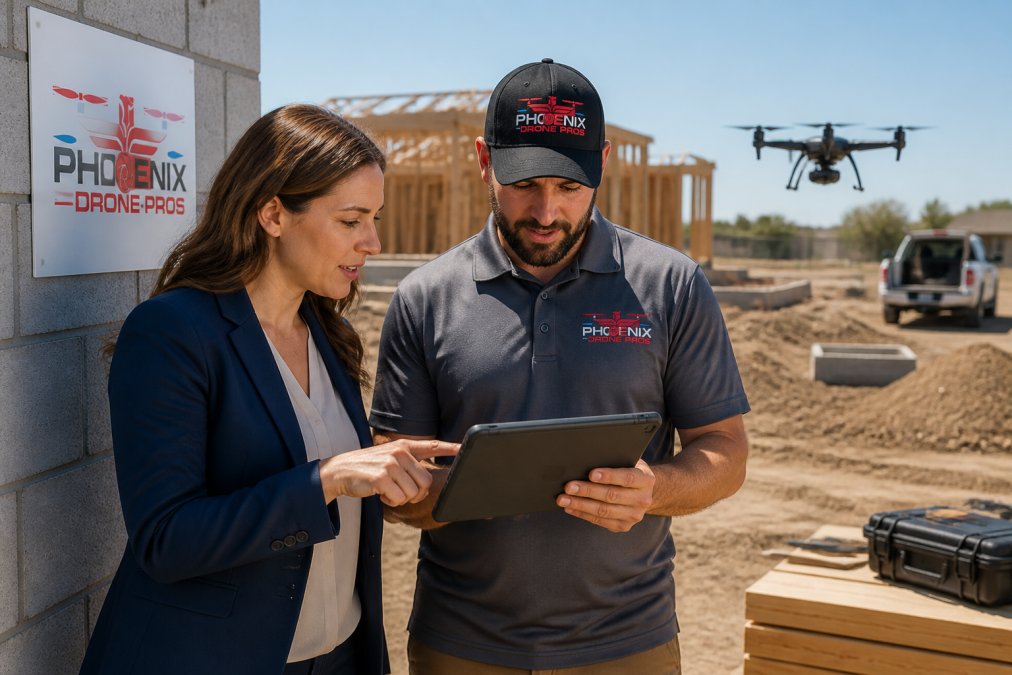
Matching professional drone photography to your project means aligning the operator's equipment, certifications, and experience with your deliverable. A real estate listing, a construction timeline, and a roof inspection each require different capabilities that determine which airframe, sensor, and workflow the pilot brings to your site.
Real Estate and Property Marketing
The core requirement is a wide-angle lens with low distortion and a sensor large enough to hold detail in both the interior-facing and sky-facing portions of a bracketed exposure. Listing pilots typically bracket three to five exposures per frame and blend them in post to control window blowout and sky clipping.
Construction Progress Documentation
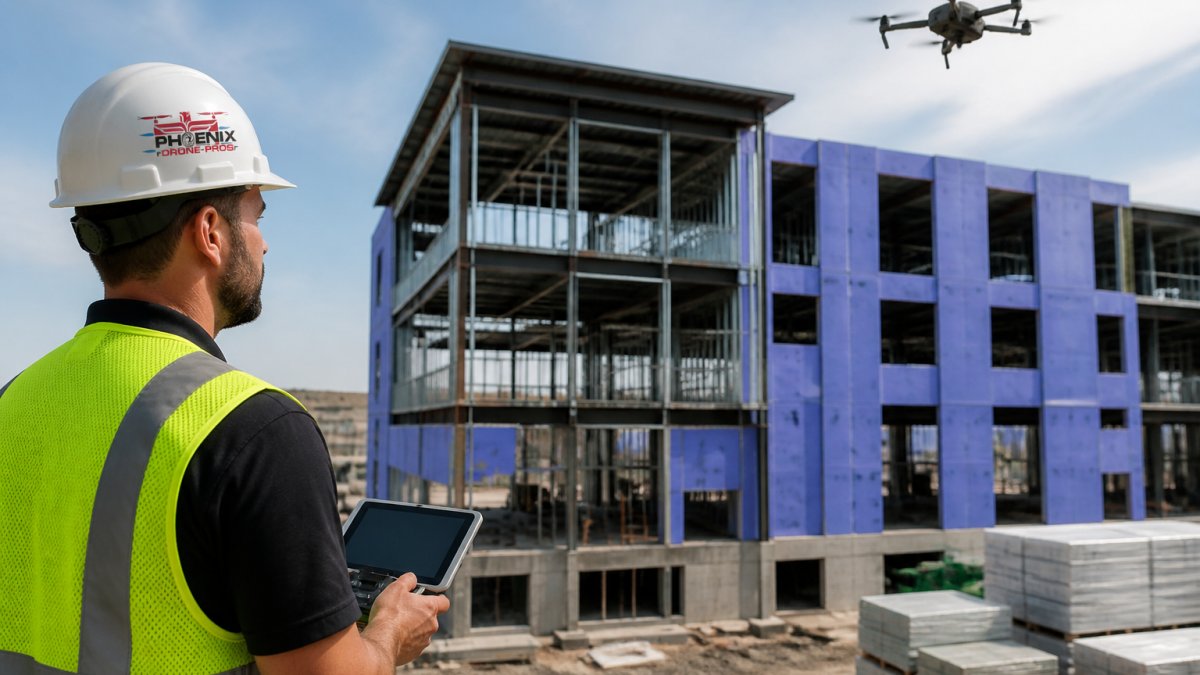
This is a repeat-visit job, not a one-off shoot. The deliverable is a consistent visual record across weeks or months, so the operator needs a repeatable flight path, consistent altitude and camera angle, and a file-naming convention that lets you drop each visit into a timeline.
Key capabilities to verify:
- Waypoint or automated flight modes. Manual flying produces a slightly different angle every visit, which makes month-over-month comparison difficult.
- Orthomosaic and 3D model generation. Photogrammetry software stitches overlapping nadir and oblique images into a measurable model. Ask what software the operator uses and whether they deliver a georeferenced file.
- Ground control points. For survey-grade accuracy, the operator should be able to place and measure ground control points or use an RTK-equipped aircraft.
- Data delivery format. Point clouds, orthomosaics, and 3D meshes are different products. Confirm which one your team can actually open.
Inspections and Thermal Imaging
Roof, facade, and solar inspections demand a different airframe than cinematic work. Priorities shift to thermal sensor resolution, stable close-proximity hovering, and obstacle sensing that works in tight spaces.
Matching Color and Workflow to Ground Cameras
This is the step most guides skip, and where professional productions live or die. If your drone footage will be cut alongside footage from a ground cinema camera, the two sources need to match in color science.
Niche-Specific Hardware Summary
| Project Type | Priority Hardware | Priority Skill |
|---|---|---|
| Real estate stills | Wide lens, bracketing-capable sensor | Exposure blending, low-distortion framing |
| Construction documentation | Waypoint flight, RTK or GCP workflow | Repeatable flight paths, photogrammetry |
| Thermal inspection | Radiometric thermal sensor | Close-proximity hover, data analysis |
| Cinematic / broadcast | Log profile, interchangeable lenses | Color matching to ground cameras |
This is where working with a specialist pays off. Phoenix Drone Pros brings FAA-certified, fully insured pilots with over a decade of commercial experience, covering everything from real estate media to thermal roof inspections and construction progress documentation. For commercial property teams, the FAA's drone airspace authorization system determines where flights are permitted, and an experienced local operator already knows how to work within those constraints.
Frequently Asked Questions
What certifications should a professional drone photographer have?
At minimum, a Remote Pilot Certificate under FAA Part 107. This certifies the pilot has passed an aeronautical knowledge exam and can legally fly commercially. Ask for the certificate number and verify it. For specialized work like thermal roof inspections, additional training helps. Also confirm the operator carries liability insurance, which is a separate requirement from certification.
How do I verify if a drone operator is fully insured?
Request a Certificate of Insurance (COI) before the flight. The COI should list the operator's policy limits, effective dates, and your property or company as an additional insured if needed. Call the insurance company directly to confirm the policy is active. Do not accept a verbal assurance. For commercial projects, look for at least $1 million in general liability coverage.
What is the difference between hobbyist and commercial drone photography?
Hobbyists fly under FAA Exception for Recreational Flyers (Section 44809) and cannot accept payment or fly for business purposes. Commercial operators must hold a Part 107 certificate, follow stricter operating rules, and carry insurance. Commercial work also demands higher-quality deliverables, reliable turnaround, and often additional equipment like ND filters or thermal cameras. Hiring a hobbyist for paid work is illegal and risky.
How much should I charge for drone photos?
Pricing depends on project scope, location, deliverable format, and turnaround time. Most professional drone service providers price per project rather than per photo. For real estate listings, a standard package might include a set number of edited images and a short video. For construction progress documentation, pricing is often based on recurring site visits. Request a custom quote from providers like Phoenix Drone Pros for accurate numbers.