 ultimate-guide
Reliable Construction Progress Documentation Guide
Table of Contents
- What Reliable Construction Progress Documentation Means for Property Managers
- Drone Construction Site Monitoring: Automated Data Capture That Pays for Itself
- The Construction Progress Report Template Property Managers Actually Need
- Best Practices for Construction Documentation That Hold Up Under Scrutiny
- Liability and Insurance Documentation: Protecting the Asset and the Owner
- Integrating Documentation Into Property Management Workflows
- Conclusion: Building a Documentation Habit That Protects Long-Term Value
- Frequently Asked Questions
Last Updated: September 17, 2026
What Reliable Construction Progress Documentation Means for Property Managers
Reliable construction progress documentation is the practice of capturing, organizing, and preserving verifiable records of a project's physical state at every stage, from groundbreaking through handover. For property managers, it is the difference between a defensible asset history and a folder of blurry phone photos.
Drone Construction Site Monitoring: Automated Data Capture That Pays for Itself
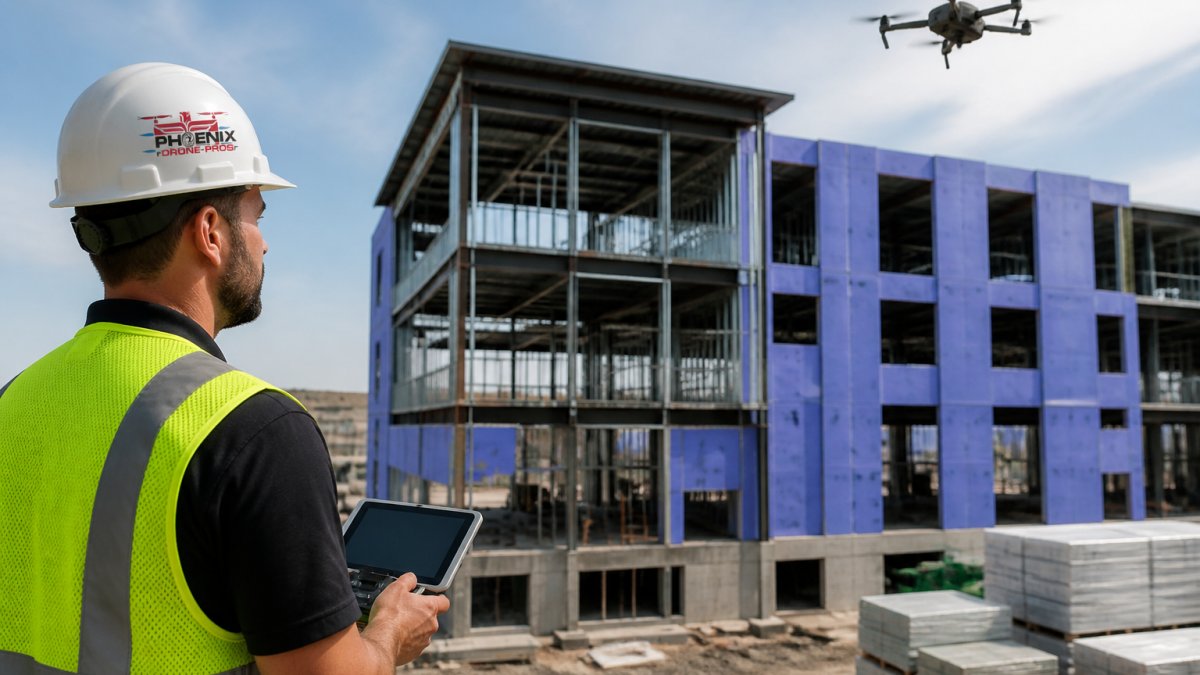
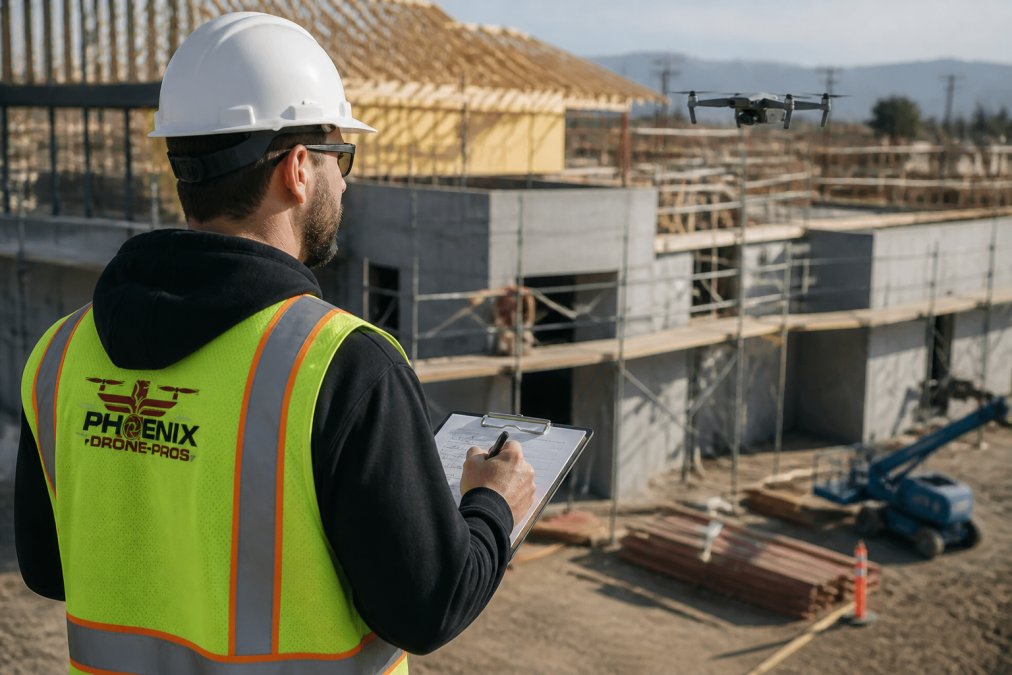
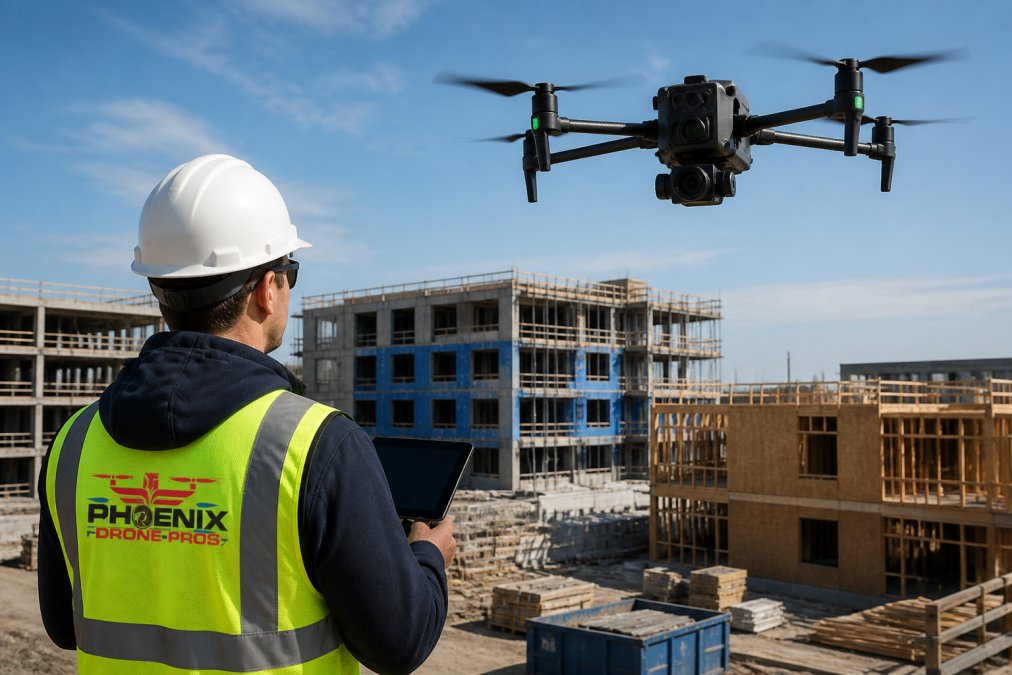
Drone construction site monitoring replaces sporadic manual site walks with scheduled, repeatable aerial capture. A single flight can document roof progress, site grading, material staging, and structural sequencing across an entire parcel in minutes rather than hours.
The Construction Progress Report Template Property Managers Actually Need
A construction progress report template for property management has to do two jobs at once: prove what happened during construction, and seed the asset record the building will live on for decades. Most templates only do the first. The second is where property managers gain leverage.
| Report Section | What It Contains | Why It Matters to a Property Manager |
|---|---|---|
| Project identification | Site, phase, building, floor, date, weather, crew on site | Establishes context for later review and ties the entry to a specific asset |
| Visual record | Dated ground photos, video, aerial capture, 360-degree walkthroughs | Proves physical state at a point in time; supports warranty and defect claims |
| Work completed vs. schedule | Planned milestones, actual progress, percent complete by trade | Flags delay before it compounds and supports draw requests |
| Deviations and change orders | Field changes, substitutions, RFI responses, approved scope shifts | Creates a paper trail when a substituted material fails years later |
| Issue log | Defects, punch items, water intrusion, open items with owner and due date | Turns observations into trackable resolutions instead of hallway conversations |
| Asset and warranty data | Equipment serial numbers, manufacturer, install date, warranty term, expected service life | Feeds the property's asset register and warranty calendar at handover |
| Sign-off | Named reviewer, role, timestamp, and method of verification | Assigns accountability and establishes chain of custody |
Fields most templates miss
The property-management-specific fields are the ones that pay off after the contractor leaves:
- Warranty start date and term for each major system, roofing, HVAC, envelope, fire protection, elevators. Warranty clocks start at substantial completion, not at the date a problem appears.
- Manufacturer and model for installed equipment, so a replacement part can be sourced without opening a ceiling.
- Installer of record for each trade, so a warranty call goes to the right party instead of the general contractor's defunct entity.
- Concealed conditions documented before drywall or roofing closes them up, in-wall plumbing, flashing details, structural connections.
- Punch list status at each milestone, not just at final completion, so you can see which items were closed and which were waived.
Cadence and retention
A common pattern is daily logs during active construction, weekly photo sets, and monthly summary reports that roll the daily entries into a single narrative. Retain originals for the full warranty period plus the statute of limitations for construction defect claims in your state, many jurisdictions allow claims for several years after substantial completion, and some allow longer for latent defects. Confirm the specific window with counsel, because it varies.
A note on format
Store reports as both a human-readable PDF and a structured data file (CSV or JSON) so the asset fields can be imported into a computerized maintenance management system (CMMS) at handover. A PDF alone is a dead end, it cannot be queried, sorted, or filtered when you need to know every roof membrane installed in a given year.
Best Practices for Construction Documentation That Hold Up Under Scrutiny
Best practices for construction documentation come down to consistency and traceability. Capture on a fixed schedule, store everything in one version-controlled location, and never overwrite an original file. Maintaining this level of rigor ensures that every phase remains transparent and accountable, especially when navigating the complexities of construction administration services.
- Timestamp every capture at the source, not at upload
- Keep originals untouched; edit only working copies
- Name files by date and location, not by camera default
- Log who accessed or changed each record
- Retain records through the full project lifecycle and beyond
Liability and Insurance Documentation: Protecting the Asset and the Owner
Liability and insurance documentation is the part of progress tracking that property managers underinvest in most. When a defect claim surfaces years after completion, the party holding dated, verifiable visual records usually controls the conversation. The property manager is often the only party still around to hold them.
Why the property manager's exposure is different
The general contractor's insurance and indemnity obligations typically expire or narrow well before the building's useful life ends. The owner, and by extension the property manager acting on the owner's behalf, carries the residual risk. That means the documentation you inherit at handover is not a courtesy; it is the evidence base for every future claim, warranty dispute, and insurance renewal conversation.
What actually holds up in a claim
Not all documentation is equal. The formats that survive scrutiny share four traits:
- Contemporaneous, created at or near the time of the event, not reconstructed later. A photo with an embedded timestamp from the capture device is stronger than a photo uploaded to a folder with a manually entered date.
- Verifiable, the original file is preserved with its metadata intact. Editing a photo, even to crop it, can undermine its evidentiary value.
- Complete, a gap in the record invites the argument that something was hidden. A missing week is worse than a boring week.
- Attributable, a named person captured, reviewed, and approved each entry.
Coordinating with insurers and counsel
Two practical moves pay off:
- Notify your insurer early. Most commercial property policies require prompt notice of circumstances that could give rise to a claim. If you discover a defect during construction, document it and notify the carrier, waiting until the defect becomes a loss can jeopardize coverage.
- Loop in counsel before you produce records. When a claim or lawsuit is anticipated, the documentation you hold may be subject to litigation hold obligations. Do not delete, edit, or reorganize files once a dispute is reasonably foreseeable. Consult counsel about preservation duties in your jurisdiction.
Retention periods and the statute of limitations
Retention is not a single number. Construction defect claims are governed by statutes of limitation and statutes of repose that vary by state and by the type of defect. A common pattern is a shorter window for patent defects (those discoverable on reasonable inspection) and a longer window for latent defects (those hidden until they manifest). Some jurisdictions also have a separate repose period that runs from substantial completion regardless of when the defect is discovered.
Insurance renewal and valuation
Dated, organized construction records also support insurance renewal. Carriers price risk partly on the age and condition of major systems. A property manager who can show documented roof replacement dates, envelope repairs, and equipment installs is in a stronger position at renewal than one who cannot, and may avoid the coverage restrictions that follow an undocumented loss history.
Integrating Documentation Into Property Management Workflows
Integration is where most documentation efforts quietly fail. Records captured during construction need to flow into the same systems that manage the building afterward, not sit in a separate folder nobody opens.
Practical integration looks like this:
- Define capture points tied to project milestones
- Assign one owner for collection and one for review
- Sync records to your document management system on a set cadence
- Tag entries by building, floor, or system for later retrieval
- Review the archive at handover and confirm completeness
Conclusion: Building a Documentation Habit That Protects Long-Term Value
The challenge is not capturing one good set of photos. It is sustaining a documented record across every phase, every contractor change, and every year the building stands. Most property managers start strong and quietly stop.
Frequently Asked Questions
How often should construction progress be documented for a property management portfolio?
Weekly documentation catches schedule variance early enough to correct it. For active construction, weekly drone flights and daily logs give the clearest record. Once a project wraps, monthly or quarterly aerial checks during the warranty period help track settling, drainage issues, or roof problems before they become expensive. Property managers overseeing multiple sites often align documentation frequency with draw requests or owner reporting cycles so the visual record matches the financial milestones.
What are the legal advantages of maintaining detailed construction records?
A dated, time-stamped visual record establishes what existed at each phase of construction, which matters when disputes arise over workmanship, change orders, or damage claims. If a contractor claims work was completed and a property manager has drone footage showing otherwise, that evidence resolves the disagreement quickly. Insurance carriers also respond faster when claims include documented site conditions before and after an incident. A digital audit trail protects both the property owner and the management company.
How does drone technology improve construction site monitoring compared to ground-level photos?
Drone construction site monitoring captures the full site in a single flight, including rooftops, grading, drainage paths, and areas behind fencing that ground crews cannot easily photograph. Flights take minutes rather than hours, and the resulting images can be overlaid on site plans for progress verification. For property managers overseeing large or multi-building projects, this gives a complete visual record without sending staff into unsafe or restricted areas.
What should a construction progress report template include for property management use?
A practical template covers project milestones, schedule variance against the baseline, photo and video attachments with dates, subcontractor coordination notes, safety observations, and any compliance tracking items. Property managers should also include a section for resource allocation and a sign-off field for stakeholder alignment. Cloud-based collaboration tools let multiple parties annotate the same report, which reduces the back-and-forth that delays project handover.