 listicle
5 Benefits of Thermal Imaging Drones for Property
Table of Contents
- How Thermal Imaging Drones Work for Property Inspections
- 1. Detect Moisture Intrusion and Insulation Defects Early
- 2. Improve Safety and Avoid Costly Roof Access
- 3. Save Money with Preventative Maintenance and Energy Efficiency
- 4. Get Faster, More Accurate Inspections with Thermal Imaging Drones
- 5. Meet FAA Part 107 Requirements for Property Inspections
- Understanding Thermal Roof Inspection Cost
- Frequently Asked Questions
Last Updated: September 25, 2026
How Thermal Imaging Drones Work for Property Inspections
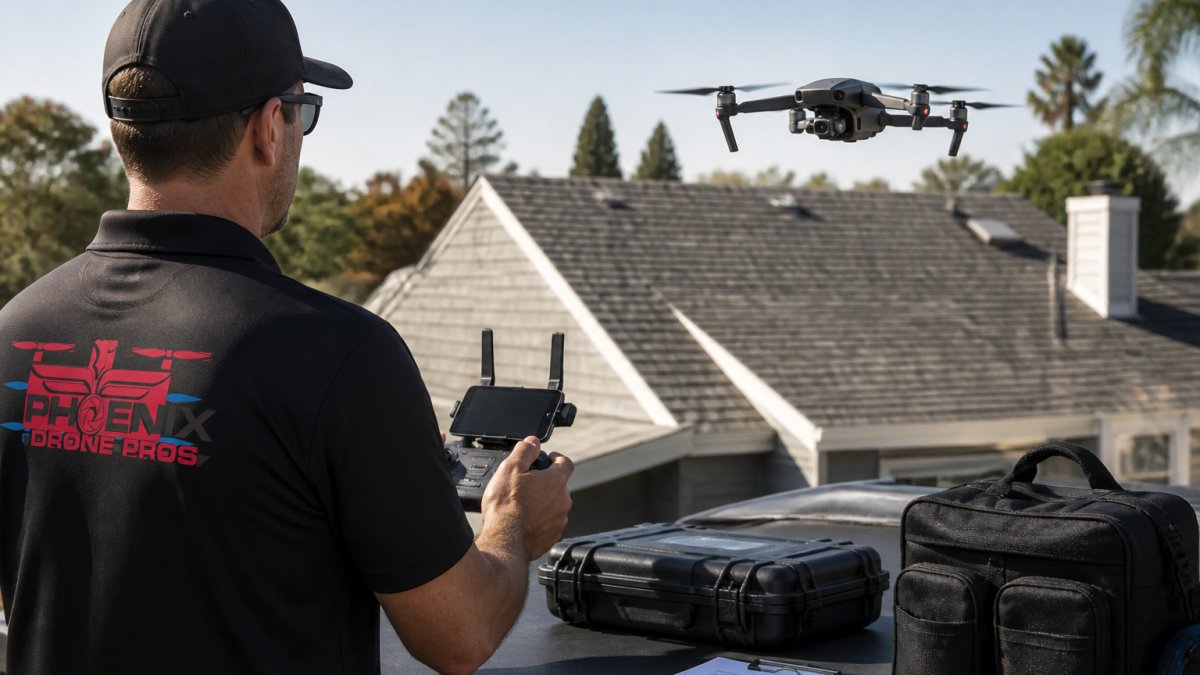
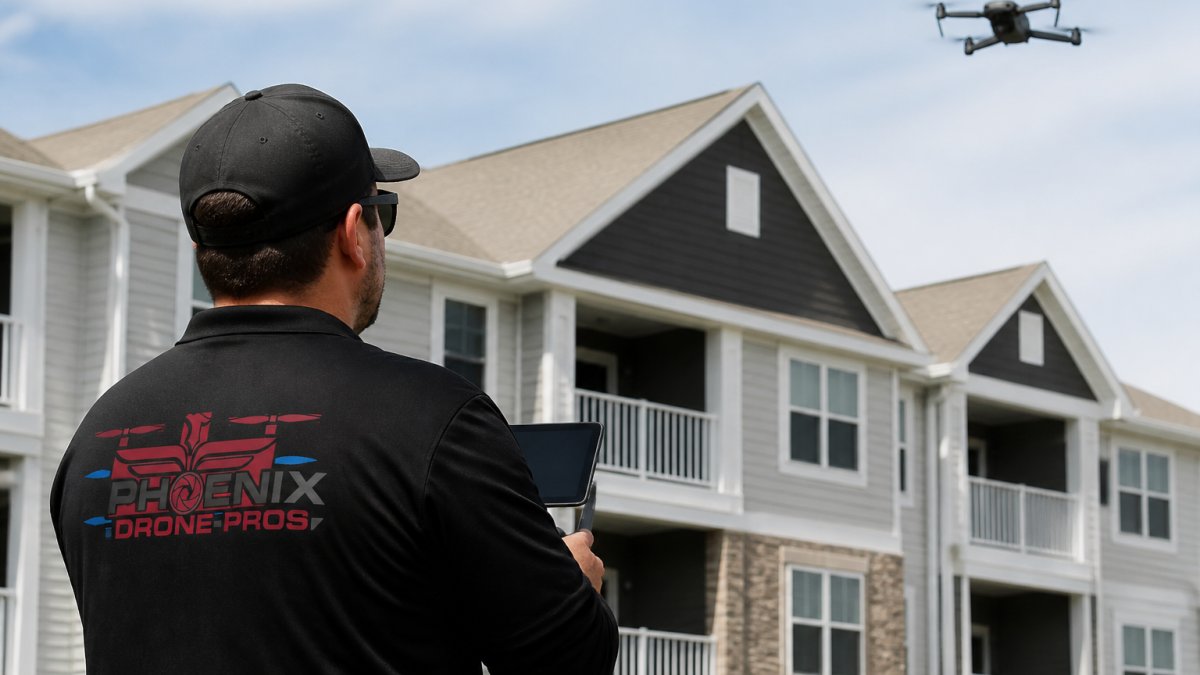
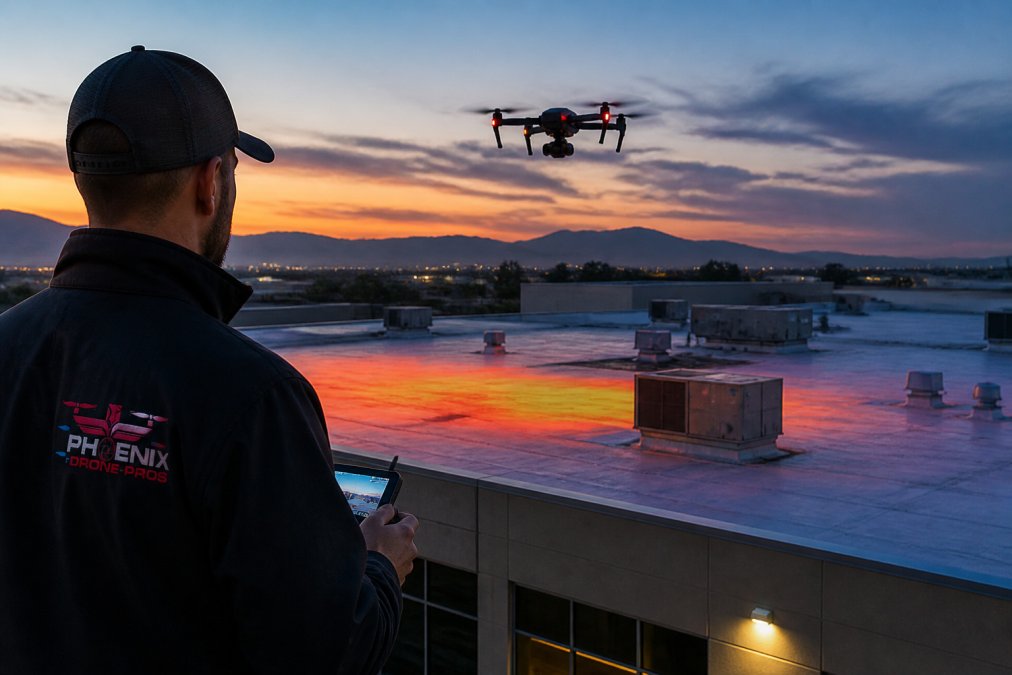
Thermal imaging drones are unmanned aircraft equipped with infrared cameras that detect heat signatures invisible to the naked eye. Our FAA-certified pilots use these systems to inspect roofs, walls, and building envelopes without anyone stepping foot on a ladder.
Thermal Sensors and Radiometric Data
Radiometric data is temperature information captured at each pixel, allowing inspectors to measure exact surface temperatures rather than just see color gradients. A 640×512 thermal sensor, common in enterprise drones, captures over 327,000 individual temperature readings per frame.
Temperature Differentials and Heat Signatures
Heat signatures reveal where a building loses energy. When indoor air escapes through a gap in insulation, the exterior surface shows a temperature differential, often just a few degrees, that thermal sensors detect instantly.
1. Detect Moisture Intrusion and Insulation Defects Early
Moisture intrusion is the leading cause of premature roof failure, and thermal imaging drones catch it before visible damage appears. Wet insulation holds heat differently than dry material, creating a distinct thermal signature that shows up clearly in aerial thermography.
Thermal Drone Moisture Detection in Roofs and Walls
Thermal drone moisture detection works best during specific conditions. The temperature differential between wet and dry materials peaks in early morning or after sunset, when solar heating isn't masking the signal.
Spotting Insulation Gaps and Thermal Bridges
Insulation defects show up as irregular warm or cool patches across a roof plane. Missing batt sections, compressed insulation, and settled blow-in material all create distinct patterns that a trained inspector can map and quantify.
2. Improve Safety and Avoid Costly Roof Access
Roof access is the most dangerous part of any property inspection. Falls remain a leading cause of workplace fatalities in construction, and steep or fragile roofs make physical inspection genuinely risky.
3. Save Money with Preventative Maintenance and Energy Efficiency
Preventative maintenance costs a fraction of emergency repairs. A thermal inspection that identifies a small moisture intrusion today prevents a full roof replacement next year. But the financial case goes further than most property owners realize, it touches insurance underwriting, utility programs, and capital planning. Integrating a professional roof inspection into your regular asset management cycle ensures that these hidden structural vulnerabilities are addressed before they escalate into significant liabilities.
Where the ROI Actually Comes From
Energy efficiency compounds the savings. Insulation defects and thermal bridges force HVAC systems to work harder, driving up utility costs month after month. Thermal imaging pinpoints exactly where that energy escapes, so remediation dollars go to the worst-performing areas first rather than being spread evenly across a roof.
| Problem Detected | Repair Cost Tier | Consequence If Ignored |
|---|---|---|
| Small moisture intrusion | Low | Deck rot, mold, interior damage |
| Missing insulation section | Low to medium | Higher energy bills year-round |
| Thermal bridge at framing | Medium | Condensation, premature failure |
| Widespread wet insulation | High | Full membrane replacement |
The Insurance and Compliance Angle Most Articles Skip
This is where thermal imaging separates itself from a visual roof walk. Documented thermal reports give property owners evidence they can bring to their insurance carrier and to code officials, and that evidence often has direct financial value.
- Insurance underwriting. Carriers increasingly ask for documented roof condition and maintenance history when pricing commercial property policies. A dated, geo-tagged thermal report showing proactive maintenance can support a better risk profile at renewal. Most brokers will tell you the report itself doesn't guarantee a discount, but it strengthens the submission.
- Building code and energy compliance. Many jurisdictions reference energy codes that require verified building envelope performance. Thermal imaging is a recognized method for documenting insulation continuity and air leakage paths, which can support compliance documentation for renovations and tenant improvements.
- Utility and efficiency programs. Utilities and state energy offices frequently run commercial energy-efficiency programs that accept infrared building envelope assessments as part of an application. The U.S. Department of Energy's building envelope guidance outlines how envelope performance ties to whole-building efficiency, which is the same logic these programs use.
- Warranty protection. Manufacturer roof warranties often require documented maintenance. A thermal report creates a dated record that can help preserve warranty coverage if a claim is later disputed.
Reading the Report Like a Budget Document
A useful thermal report doesn't just show hot spots. It ranks anomalies by severity, ties each one to a roof section or building elevation, and estimates the repair category. That structure is what lets a property manager turn a thermal flight into a line item in the capital plan instead of a vague warning.
4. Get Faster, More Accurate Inspections with Thermal Imaging Drones
A thermal drone inspection covers an entire commercial roof in under an hour. Traditional walk-through inspections of the same property can take half a day or more, especially when roof access requires setup and safety equipment.
Time Efficiency and Non-Destructive Testing
Non-destructive testing means no core samples, no membrane cuts, and no disruption to the building's weather seal. Thermal imaging reads surface temperatures from a distance, leaving the roof completely intact.
Data Interpretation and Reporting
Raw thermal images are only useful when someone interprets them correctly. A professional report connects each thermal anomaly to a specific location, likely cause, and recommended action.
5. Meet FAA Part 107 Requirements for Property Inspections
FAA Part 107 requirements for property inspections govern all commercial drone operations in the United States. Any pilot flying a drone for paid inspection work must hold a Remote Pilot Certificate and follow operational rules covering altitude, airspace, and visibility. But for a property owner hiring an inspector, the useful question isn't whether Part 107 exists, it's what compliance actually looks like on your roof and what it protects you from.
What Part 107 Actually Requires of Your Inspector
The FAA's official Part 107 resources lay out the core operating rules. In practice, a compliant thermal inspection flight involves:
- A pilot holding a current Remote Pilot Certificate with a small unmanned aircraft rating.
- Flight within visual line of sight of the pilot or a designated visual observer.
- Operations below 400 feet above ground level unless flying within 400 feet of a structure.
- No flight over people who are not directly participating in the operation, unless the aircraft and operation meet the applicable category requirements.
- Compliance with airspace rules, including authorization when operating in controlled airspace.
Insurance, Liability, and the Paper Trail
Part 107 certification is a baseline, not a complete risk transfer. Property owners should confirm two additional things before any flight:
- Liability coverage. Ask for a certificate of insurance showing aviation liability coverage. Standard general liability policies typically exclude aircraft operations, so a vendor without dedicated aviation coverage may leave you exposed if the drone damages your roof, HVAC equipment, or a neighboring property.
- Contractual indemnification. A written agreement should state who is responsible for airspace compliance, who carries the insurance, and how data is handled after the flight.
Data Handling and Privacy Considerations
Thermal inspections capture imagery of your building, and often adjacent buildings, vehicles, and people. A professional operator has a written data retention and handling policy, delivers files through a secure channel, and doesn't retain or reuse your thermal data without permission. This is also where the reporting workflow matters: a report that geo-tags anomalies and ties them to your building's sections is more useful, and more defensible, than a folder of raw images.
Questions to Ask Before You Book
- Can you provide your Remote Pilot Certificate number and current insurance certificate?
- Do you obtain airspace authorization for controlled airspace, and can you show the authorization for my property?
- How is the thermal data delivered, stored, and retained?
- Does the report include severity ranking and geo-tagged anomaly locations?
A provider who can answer all four without hesitation is operating at the standard your property deserves. If you'd rather build that expertise in-house, Phoenix Drone Pros also offers drone training for teams that want to fly their own Part 107-compliant missions.
Understanding Thermal Roof Inspection Cost
Thermal roof inspection cost depends on several factors: property size, roof complexity, number of buildings, and reporting requirements. A single-family home inspection prices differently than a multi-building commercial portfolio.
Frequently Asked Questions
Can a thermal drone see through walls or inside a house?
No. Thermal imaging drones detect surface temperature differences, not what is behind walls. They can reveal moisture trapped in roofing or insulation gaps by spotting temperature anomalies on the exterior, but they cannot see people or objects inside a building. For property inspections, they are best used to find hidden issues like leaks or missing insulation that affect energy efficiency.
How does thermal imaging help identify roof leaks?
Wet roofing materials retain heat differently than dry ones. A thermal drone captures these temperature differentials as hot spots or cool patches, showing where moisture has entered. This allows inspectors to pinpoint leak sources without tearing into the roof. Early detection prevents structural damage and reduces repair costs, making it a key benefit of thermal imaging drones for property maintenance.
What FAA regulations apply to commercial drone property inspections?
Commercial drone inspections fall under FAA Part 107. Pilots must hold a Remote Pilot Certificate, keep the drone within visual line of sight, and avoid flying over people not involved in the operation. For property inspections, you also need permission from the property owner. Some inspections may qualify for waivers, but Part 107 is the baseline. Always hire an FAA-certified operator to ensure compliance.
Are thermal drone inspections cost-effective for residential properties?
Yes. Thermal roof inspection cost is often lower than traditional methods because drones reduce labor and safety risks. They can survey a roof in minutes, identifying issues before they become major repairs. For homeowners, this means catching insulation defects or moisture intrusion early, which can save thousands in energy bills and structural fixes. Pricing depends on property size and complexity, so request a quote.
How accurate are thermal drones for detecting insulation gaps?
Accuracy depends on the thermal sensor resolution. Higher-resolution sensors can detect small temperature differences, making insulation gaps and thermal bridges visible. However, factors like weather and time of day affect results. A certified operator will interpret radiometric data correctly, ensuring you get actionable insights for improving energy efficiency.