 listicle
Benefits of FAA Drone Certification
Table of Contents
- What FAA Drone Certification Opens Up for Your Business
- What Can You Do With a Part 107 License
- Part 107 Certificate Requirements and Eligibility
- Is a Part 107 Certificate Worth It for Your Industry
- Hiring a Part 107 Drone Pilot for Your Project
- How Certification Compares to Recreational Flying
- The Certification Process and What It Costs
- Frequently Asked Questions
Last Updated: October 10, 2026
What FAA Drone Certification Opens Up for Your Business
A Part 107 Remote Pilot Certificate from the FAA opens doors that recreational flying simply cannot. If you're considering whether FAA drone certification makes sense for your operation, the answer depends on what you want to accomplish. At Phoenix Drone Pros, we work with clients across various industries who all share one thing in common: they needed the legal authority to operate commercially. That's what the certificate provides.
The FAA introduced Part 107 regulations in 2016 to create a clear pathway for commercial drone operations. Before that, companies either paid tens of thousands for exemptions or operated in legal gray areas. Today, a Part 107 certificate is the standard credential that clients expect, insurance companies require, and the FAA enforces. Without it, you cannot accept payment for drone services. With it, you unlock a legitimate business line.
The real question isn't whether certification is necessary, it's whether your business model requires it. If you're flying drones recreationally on your own property, you don't need it. If you're offering services to others or documenting your own business operations for commercial purposes, you do.
What Can You Do With a Part 107 License
A Part 107 certificate lets you operate a drone for compensation in ways recreational pilots cannot.
Standard Operations (Permitted With Certification)
With a Part 107 license, you can:
- Fly drones during daylight and twilight hours (with proper lighting)
- Operate within controlled airspace with proper authorization from ATC or LAANC
- Fly at altitudes up to 400 feet above ground level
- Accept payment for aerial services
- Legally document your own business operations
- Maintain visual line of sight with the drone
- Operate from a safe distance from people and property
Conditional Operations (Require Specific Conditions or Waivers)
Night Operations are not automatically permitted. Part 107 rules restrict flight to daylight and twilight (30 minutes before sunrise to 30 minutes after sunset). To fly at night, you must:
- Install anti-collision lighting that meets FAA specifications
- Obtain a waiver from the FAA (filed through IACRA)
- Demonstrate operational safety and emergency procedures
Night waivers typically take 2-4 weeks to process. Many operators in construction and infrastructure inspection pursue night waivers to avoid daytime airspace conflicts or to meet client schedules.
Operations Over People are restricted by default. Part 107 prohibits flying over people unless they are directly involved in the operation (e.g., your ground crew). To conduct operations over uninvolved people or crowds, you must:
- Obtain a waiver or meet the conditions of a Part 107 rule update (as of 2024, limited over-people operations are permitted under specific conditions with certain drone models)
- Ensure the drone meets technical requirements (remote ID capability, kinetic energy limits)
- Maintain detailed safety protocols and insurance coverage
Operations over crowds typically require waivers and are among the most heavily scrutinized by the FAA.
Operations Over Moving Vehicles follow similar restrictions. You cannot fly over moving cars, trucks, or equipment unless you have a waiver. This is critical for construction sites and highway inspections.
Airspace Authorization in controlled airspace (Class B, C, D, or E) requires coordination with air traffic control or LAANC approval. LAANC is a free, automated system that grants real-time airspace authorization for low-altitude flights in controlled airspace.
Waivers and Special Authorizations
If your operation falls outside standard Part 107 rules, you can request a waiver. Common waivers include:
- Night operations
- Operations over people or moving vehicles
- Altitude exceptions (flying above 400 feet)
- Operations in restricted airspace
Waivers are filed through IACRA and typically reviewed within 2-4 weeks. The FAA evaluates each request based on safety, operational necessity, and risk mitigation.
Recreational Flying Comparison
Recreational flying, by contrast, restricts you to flying on your own property, keeping the drone in visual line of sight, maintaining altitude below 400 feet, and never accepting compensation. The moment money changes hands, you need the certificate.
Key Takeaway
Certification is the foundation for commercial operations, but it is not a blanket permission for all advanced flying. Night flights, operations over people, and airspace access require additional steps, waivers, or authorizations.
Part 107 Certificate Requirements and Eligibility
To obtain a Part 107 Remote Pilot Certificate, you must meet basic eligibility requirements and pass the FAA knowledge test.
You must be at least 16 years old, able to read and write English, and a U.S. citizen or lawful permanent resident. There are no formal flight-hour requirements or prerequisite training, the FAA assumes you'll study on your own or take a course before the exam.
The mandatory step is passing the Part 107 knowledge test. The exam costs $175 and covers airspace regulations, operating requirements, weather, emergency procedures, and safety. You'll answer 60 questions in 120 minutes. Most applicants study for 2-4 weeks using free resources, paid courses, or study guides. If you prefer structured instruction, drone flight training can accelerate your preparation and boost exam confidence.
Before taking the test, you must also pass the TRUST (Test for Recreational UAS Safety) if you've never held a Part 107 certificate, this is a free online safety course that takes about 20 minutes. After passing the knowledge test, you'll register your drone with the FAA for $5 (valid three years) and apply through IACRA (the FAA's online system) to receive your certificate.
The entire process typically takes 4-8 weeks from start to certificate in hand.
Is a Part 107 Certificate Worth It for Your Industry
The value of certification depends entirely on your business model and the services you offer.
Real Estate and Property Services
Real estate agents and brokers routinely use aerial photography to showcase properties. A Part 107 certificate is essential here because you're accepting payment from sellers or brokers for your drone work. High-end listings benefit dramatically from aerial views, properties sell faster and at higher prices when potential buyers see the full property context from above.
Without certification, you cannot legally offer this service. With it, you position yourself as a professional who understands regulations and maintains insurance. Clients expect it. For commercial real estate transactions, certified operators can also provide specialized documentation like Video Offering Memorandum services that showcase properties to investors and stakeholders.
Construction and Site Management
Construction companies use drone footage for progress documentation, site planning, and 3D mapping. A Part 107 certificate allows you to conduct regular flights over active job sites, capture consistent imagery week-to-week, and maintain detailed records that contractors and project managers rely on.
The certificate also enables operations over people and equipment, critical for construction sites where workers are present. This flexibility makes drone documentation practical rather than theoretical.
Inspection and Assessment Work
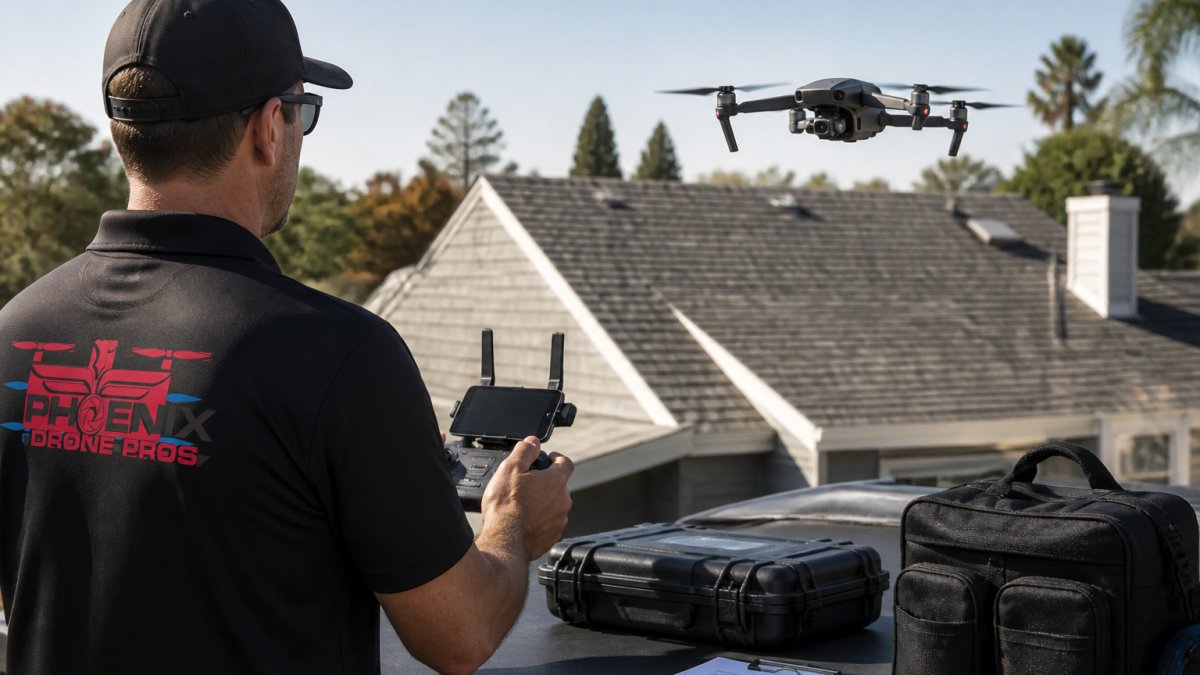
Roof inspections, structural assessments, and facility surveys all benefit from aerial perspectives. A Part 107 certificate lets you safely inspect difficult-to-reach areas without sending workers up ladders or scaffolding. Insurance companies increasingly recognize drone inspections as a safer, faster alternative to traditional methods.
For homeowners, commercial property managers, and facility teams, a certified operator represents professional competence and reduced liability. Specialized inspection services, such as drone solar panel cleaning, also require Part 107 certification to operate legally and safely.
Hiring a Part 107 Drone Pilot for Your Project
When you need drone services, hiring a Part 107-certified operator protects your business. A valid certificate means the pilot has passed the FAA knowledge test, understands regulations, and can legally operate in controlled airspace. Ask to see the certificate before booking.
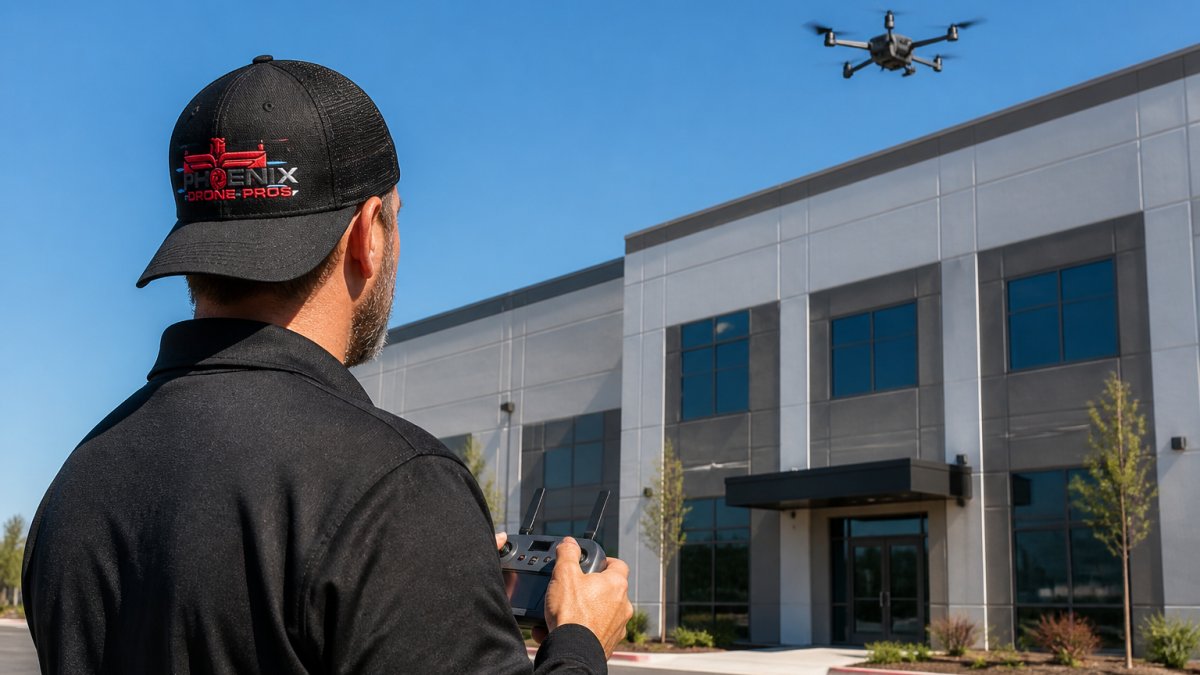
Beyond certification, verify that the operator carries liability insurance. Ask about their experience with your specific project type. A pilot experienced in construction documentation may not have the same expertise in thermal inspections. Phoenix Drone Pros maintains FAA certification and full insurance coverage, plus over 10 years of commercial experience across real estate, construction, and inspections. That combination, certification, insurance, and proven track record, is what separates professional operators from hobbyists.
How Certification Compares to Recreational Flying
Recreational flying and commercial flying operate under completely different rules. Understanding the distinction clarifies why certification matters.
Recreational pilots can fly drones on their own property without any FAA certificate. They must follow the TRUST safety course, keep the drone in visual line of sight, stay below 400 feet, and never accept payment. This is ideal for hobbyists and personal projects.
FAA drone certification enables everything recreational flying prohibits: commercial operations, compensation, greater operational flexibility, and airspace access. A certified pilot can fly in controlled airspace, conduct operations over people and structures, request special authorizations, and legally accept payment for services.
The trade-off is straightforward. Recreational flying is free and simple. Commercial flying requires study, an exam fee, and ongoing compliance with regulations. But it's the only legal path if you want to offer drone services as a business.
The Certification Process and What It Costs
The path to a Part 107 certificate involves four main steps: TRUST completion, exam study, knowledge test, and FAA registration. But the true cost of operating legally extends beyond the initial certification.
Initial Certification Costs
TRUST (Test for Recreational UAS Safety) is free and takes about 20 minutes online. You'll answer questions about safety, regulations, and responsible flying.
Study time varies. The FAA knowledge test covers airspace, regulations, weather, emergency procedures, and safety. Many pilots study for 2-4 weeks using free YouTube guides, paid online courses, or textbooks.
After passing the exam, you'll register your drone with the FAA for $5 (valid for three years).
Total initial cost: $180 ($175 exam + $5 registration). Optional training can add $100-$300.
Ongoing Operational Costs
Initial certification is only the beginning. Operating a commercial drone business requires additional expenses that many new pilots underestimate.
Liability Insurance is the largest recurring cost.
Recurrent Training and Certificate Renewal occur every 24 months.
Equipment and Maintenance are separate from certification but essential to operations. A commercial-grade drone costs $500-$3,000 or more, depending on payload and durability requirements.
Airspace Authorization and Waivers may incur fees.
Realistic First-Year Budget
For a solo operator starting a commercial drone business:
- Exam and registration: $175 (exam) + $5 (registration)
- Optional training course: $100-$300
- Liability insurance (annual): Pricing depends on coverage limits and business type.
- Equipment (drone, batteries, spares): Pricing depends on payload and durability requirements.
- Total first year: Pricing depends on individual choices and needs.
Subsequent years drop to a lower annual cost (insurance only) if you already own equipment and do not pursue waivers.
Certification Alone Does Not Guarantee Income
The certificate is a legal credential, not a business plan. Many new Part 107 pilots earn little or nothing in their first year because they lack industry connections, portfolio work, or specialized expertise.
Frequently Asked Questions
What are the main benefits of getting an FAA drone certification?
An FAA drone certification (Part 107) allows you to operate drones commercially for compensation and access controlled airspace with proper authorization. The certification demonstrates to clients and insurers that you understand FAA regulations, flight safety procedures, and operating requirements. This credibility opens doors to higher-paying work in real estate, construction, and inspections.
Is a Part 107 certificate worth it if I only want to fly recreationally?
No. Recreational flying is governed by different rules and does not require Part 107 certification. If you fly only for personal enjoyment without compensation, you can complete the free FAA TRUST safety test instead. Part 107 is designed for commercial operators who need to earn income from drone work or require operational flexibility like night flying or flights over people. Recreational rules are simpler but much more restrictive.
How much does it cost to get Part 107 certified, and how long does it take?
The mandatory FAA knowledge test costs $175. Optional training courses range from $100 to $300, though free study guides are available. Registration of your drone costs $5 and is valid for three years. Most applicants spend 2-4 weeks studying before taking the exam. After passing, you apply through the FAA's IACRA system (free) and receive your certificate within days. Total out-of-pocket cost depends on whether you purchase training.
What should I look for when hiring a Part 107 drone pilot?
Verify the pilot holds a current Part 107 Remote Pilot Certificate and ask to see their credentials. Confirm they carry liability insurance (essential for protecting your property and assets). Request examples of previous work in your industry, real estate pilots, construction pilots, and inspection specialists have different expertise. Ask about turnaround time for deliverables and whether they have experience with your specific project type, such as thermal inspections, 3D mapping, or video production. A certified pilot with insurance and relevant experience protects your project from liability and ensures professional results.