 comparison
7 Alternatives to Hiring an In-House Drone Pilot
Last Updated: October 29, 2026
Quick Summary
Alternatives to hiring an in-house drone pilot include freelance pilots, drone service providers, drone service networks, and buying equipment to train staff. Freelance pilots suit occasional, project-based flights, while service providers suit repeatable inspections across many locations. Choose based on how often you fly and how complex each mission is.
- Freelance pilots suit occasional, project-based flights and avoid payroll and equipment ownership.
- A drone service provider sells a finished outcome, such as an inspection report or site map.
- Confirm a freelancer's availability before committing, since schedules can shift deadlines.
- Thermal roof inspections can reveal conditions that are not visible to the eye.
- Ask every provider what happens when weather cancels a flight, and get the answer in writing.
Table of Contents
- Why Businesses Look Beyond an In-House Drone Pilot
- Comparing Your Options at a Glance
- Freelance Drone Pilot Arrangements
- Working With a Drone Service Provider
- Drone Inspection Services for Roofs and Structures
- What Hiring a Drone Pilot Actually Costs
- Choosing the Right Option for Your Project Volume
- Frequently Asked Questions
Why Businesses Look Beyond an In-House Drone Pilot
Hiring a full-time drone pilot is not the only way to get aerial work done. Many organizations find that drone work is occasional, seasonal, or tied to specific projects, which makes a salaried role hard to justify. Alternatives to hiring an in-house drone pilot let a business buy the results without carrying the cost of a permanent operator.
Phoenix Drone Pros works with real estate agents, construction managers, homeowners, and facility managers in Phoenix and San Antonio. A company may need aerial photography, inspection, or mapping only a few times a year, and a full-time hire may not fit that volume. For marketing a property, Phoenix Drone Pros offers Video Offering Memorandum services for polished aerial footage.
Freelance pilots are often a practical fit when drone work is occasional, seasonal, or tied to specific projects, so the right choice depends on how often the work actually happens.
Comparing Your Options at a Glance
Several staffing models can replace a dedicated pilot. Each one trades control for flexibility in a different way.
| Option | Best For | Main Trade-Off |
|---|---|---|
| Freelance drone pilot | Occasional, project-based flights | Less control over scheduling |
| Drone service provider | Inspections and mapping at scale | Dependent on the provider's availability |
| Drone service network | Sourcing pilots for individual jobs | Quality varies by pilot |
| Buy equipment and train staff | Frequent, repeatable flights | Upfront cost and training time |
Pricing for most of these options depends on project scope, quantity, dates, and delivery requirements. For current rates or a quote tailored to your project, contact Phoenix Drone Pros directly.
Freelance Drone Pilot Arrangements
A freelance pilot is the most direct substitute for an employee. You hire the pilot for a defined job, pay for that work, and avoid payroll, benefits, and equipment ownership.
Freelance arrangements work best when the flights are irregular. A builder documenting progress every few weeks, or an agent shooting listings during a busy season, may need a pilot only some of the time.
The main risk is consistency. A freelancer may be unavailable when a deadline shifts, so confirm availability before you commit to a timeline.
Working With a Drone Service Provider
A drone service provider handles the flights, the data, and often the deliverables. You buy an outcome, such as a roof inspection report or a site map, rather than managing a pilot.
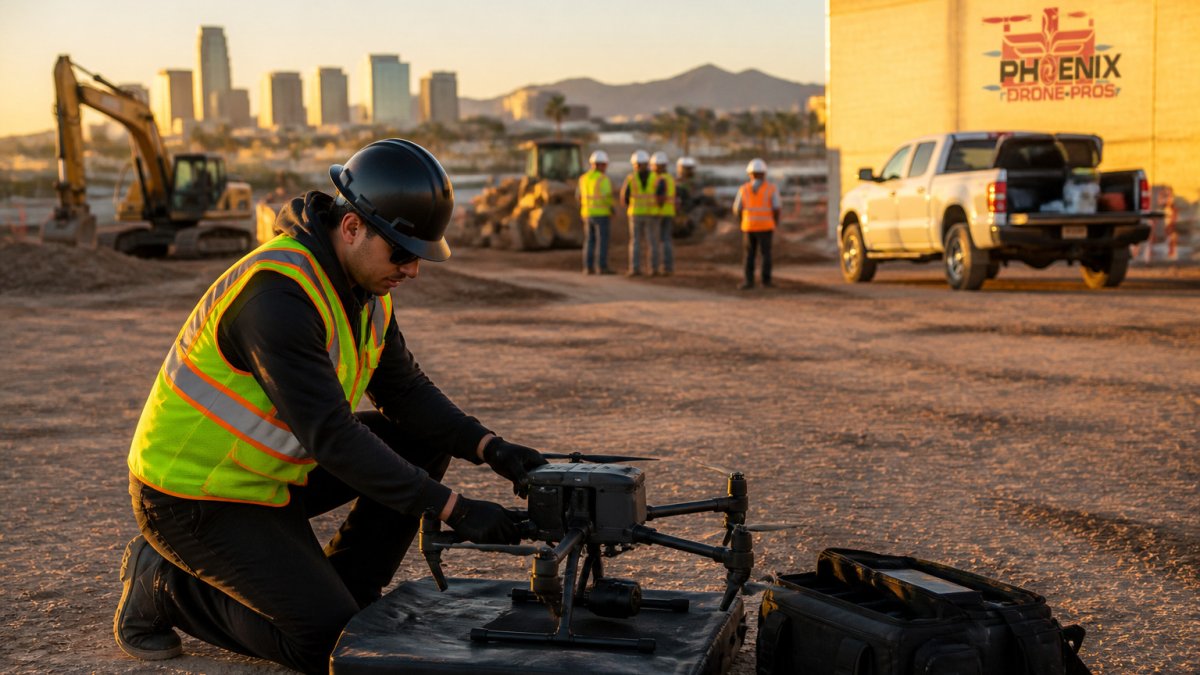
This model suits organizations that need repeatable documentation across many locations.
Before you sign with a provider, compare its service scope against what you actually need.
Ask every provider what happens when a flight is canceled or weather delays delivery, and get the answer in writing.
Drone Inspection Services for Roofs and Structures
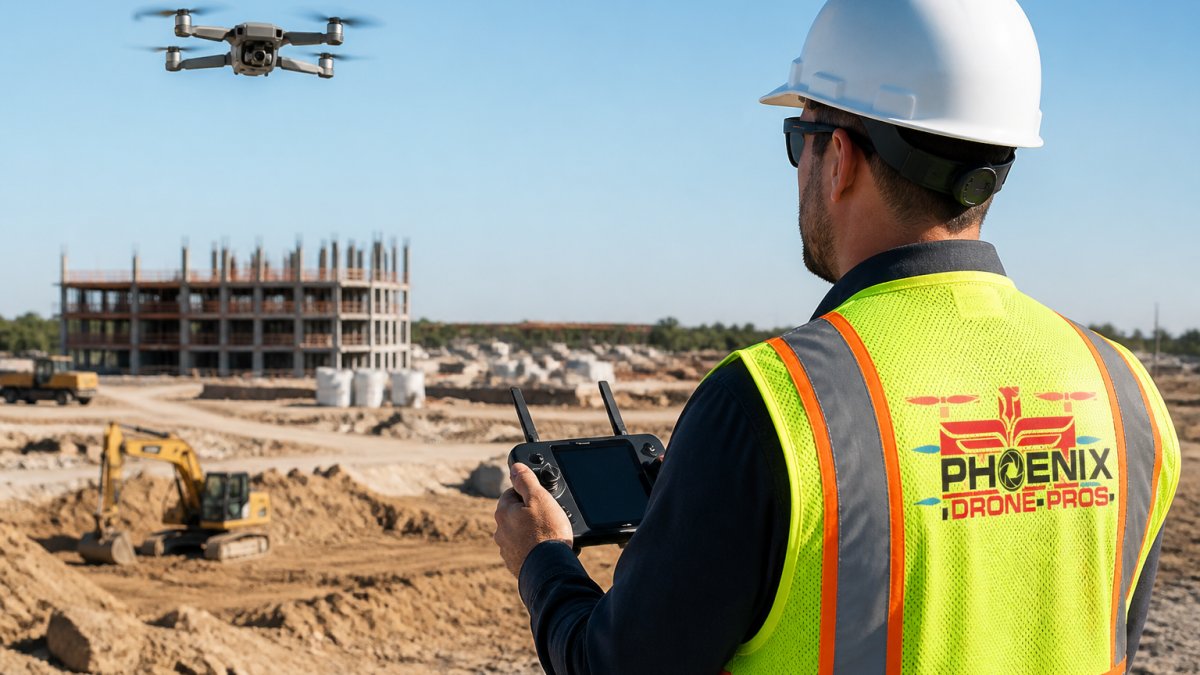
Roof and structure inspections are one of the most common reasons businesses skip hiring a pilot. A drone can reach steep or fragile surfaces without putting a crew on the roof.
Thermal inspection is especially useful for facility managers. Thermal inspection can reveal conditions on a roof that are not visible to the eye, which can help you judge whether an inspection is worth scheduling. Integrating thermal drone inspection into your routine maintenance cycle provides a deeper understanding of how these heat signatures correlate with the long-term health of your infrastructure.
If you need structural assessment as well as imagery, confirm the provider's experience with commercial roof types before booking. Phoenix Drone Pros also offers drone training if you plan to build internal capability over time.
What Hiring a Drone Pilot Actually Costs
Most guides stop at 'it depends.' A useful comparison breaks the cost of each staffing model into the same line items so you can see where the money actually goes. The categories below are the ones that move the total the most.
In-house pilot (full-time employee)
- Base salary and payroll taxes. Budget for a full-time wage plus employer payroll contributions.
- Benefits. Health coverage, paid time off, retirement contributions, and workers' compensation add a meaningful percentage on top of salary.
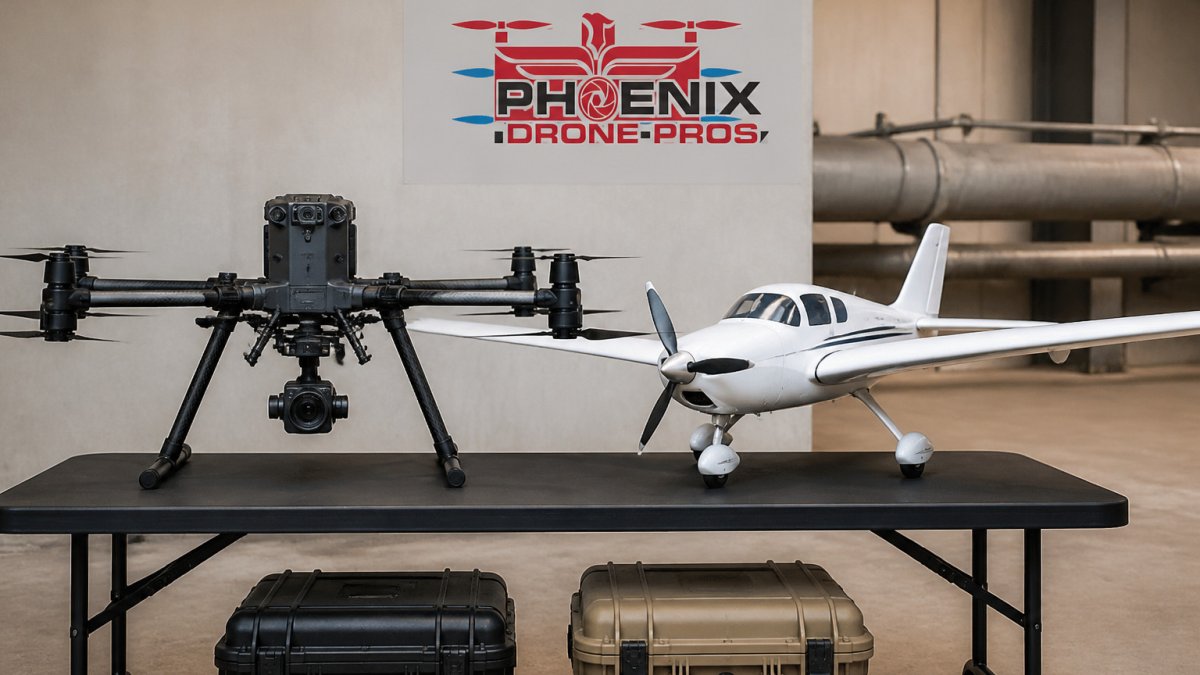
- Equipment. A commercial-grade airframe, spare batteries, a controller, a rugged case, and a payload (RGB, thermal, or LiDAR) is a capital purchase, and it depreciates and needs replacement.
- Insurance. Commercial liability and hull coverage are recurring annual costs.
- Training and certification. Certification and recurrent training are ongoing expenses.
- Software. Flight planning, processing, and data storage subscriptions are usually billed per seat or per volume.
- Utilization risk. If the pilot flies a few times a month, you are paying a full-time cost for part-time output. Idle time is the hidden line item that makes in-house staffing expensive at low volume.
Freelance pilot (per project)
- Day rate or project fee. You pay only for the work performed, and the pilot typically supplies the aircraft and basic processing.
- Travel and mobilization. Confirm whether mileage, per diem, and site access time are included or billed separately.
- Deliverable scope. Edited photos, raw files, orthomosaics, and reports may be priced differently; get the deliverable list in the quote.
- Rework and reshoots. Ask what happens if weather, airspace, or image quality forces a second visit.
Drone service provider (per deliverable)
-
Per-site or per-asset pricing. Providers usually quote by the inspection, acre, or report rather than by flight hour.
-
Data and reporting. Confirm whether the deliverable includes analysis, annotations, and a client-facing report or only raw imagery.
-
Contract terms. Minimum call-outs, cancellation windows, and turnaround commitments affect the effective price.
Buy equipment and train staff (internal capability)
- Capital outlay for aircraft, payloads, and spares.
- Training time and certification for the staff member who will fly, plus a backup so you are not grounded when that person is unavailable.
- Insurance, software, storage, and maintenance.
- The same utilization problem as a dedicated hire, but spread across existing staff who have other duties. If you go this route, drone training is available if you want a team member trained to fly.
Because rates vary with scope, site access, and deliverable requirements, request a written quote rather than relying on general estimates. Phoenix Drone Pros can provide current scheduling and pricing for your project.
Choosing the Right Option for Your Project Volume
Match the staffing model to two variables: how often you fly and how complex each mission is. The matrix below is a practical starting point, not a rigid rule.
| Flight frequency | Mission complexity | Best-fit model | Why |
|---|---|---|---|
| A few times a year, ad hoc | Simple (listing photos, basic progress shots) | Freelance pilot | Lowest commitment; pay per job |
| Seasonal or project-based | Simple to moderate | Freelance pilot or service network | Flexes with demand without payroll |
| Monthly or quarterly across multiple sites | Moderate (roof inspections, mapping, progress documentation) | Drone service provider | Consistent deliverables, documented procedures, scalable across locations |
| Weekly or more, repeatable | Moderate | Service provider or trained internal staff | Volume justifies a program; internal staff may win if utilization is high |
| Frequent, repeatable, and central to operations | High (thermal, LiDAR, volumetric analysis, regulated airspace) | In-house pilot or dedicated program | Control, turnaround, and specialized skill justify the fixed cost |
| Any frequency | High and one-off (complex structure, sensitive site) | Specialized provider | Bring in expertise without hiring for a single mission |
How to read the matrix
- Frequency drives the fixed-cost decision. Salaried pilots and owned equipment only pay off when utilization is high enough to spread the fixed cost across many missions. Occasional work almost always favors per-job pricing.
- Complexity drives the skill decision. Thermal, LiDAR, mapping-grade accuracy, and operations near controlled airspace require specific experience and equipment. Confirm the provider or pilot has done that exact mission type, not just flown a drone.
- Geography matters. Multi-site programs favor providers with pilot networks or regional coverage; a single-site project usually favors a local freelancer or provider.
- Data needs matter. If you need processed deliverables, annotations, and reports, a provider is usually simpler than managing a freelancer's raw files.
A common pattern is to start with a freelancer or provider for occasional work, then move to a recurring service agreement as volume grows, and only consider an in-house pilot once flights are frequent, repeatable, and central to operations. Phoenix Drone Pros is FAA certified and fully insured and can help you scope the right model for your volume.
Frequently Asked Questions
What are the alternatives to hiring an in-house drone pilot?
The main alternatives are hiring a freelance drone pilot for individual projects, using a drone service provider that manages pilots and equipment, booking outsourced inspection services, and training existing staff to fly company-owned equipment. Each suits a different mix of flight frequency and mission complexity. Occasional or seasonal work usually fits a freelance or provider arrangement, while routine, repeatable flights may justify building in-house capability. Compare the total cost of each model against how often you actually need aerial work.
Is it cheaper to hire a freelance drone pilot or a full-time employee?
For occasional work, a freelance pilot is usually cheaper because you pay only for the flights you book. A full-time employee carries salary, benefits, equipment, insurance, and training costs whether or not they are flying. Pricing for freelance work depends on project scope, site complexity, delivery timelines, and travel, so request quotes for your specific job. Break-even depends on how many flights you need in a year and how much of a pilot's time would otherwise sit idle.
What should I look for in a drone service provider?
Check that the provider's pilots are certified, that the provider carries liability insurance, and that it can show a record of similar projects. Ask who owns the equipment, how footage is delivered and how quickly, and what happens if a flight is cancelled for weather. A written service-level agreement should cover response times, deliverable formats, and who is responsible for airspace authorizations and safety checks.
How do I know if a freelance drone pilot is qualified?
Ask for proof of the pilot's certification and commercial liability insurance. Request examples of work that match your project type, whether that is real estate photography, construction progress mapping, or roof inspections. Confirm the pilot has experience in controlled airspace if your site is near an airport. Certification confirms a baseline, so review examples of finished deliverables before you commit.