 comparison
Aerial Cinematography Alternatives to Drone Services
Table of Contents
- Why Aerial Cinematography Alternatives Matter
- Helicopter Aerial Shots: The Professional Cinema Standard
- Cable Cam Systems for Precision Flight Control
- Cost of Professional Drone Video Production vs. Alternatives
- FAA Part 107 Certified Drone Operators and Regulatory Compliance
- Cinematic Drone Filming Techniques for High-End Productions
- Hybrid Production Workflows: Combining Multiple Aerial Methods
- Choosing the Right Aerial Method for Your Production Needs
- Frequently Asked Questions
Last Updated: September 1, 2026
Why Aerial Cinematography Alternatives Matter
Aerial cinematography seems obvious for film productions, commercials, and real estate marketing. But drone services aren't the only way to capture compelling aerial perspectives. Understanding your full range of options, and when each makes sense, separates productions that nail the shot from those that compromise on vision or budget.
The choice between aerial cinematography alternatives shapes your entire production workflow. Some methods offer unmatched flexibility and speed. Others deliver cinematic quality that drones simply can't match. Still others solve specific problems that standard drone operations can't address.
This guide explores helicopter shots, cable cam systems, and hybrid workflows compared to drone services, examining regulatory requirements, production efficiency, and visual impact. By the end, you'll know exactly which method fits your specific production needs.
Helicopter Aerial Shots: The Professional Cinema Standard
Helicopter aerial shots remain the gold standard for high-end film and television production. When you need sweeping establishing shots, complex camera movements, or the ability to follow action across vast landscapes, nothing compares to the stability, payload capacity, and precision flight control that a manned helicopter provides.
A helicopter offers unmatched advantages for cinematic work. The aircraft can hover with absolute stability, execute smooth camera movements impossible from a drone, and carry cinema-grade cameras that weigh far more than any UAV payload. The pilot and camera operator work in perfect coordination, adjusting altitude, angle, and speed in real-time based on the director's needs.
The regulatory environment for helicopter operations differs significantly from drone regulations. While FAA Part 107 certified drone operators must follow strict altitude limits and airspace restrictions, manned aircraft operate under different rules. For complex urban shoots or operations near controlled airspace, this actually simplifies logistics compared to navigating drone airspace restrictions.
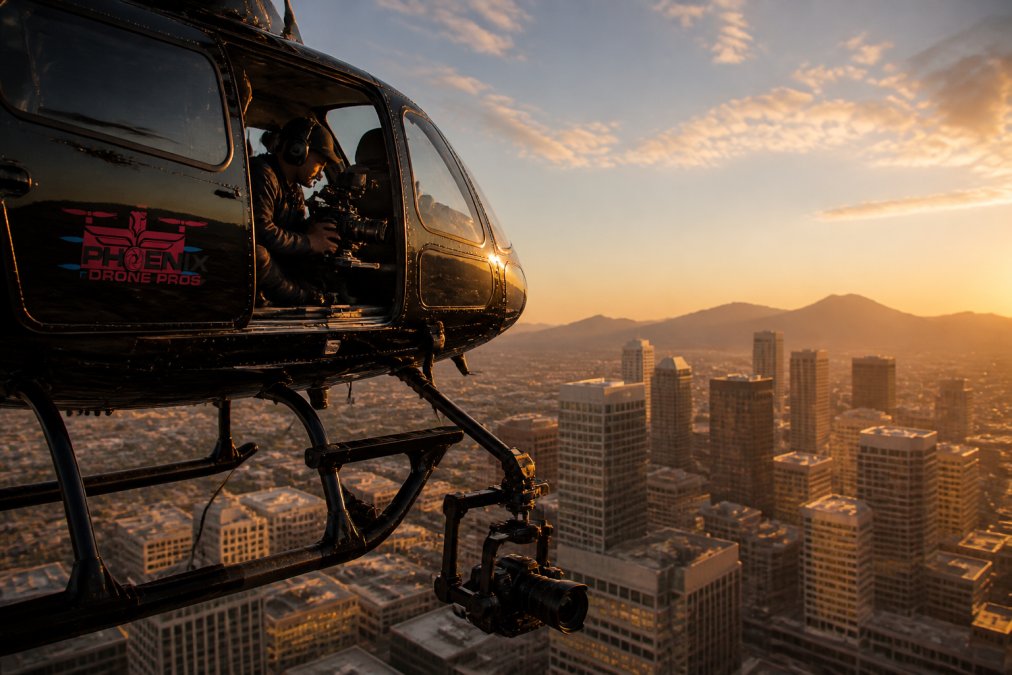
Cost is the primary trade-off. Helicopter rentals, pilot fees, and crew coordination typically exceed drone cinematography costs significantly. However, for projects requiring multiple angles, complex movements, or work across a large geographic area in a single day, the efficiency can justify the investment. You complete in one flight what might take multiple drone sessions.
Helicopter aerial shots also excel when you need to operate outside standard drone limitations. Flying at night, operating over populated areas, or working in airspace where drone waivers are difficult to obtain becomes feasible with manned aircraft.
Cable Cam Systems for Precision Flight Control
Cable cam systems represent an underutilized alternative for aerial cinematography that offers extraordinary precision and repeatability. A cable cam uses a camera suspended from a cable stretched between two anchor points, creating a controlled flight path that follows the cable with mechanical precision.
Cable cam systems deliver something drones cannot: perfectly repeatable camera movements. Once you've programmed the cable path and camera motion, you can execute the exact same shot repeatedly, frame for frame. This repeatability is invaluable for complex productions where multiple takes, different lighting conditions, or additional camera angles require consistency.
Setup requires planning and infrastructure. You need two solid anchor points, buildings, cranes, or specially constructed rigs, positioned to create the desired camera path. Installation takes several hours for a complex cable run. However, once installed, you can execute unlimited takes without repositioning equipment.
Cable cam systems excel in environments where drones face regulatory or practical limitations. Shooting over crowds at events, operating in airspace where drone waivers aren't available, or working in confined spaces where drone operations are restricted all become feasible with cable systems. The camera never leaves the predetermined cable path, eliminating safety concerns that might otherwise restrict drone operations.
Cost considerations differ from both drones and helicopters. Cable cam rental and installation represents a moderate investment, typically less than a full helicopter day but more than a standard drone shoot. If you need dozens of takes from the same vantage point with perfect consistency, cable cams become highly cost-effective.
Cost of Professional Drone Video Production vs. Alternatives
Understanding the actual cost structure of aerial cinematography alternatives requires looking beyond base service fees to total production impact. Professional drone video production from experienced operators typically involves project-based pricing that reflects equipment value, pilot certification, insurance, and post-production work.
When comparing aerial cinematography alternatives, consider total production cost, not just the aerial service component. A helicopter shoot might cost more per flight hour but could accomplish in one day what requires three days of drone work. A cable cam system requires installation time but enables unlimited takes from a single setup. A hybrid approach, using drones for some shots and alternative methods for others, often delivers the best value by matching each shot type to the most efficient capture method.
The regulatory compliance aspect of cost often gets overlooked. FAA Part 107 certification for drone operators is mandatory and involves ongoing training and documentation. When you factor in the cost of compliance, permitting, and waivers, the total cost picture becomes clearer.
Post-production costs also vary by method. Drone footage often requires stabilization and color grading. Helicopter and cable cam footage typically arrives more polished, reducing post-production time.
FAA Part 107 Certified Drone Operators and Regulatory Compliance
FAA Part 107 certification establishes the regulatory framework for commercial drone operations in the United States. Understanding these requirements is essential when evaluating aerial cinematography alternatives, because regulatory constraints often drive the decision to explore non-drone options.
An FAA Part 107 certified drone operator must comply with specific operational restrictions. Drones must remain within visual line of sight, cannot fly higher than 400 feet above ground level, and cannot operate over people or moving vehicles without specific waivers (faa.gov). For productions requiring flying over crowds, operating at night, or working in controlled airspace, these restrictions become deal-breakers.
Obtaining FAA Part 107 certification requires passing a written exam demonstrating knowledge of regulations, airspace, weather, and aircraft systems. Operators serious about professional work often pursue done flight training to develop the skills and knowledge that go beyond basic certification. The waiver process exists to address specific operational needs that fall outside standard Part 107 rules. Flying over people, operating at night, or working in certain airspace categories requires waivers from the FAA. The waiver process is time-consuming, typically requiring 90 days or more for approval (faa.gov). For productions with tight timelines, the regulatory delay alone makes alternative methods attractive.
Helicopter operations and cable cam systems operate under different regulatory frameworks. Manned aircraft coordinate with air traffic control and follow established procedures that, while different from drone regulations, are well-established and predictable. Cable cam systems have minimal regulatory overhead since the camera never leaves a predetermined path.
Cinematic Drone Filming Techniques for High-End Productions
Despite the existence of alternatives, drone technology has advanced to the point where professional cinematography is genuinely possible with the right equipment, operator skill, and production planning. Understanding what modern drones can achieve helps clarify when drone cinematography makes sense versus when alternatives are necessary.
High-end drone cinematography relies on specialized equipment that goes far beyond consumer models. Professional cinema-grade drones carry full-frame sensors with capabilities that rival traditional cinema cameras. The DJI Inspire 3 with the X9-Air Full Frame 8K camera represents the current standard for professional aerial cinematography, delivering resolution and color science that integrates seamlessly with footage from traditional cinema cameras.
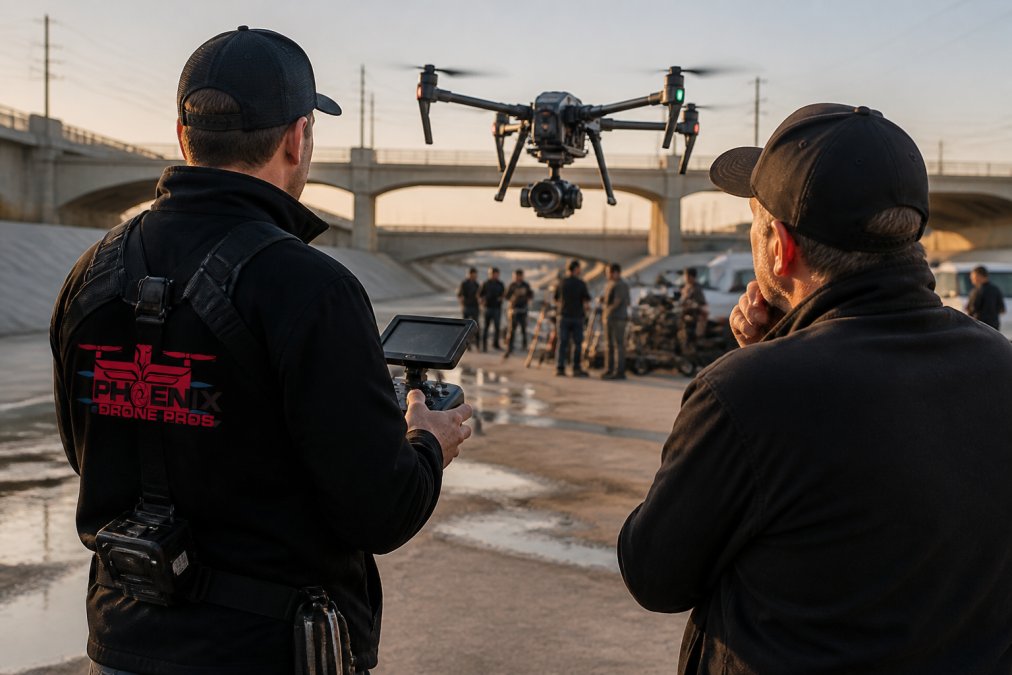
Cinematic drone filming techniques require operator skill that extends far beyond basic flight control. Smooth camera movements demand understanding of momentum, acceleration, and deceleration. Exposure management in changing light conditions requires real-time adjustment. The best drone cinematography comes from operators who think like camera operators, not pilots.
The advantages of drone cinematography for high-end production are substantial. Setup time is minimal compared to helicopter coordination or cable cam installation. You can execute multiple takes and adjust framing without repositioning equipment. The cost efficiency, when you have a skilled operator and appropriate equipment, is genuinely competitive with alternatives for many shot types.
However, cinematic drone filming has real limitations. Payload capacity constrains the size of camera systems you can deploy. Flight time is limited, typically 20-30 minutes of actual shooting per battery. Wind conditions significantly impact drone stability. These limitations don't make drone cinematography inferior; they simply define the scenarios where it excels.
Hybrid Production Workflows: Combining Multiple Aerial Methods
The most sophisticated productions don't choose a single aerial cinematography method; they combine multiple approaches in a hybrid workflow that leverages the specific strengths of each technique.
A hybrid production workflow recognizes that different shots have different requirements. Wide establishing shots that benefit from extreme altitude and stability might use helicopter cinematography. Intimate camera movements through complex environments might use drones. Precision movements requiring perfect repeatability might use cable cams. By matching each shot type to the optimal capture method, you maximize both creative quality and production efficiency.
Implementing hybrid workflows requires coordination and planning. Your production team must identify which shots benefit from which methods early in pre-production. Equipment and crew scheduling must account for multiple capture methods.
The creative advantages of hybrid workflows are significant. You're not constrained by the limitations of any single method. The final product benefits from the visual language of multiple techniques, creating a richer, more dynamic visual narrative.
Cost management in hybrid workflows requires careful analysis. You might spend more on total equipment and crew, but you accomplish the project in fewer days because each method is optimized for specific shots.
Choosing the Right Aerial Method for Your Production Needs
Selecting the right aerial cinematography method requires honest assessment of your specific production requirements, budget constraints, and timeline. No single method works for every situation.
Start by defining your actual requirements. What specific shots do you need? What visual language do you want to establish? What constraints exist, regulatory, environmental, budgetary, or timeline-based? These questions clarify which methods are even viable for your project.
| Aerial Method | Best For | Key Advantage | Primary Constraint |
|---|---|---|---|
| Drone Cinematography | Dynamic shots, tight timelines, moderate budgets | Flexibility, rapid setup, cost-effective | Limited payload, flight time, wind sensitivity |
| Helicopter Shots | Establishing shots, complex movements, premium productions | Stability, payload capacity, precision flight | High cost, coordination complexity |
| Cable Cam Systems | Repeatable movements, event coverage, confined spaces | Perfect repeatability, no airspace restrictions | Setup time, fixed camera path, installation cost |
| Hybrid Workflow | Complex productions with varied shot requirements | Optimizes each shot type for efficiency | Requires extensive planning and coordination |
Budget considerations should be realistic. If your budget is limited, drone cinematography from a skilled operator delivers genuine professional quality at accessible cost. If you have substantial budget and timeline flexibility, helicopter cinematography offers unmatched capabilities. If you need specific technical capabilities, perfect repeatability, or operation in restricted airspace, alternative methods become necessary regardless of cost.
Timeline matters enormously. Drone cinematography can be arranged quickly with minimal setup. Helicopter work requires coordination and scheduling that takes weeks. Cable cam systems need installation time but then offer rapid execution.
Regulatory environment shapes the decision significantly. If your location has airspace restrictions, drone waivers that would take months, or operational requirements that fall outside standard Part 107 rules, alternative methods become necessary.
Creative requirements should drive the decision. What visual language best serves your story? What camera movements and perspectives do you actually need? Be specific about your requirements.
Choosing aerial cinematography alternatives requires understanding what each method actually delivers and being honest about your project's real requirements. Drones offer flexibility and cost-efficiency for many applications. Helicopters provide unmatched stability and precision for premium productions. Cable cams enable perfect repeatability in specific scenarios. Hybrid workflows use multiple methods for sophisticated productions.
Phoenix Drone Pros understands how to match production needs to optimal capture techniques. Whether you need professional drone cinematography, guidance on alternative methods, or coordination across multiple aerial platforms, our FAA-certified and fully insured team brings over a decade of commercial experience to every project. Contact Phoenix Drone Pros to discuss your aerial cinematography requirements and discover which approach will deliver the visual impact your production deserves.
Frequently Asked Questions
What factors should you consider when choosing an aerial cinematography provider?
Evaluate FAA Part 107 certification status, insurance coverage, equipment specifications, portfolio examples, turnaround time for deliverables, and experience with your specific project type. Ask about their gimbal technology, sensor capabilities, and whether they hold waivers for complex operations like night filming or flight over people. Request references and verify their track record with similar productions.
How do cinematic drone filming techniques compare to helicopter aerial shots?
Cinematic drone filming techniques offer precision flight control, lower operating costs, and access to tight spaces, making them ideal for real estate and smaller productions. Helicopters provide unmatched stabilization for high-speed movement, larger camera payloads, and the cinematic look preferred by major productions. Drones excel at slow, deliberate camera movement; helicopters dominate dynamic, sweeping sequences. Your choice depends on your visual intent and budget.
What is the cost difference between professional drone video production and alternatives?
Professional drone video production typically costs less than helicopter services, which can run thousands per flight hour. Cable cam systems and crane rigs fall between the two. Pricing depends on flight duration, equipment complexity, location permits, and crew experience. Contact Phoenix Drone Pros for a custom quote based on your project scope and technical requirements.
Why should you hire FAA Part 107 certified drone operators for cinematography?
FAA Part 107 certified drone operators have demonstrated regulatory knowledge, insurance compliance, and professional standards. They understand airspace restrictions, can obtain necessary waivers for complex operations, and carry liability insurance protecting your production. Certification ensures your footage won't be compromised by legal issues and that your crew operates safely within federal guidelines.
Can you combine drones with other aerial methods in a single production?
Yes. Hybrid production workflows combine drones for precision shots, helicopters for wide establishing shots, and cable cams for controlled movement. This approach maximizes visual impact while managing costs. Many professional productions use drones for detail work, helicopters for sweeping cinematic moments, and ground-based rigs for specific sequences. Coordinating these methods requires experienced aerial cinematography teams familiar with multi-platform workflows.
This article was written using GrandRanker