 listicle
Aerial Videography for Corporate Events: 2026 Guide
Table of Contents
- Why Aerial Videography Elevates Corporate Event Coverage
- Corporate Events That Benefit Most from Drone Cinematography
- Drone Event Coverage Regulations: What Organizers Must Know
- Hiring FAA-Certified Drone Pilots: Vetting Checklist
- Best Practices for Event Drone Cinematography
- Insurance, Weather Planning, and Data Privacy at Events
- Frequently Asked Questions
Last Updated: September 13, 2026
Why Aerial Videography Elevates Corporate Event Coverage
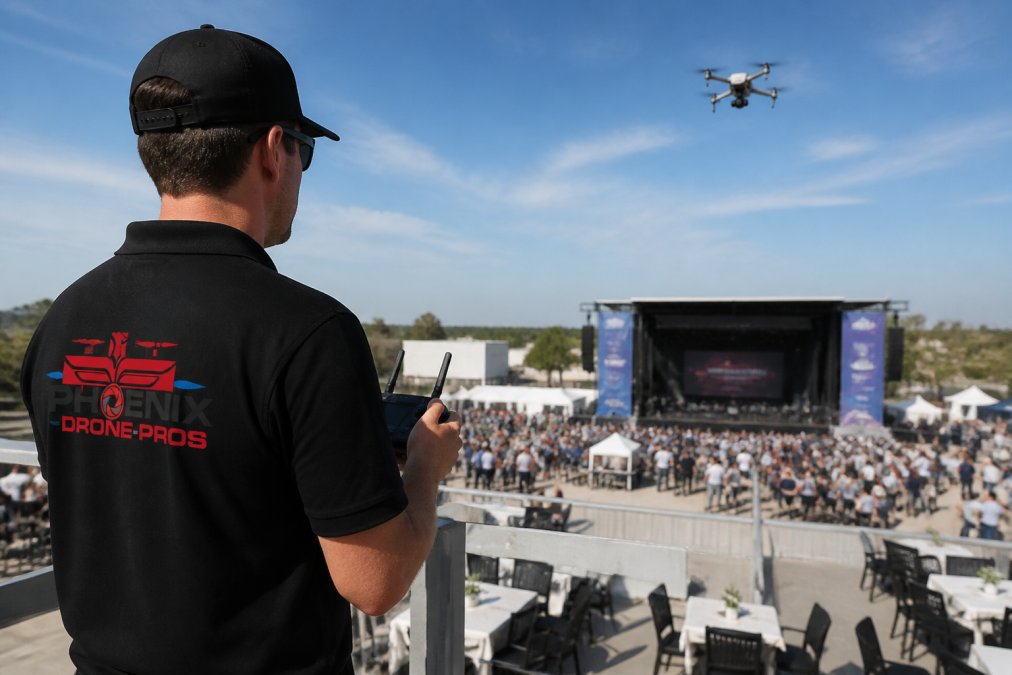
Aerial videography for corporate events captures cinematic drone footage of a venue, its crowd, and its surroundings from perspectives a ground camera cannot reach. At Phoenix Drone Pros, a single establishing shot can convey scale and atmosphere better than a full minute of handheld footage.
Event marketing is crowded, every attendee with a phone produces content. What separates a forgettable recap from a video people share is production value, and the fastest way to raise it is an aerial dimension.
Establishing Shots and Environmental Context
Establishing shots orient viewers: the venue at golden hour, parking fields filling up, the skyline behind the main stage. Aerial perspectives deliver that context in seconds, which ground-level coverage cannot match.
These shots do more than look impressive, they set expectations. When a sponsor sees their logo on a banner from 120 meters up, they understand their investment worked.
Production Value and Brand Storytelling
Cinematic aerial footage signals that your brand invests in how it presents itself. A well-planned flight path, smooth gimbal movement, and 4K visuals turn a routine gathering into brand storytelling.
Aerial coverage works best when it supports a narrative rather than being sprinkled in randomly. Decide in advance whether the drone is establishing scale, showcasing attendance, or closing the recap, then fly accordingly.
Corporate Events That Benefit Most from Drone Cinematography
Not every event justifies a drone. The ones that do share a trait: their value is partly visual and partly about scale, exactly what aerial perspectives communicate.
Conferences, Product Launches, and Brand Activations
Large conferences and product launches benefit because drone cinematography captures crowd energy a stage camera misses. An outdoor product reveal, a branded activation, or a multi-hall conference each reads better from above.
For indoor venues, coverage depends on ceiling height and venue permission, so plan early. Many organizers pair a compact drone with ground crews for a seamless ground-to-air transition.
Groundbreakings, Golf Outings, and Outdoor Functions
Groundbreakings are a natural fit: a drone can document the site, attendees, and surrounding development in one continuous sequence that becomes a baseline for later progress documentation.
Golf outings and outdoor functions also benefit, especially when the course or venue is part of the appeal. A slow reveal of the property followed by shots of teams in play yields event highlights and marketing assets from one flight.
Drone Event Coverage Regulations: What Organizers Must Know
Drone event coverage regulations in the United States are set by the Federal Aviation Administration (FAA) and are stricter than most organizers expect. Commercial operations generally require a certified remote pilot, and flights over people, near stadiums, or in controlled airspace carry additional restrictions that must be resolved before event day (faa.gov).
Budget time for approval, not just flight time. Some venues sit inside controlled airspace, and some events fall under temporary flight restrictions no waiver will override on short notice.
A common mistake is assuming a hobbyist registration covers commercial work. It does not. Ask any pilot you hire for their Part 107 certificate and confirm they understand the specific airspace around your venue. The FAA's commercial drone operations guidance is the authoritative starting point, and it's worth reading before you sign a contract.
Hiring FAA-Certified Drone Pilots: Vetting Checklist
Hiring FAA-certified drone pilots comes down to verifying credentials, insurance, and event experience before the shoot. Most organizers treat this as paperwork, but it is the highest-leverage decision you make: a pilot missing one authorization can shut down your flight window on event day.
Use this checklist and read the notes under each item so you know what you are verifying:
- Current Part 107 remote pilot certificate, verified directly. Ask for the certificate number and full legal name, then confirm both against the FAA's public airmen registry. A certificate held by someone other than the person flying is not coverage.
- Certificate of insurance (COI) with liability coverage sized to your event. Ask for the COI itself, not a verbal confirmation. Confirm it is active on your event date, names commercial drone operations (often written as unmanned aircraft systems or UAS) as a covered activity, and meets your venue's limits.
- Additional insured endorsement naming your organization. A COI alone shows the pilot has insurance; the endorsement gives your organization a direct path to the policy if something goes wrong. Many venues will not issue a filming permit without it, so request it early.
- Documented experience at events of similar size and setting. Ask for two or three past events comparable in crowd size, venue type, and whether the flight was over people. Indoor, stadium, and dense-crowd work each carry different constraints.
- A written flight plan covering launch points, flight paths, and backups. The plan should identify launch and recovery zones, primary and alternate flight paths, and what happens if the primary launch point becomes unusable.
- Confirmation of airspace authorization for the venue. Controlled airspace around airports requires authorization before flight. Many pilots use the FAA's Low Altitude Authorization and Notification Capability (LAANC) system for near-real-time approval; other locations require a slower manual request. Ask which applies and when authorization was granted.
- Waiver documentation if the flight profile requires one. Flights over people, at night, or beyond visual line of sight generally require specific FAA authorization beyond a standard Part 107 certificate (faa.gov). Confirm the pilot holds the relevant, current waiver.
- Clear deliverable timeline in the contract, not verbal promises. Specify format, resolution, delivery date, and how many rounds of revision are included.
- Backup pilot and backup aircraft named in the agreement. A single pilot with a single aircraft is a single point of failure.
Organizers often collect these documents but never read them. The two most frequently missing, the additional insured endorsement and the airspace authorization, are the ones most likely to stop your flight.
Ensuring your pilot is fully certified provides the necessary technical oversight to integrate aerial footage seamlessly into the broader logistics managed by hiring a corporate event planner.Phoenix Drone Pros meets these requirements as a matter of course: our team is FAA-certified, fully insured, and brings more than a decade of commercial drone experience to every event. We also keep local pilots available for in-person venue walkthroughs and weather calls. For organizers who want to bring coverage in-house, our Done flight training walks teams through the skills and procedures behind safe commercial flights.
Best Practices for Event Drone Cinematography
Best practices for event drone cinematography start with flight planning. The best footage comes from pilots who walked the venue, mapped the sun's position, and identified launch and landing zones beforehand.
From there, a few habits separate professional results from amateur footage:
- Fly deliberate, slow movements rather than fast passes
- Capture a mix of wide establishing shots and tighter detail shots
- Coordinate with ground crews so aerial and ground footage cut together
- Shoot more coverage than you think you need, especially transitions
- Build in a weather contingency window rather than a single flight slot
Insurance, Weather Planning, and Data Privacy at Events
Insurance, weather planning, and data privacy are the three areas organizers most often overlook, and each can derail coverage on its own. This section treats them as the operational problems they are.
Insurance and Liability Coverage
Drone coverage at a corporate event touches two separate insurance questions: what the pilot carries and what your organization needs to be protected. Both matter, and they are not the same.
On the pilot side, ask for a certificate of insurance listing commercial unmanned aircraft operations as a covered activity. General liability policies for other trades often exclude aviation, so a COI that looks adequate may not respond to a drone incident at all.
On your side, request an additional insured endorsement naming your organization and, where required, the venue itself. This gives you a direct claim path to the pilot's policy and is the document most often missing. Request it at contract stage, endorsements can take days to issue.
Confirm the policy is active on your event date, not just at signing. Policies lapse, and a certificate dated three months ago says nothing about coverage on the day.
Weather and Environmental Contingency Planning
Wind and precipitation are the two conditions most likely to ground a flight. Rather than leaving the decision to event-day judgment, agree on thresholds in advance and write them into the contract.
A workable structure is to define three states:
- Green: conditions within the pilot's normal operating limits. Fly as planned.
- Yellow: conditions approaching the limit. Fly a reduced profile, prioritize the shots that matter most, and shorten the flight window.
- Red: conditions exceed the limit. Ground the aircraft and execute the backup plan.
The backup plan should specify a rescheduled flight window, not just a cancellation. Many events run across multiple days or have a setup day, and a pilot who returns during setup often salvages the establishing shots even if the main day is lost.
Also plan around light. Aerial footage depends on sun angle, and the best establishing shots happen in the first and last hours of daylight. Midday events yield flatter footage unless the pilot plans specific compensating angles.
Data Privacy and Crowd Consent
Drone footage captures attendees who did not necessarily agree to be filmed from the air, a real exposure for organizers that drone coverage guides rarely address.
A practical approach has three parts: put filming language into your event terms and registration flow so attendees have notice; coordinate with venue management on rules about filming crowds or identifiable individuals; and brief the pilot on areas to avoid, such as entrances, medical stations, or private zones.
If your event includes minors, international attendees, or regulated industries, review the consent language with counsel. Getting this wrong can become a complaint that outlasts the event.
Post-Production Workflow
Raw aerial footage is not a deliverable. It becomes one after color grading, stabilization, and editing, and after it is cut with ground footage so the final piece reads as a single production rather than two shoots.
Ask how the pilot or production team handles three things: matching aerial color to ground color so cuts do not jar, stabilizing footage used in slow motion or transitions, and delivering the formats your channels need. A single 4K master is rarely enough; most teams need vertical crops for social, a horizontal cut for the website, and a short version for paid promotion.
Confirm the delivery timeline in writing, including when the first cut arrives and how many revision rounds are included.
| Risk Area | What to Confirm | Why It Matters |
|---|---|---|
| Insurance | COI listing UAS operations, plus additional insured endorsement naming you and the venue | Protects you if an incident occurs and satisfies venue permit requirements |
| Weather | Written green/yellow/red thresholds and a rescheduled flight window | Prevents a wasted shoot day and preserves the shots that matter most |
| Privacy | Consent language in event terms, venue coordination, and no-fly zones for sensitive areas | Reduces complaint and takedown risk |
| Post-production | Delivery formats, revision rounds, and timeline in contract | Ensures footage is usable across marketing channels |
Frequently Asked Questions
What are the FAA regulations for flying drones at corporate events?
Commercial drone operations fall under FAA Part 107, which requires a certified remote pilot, a pre-flight safety check, and compliance with airspace rules. Flying over people generally requires a waiver or a drone that meets specific weight and design criteria. Many venues also sit in controlled airspace, so pilots may need LAANC authorization before takeoff. A professional aerial videography team handles these approvals and builds them into the event timeline.
Do I need a permit for drone videography at a private event?
A private venue does not exempt you from FAA rules. The pilot still needs Part 107 certification, and flights in controlled airspace require authorization through the FAA's LAANC system. Some venues, parks, and municipalities add their own permit requirements on top of federal rules. Ask your drone provider to confirm airspace status and any property-specific approvals before the event date, not on the morning of the shoot.
How far in advance should I book aerial videography for an event?
Book at least four to six weeks ahead for standard corporate functions. Large conferences, multi-day productions, and events in controlled airspace need more lead time because airspace authorizations and venue approvals take time to process. Booking early also lets your pilot do a site visit, plan flight paths around the venue layout, and coordinate with your ground crew so aerial and ground footage sync up on the day.
How does aerial videography improve corporate event marketing?
Aerial perspectives give you establishing shots that show scale, location, and crowd energy in a way ground cameras cannot. That footage becomes event highlights, social media content, and promotional video assets you can reuse for months. A single shoot can feed a recap reel, short clips for social channels, and stills for press coverage. Fewer camera setups, more marketing assets from the same budget.
What safety measures are required for drone operators at events?
A qualified pilot files a flight plan, checks weather and airspace, and sets a designated takeoff zone away from crowds. Most professional operators carry liability insurance and use drones with obstacle sensing for tight venues. The pilot also coordinates with event logistics staff so flight paths avoid rigging, cables, and guest areas. Ask any provider to walk you through their safety protocols before you sign a contract.