 listicle
Best Drones for Residential Roof Inspections in 2026
Table of Contents
- Top-Rated Roof Inspection Drones for Residential Work
- Key Features to Look for in Inspection Drones
- FAA Part 107 Requirements for Roof Inspections
- Drone Roof Inspection Software and Data Processing
- Cost of Drone Roof Inspection Services
- Entry-Level vs. Enterprise-Grade Hardware
- Conclusion: Choosing the Right Drone for Your Roof Inspections
- Frequently Asked Questions
Last Updated: October 2, 2026
Top-Rated Roof Inspection Drones for Residential Work
Finding the best drones for residential roof inspections in 2026 means balancing camera quality, obstacle avoidance, and regulatory ease.
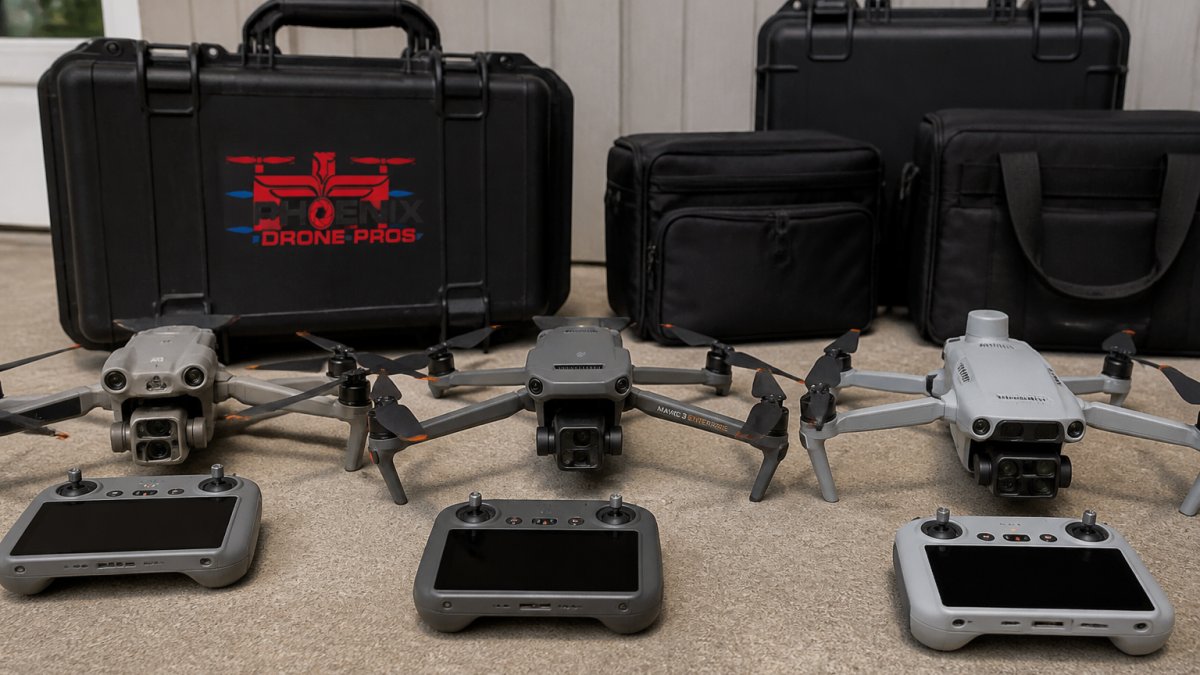
Below, we break down what each drone does well, where it falls short, and which residential roofers should buy it.
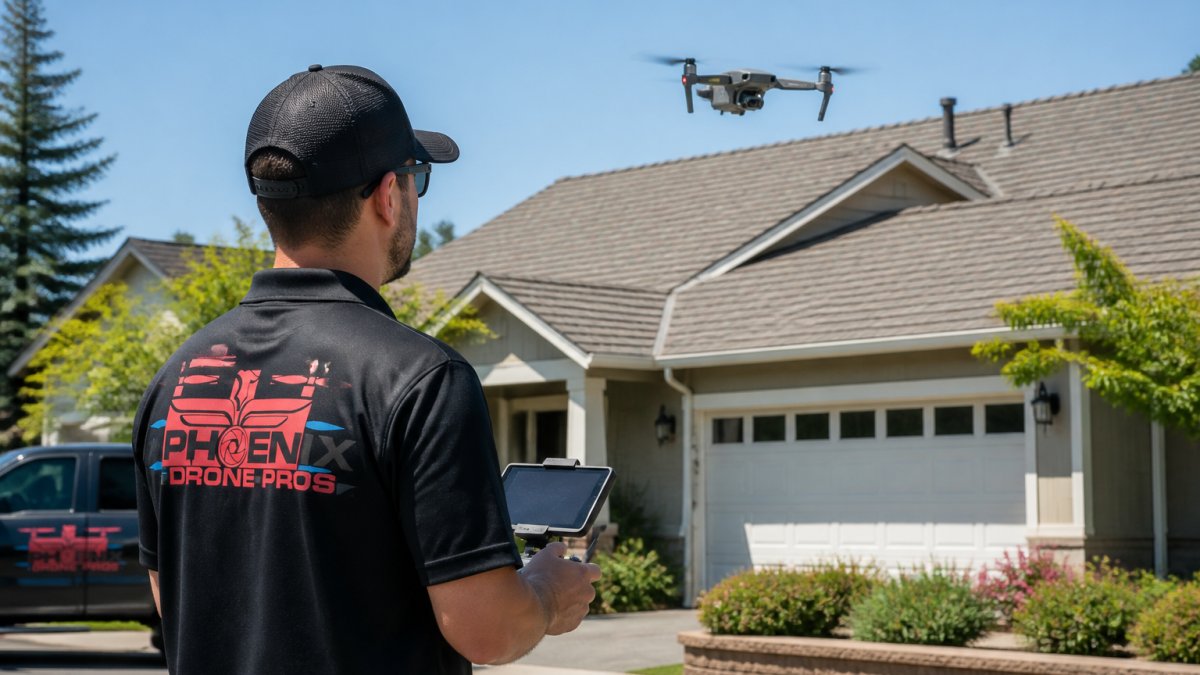
DJI Mini 4 Pro: Best for Entry-Level Residential Inspectors
The Mini 4 Pro is the best starting point for solo roofers and small inspection firms.
Omnidirectional obstacle sensing makes maneuvering around chimneys and dormers far less stressful. The trade-off: limited wind resistance versus enterprise models, and no thermal sensor. For straightforward visual assessments, nothing at this price point comes close.
DJI Mavic 3 Enterprise: Best for High-Resolution Mapping
When a job calls for survey-grade accuracy, the Mavic 3 Enterprise is the tool.
RTK module support pushes positioning to centimeter-level accuracy, which matters when geotagging defects for a repair report. The catch is a steeper learning curve and higher price. If you mostly shoot single-family homes, you may not need this much drone.
Autel EVO II Dual 640T V3: Best for Thermal Imaging Without Geofencing
The EVO II Dual 640T V3 pairs a 640x512 thermal sensor with an 8K visual camera, making it the strongest pick for moisture detection and insulation problems invisible to the naked eye.
That freedom cuts both ways: you're responsible for airspace compliance yourself, and the heavier airframe demands careful battery management. For inspectors who regularly diagnose thermal issues, the trade is worth it.
| Drone | Best For | Key Strength | Main Limitation |
|---|---|---|---|
| DJI Mini 4 Pro | Entry-level inspectors | Portable, affordable, 4K HDR | No thermal, limited wind resistance |
| DJI Mavic 3 Enterprise | High-resolution mapping | RTK accuracy, 56x zoom | Higher cost, steep learning curve |
| Autel EVO II Dual 640T V3 | Thermal diagnostics | 640x512 thermal, no geofencing | Heavier, needs thermal software |
Key Features to Look for in Inspection Drones
The features that matter most are obstacle avoidance, wind resistance, camera resolution, and thermal capability. Skip the marketing specs and focus on how each affects a real inspection.
Obstacle Avoidance and Wind Resistance
Obstacle avoidance sensors keep a drone off the roof surface when maneuvering near vents, satellite dishes, and steep pitches.
Wind resistance decides whether you can fly at all on a gusty day. Consumer drones handle moderate breezes, but enterprise models hold position better at altitude. A drone that drifts produces blurry imagery and risks a crash.
Camera Resolution and Thermal Sensors
A 20MP camera is the practical floor for reading shingle condition and hail damage assessment from a safe distance.
Thermal sensors add a second layer: they reveal moisture detection issues, missing insulation, and heat loss that visual cameras miss. If your inspections include moisture problems, a dual thermal-and-visual payload pays for itself.
FAA Part 107 Requirements for Roof Inspections
Any commercial roof inspection flight in the U.S. requires a Remote Pilot Certificate under FAA Part 107. That means passing the aeronautical knowledge exam and keeping your certificate current. The FAA Part 107 small unmanned aircraft rule sets the operating limits you'll fly under, including a 400-foot altitude ceiling and visual line of sight requirements.
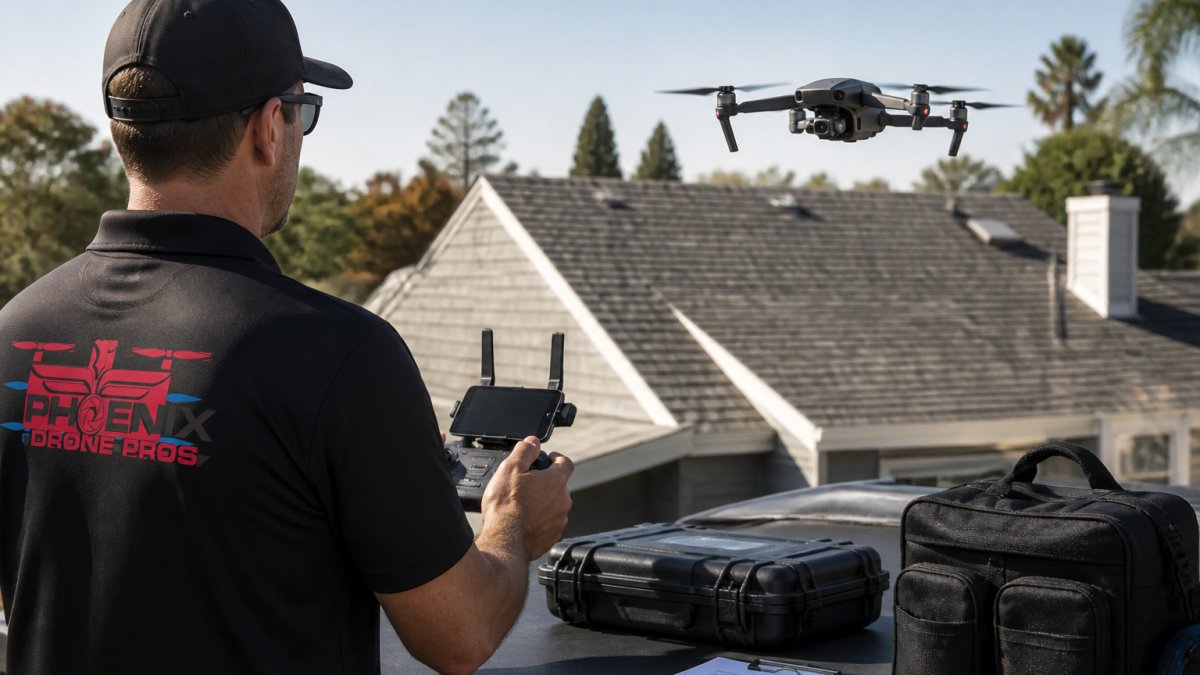
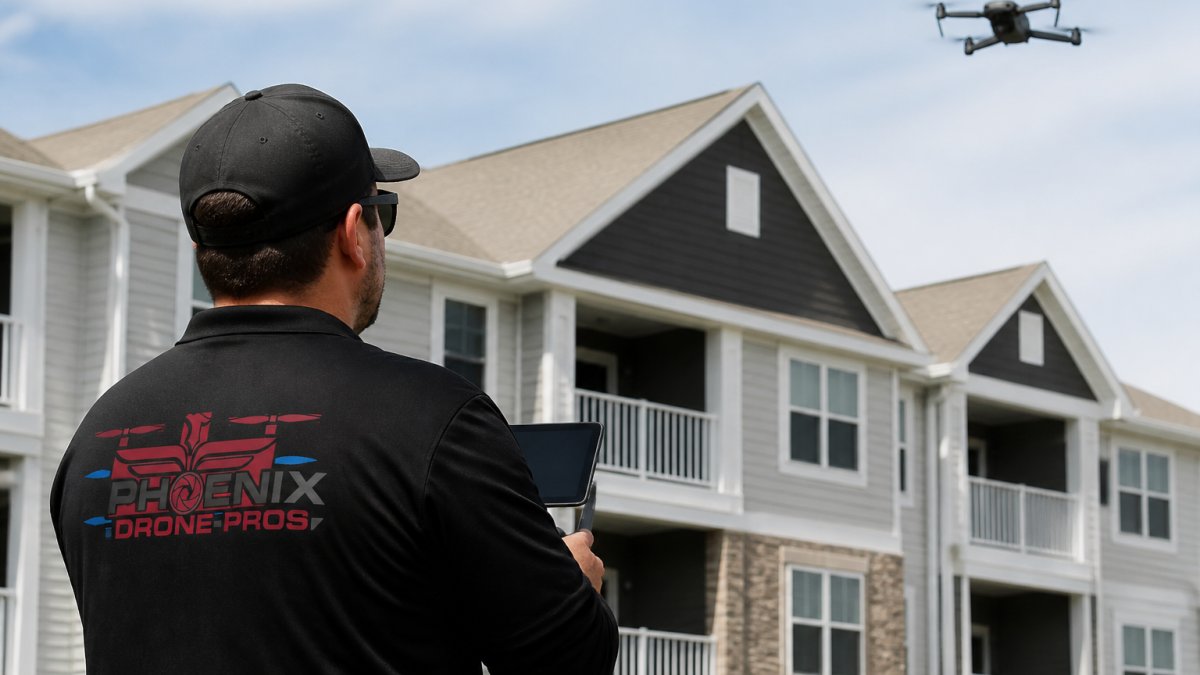
For residential work, the practical constraints matter more than the paperwork. You must maintain visual line of sight at all times, which rules out flying behind a roof ridge without a visual observer.
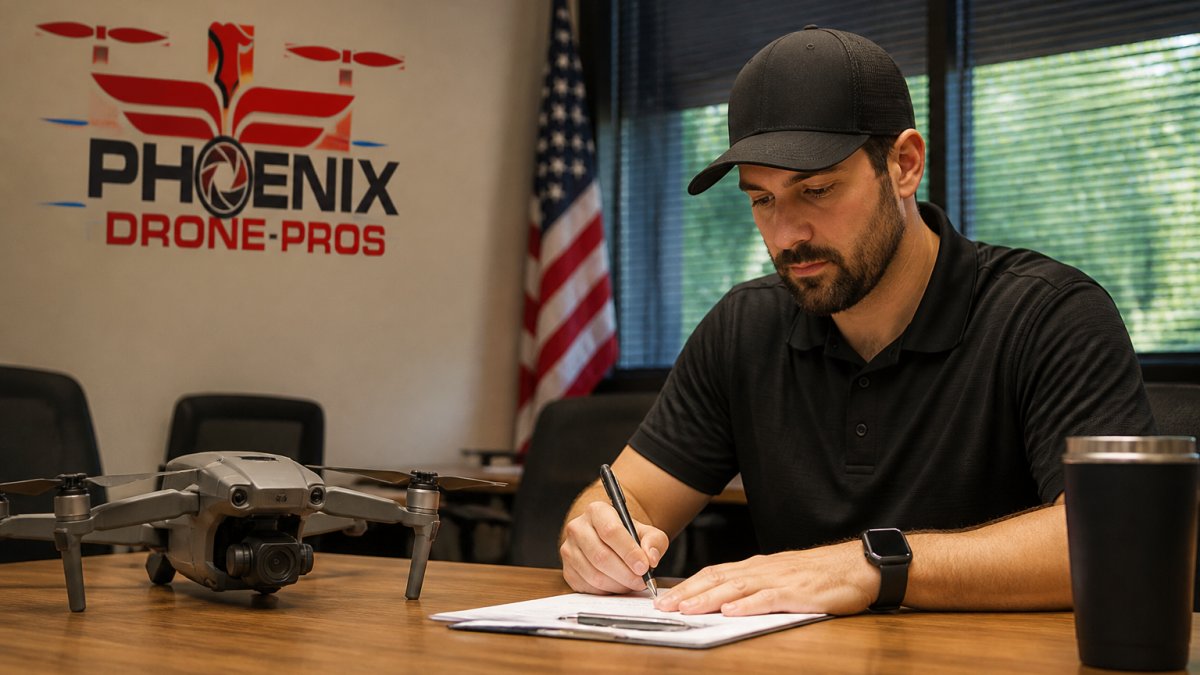
Working with a certified operator removes this burden entirely. Phoenix Drone Pros holds FAA certification and full insurance, so homeowners and property managers get compliant inspections without touching the regulatory side.
Drone Roof Inspection Software and Data Processing
Software turns raw footage into something a homeowner, adjuster, or property manager can actually use. Most guides skip this part, yet the post-flight workflow determines your margin.
The Three Processing Tiers
Most residential inspectors end up in one of three workflows, depending on job volume and report detail.
Tier 2, Cloud photogrammetry platforms. You upload overlapping images and the platform stitches them into an orthomosaic (a flat, measurable map of the roof) and a 3D model.
Tier 3, Desktop photogrammetry. Pix4Dmapper and Agisoft Metashape run on a workstation and give you the most control over point cloud density, mesh quality, and coordinate systems.
What Actually Eats Your Time
For solo inspectors, capture discipline matters more than software choice. Three habits cut processing time:
- Shoot with 75-80% image overlap. Photogrammetry software needs redundant coverage to stitch cleanly. Underlapping forces manual tie points, which is where hours disappear.
- Fly a consistent grid, not a freehand orbit. A lawnmower pattern at a fixed altitude produces predictable geometry. Freehand orbits produce gaps the software has to guess at.
- Capture at the same time of day across repeat visits. Consistent sun angle makes before-and-after comparisons meaningful and reduces color correction work.
If your drone supports it, geotagging every image with GPS coordinates (and RTK corrections on enterprise hardware) means the software spends less time solving camera positions and more time building the model.
Matching Deliverables to the Client
Not every client needs a 3D model. Matching the deliverable to the audience saves processing time and makes the report more useful:
| Client | Typical Deliverable | Why |
|---|---|---|
| Homeowner | Annotated photo PDF | Easy to read, no software needed to open |
| Insurance adjuster | Orthomosaic with measurements | Square footage and slope support the claim |
| Roofing contractor | 3D model plus measurement report | Bid accuracy and material takeoff |
| Property manager | Summary report with flagged defects | Portfolio-level triage across multiple buildings |
The Unique Angle Most Guides Miss
The hardware listicle stops at the drone. The workflow that wins repeat business is: capture with overlap discipline, process in a platform that produces measurable outputs, and deliver a report formatted for the specific reader. A $759 drone flown with good overlap and processed in the cloud will outperform a $5,000 enterprise rig flown freehand and delivered as a zip file of JPEGs.
Cost of Drone Roof Inspection Services
Cost breaks into two questions: what you pay a provider per inspection, and what it costs to run your own drone program.
What Providers Charge Per Inspection
Residential drone roof inspections are typically quoted per property, not per flight. Pricing varies with roof size, pitch, complexity (dormers, chimneys, multiple levels), travel distance, and whether thermal imaging or 3D mapping is included.
Get a written scope before you book. A quote that does not specify image count, thermal coverage, or report format is not comparable to one that does.
What It Costs to Run Your Own Program
Buying the drone is the smallest line item. The real cost of ownership includes:
| Cost Category | Typical Range | Notes |
|---|---|---|
| Drone hardware | $759 (Mini 4 Pro) to $1,469 (Mavic 3 Classic) | Enterprise models like the Mavic 3 Enterprise and Matrice 350 RTK are quote-only |
| Extra batteries | Varies by model | Budget for at least two spares; flight time per battery is 30-45 minutes on most models |
| Part 107 training and exam | Varies by provider | Required for any commercial flight |
| Liability insurance | Annual premium, varies by coverage and flight hours | See the insurance section below |
| Software subscription | Monthly or annual | Cloud photogrammetry platforms bill per user or per processing volume |
| Repairs and refresh | Contingency | Props, gimbals, and motors are the common failure points |
For a solo inspector flying a handful of jobs per week, the Mini 4 Pro or Mavic 3 Classic keeps hardware cost low, and a cloud platform subscription covers processing without a workstation investment. For firms producing survey-grade measurements or thermal diagnostics at scale, the Mavic 3 Enterprise and Matrice 350 RTK justify their cost through accuracy and sensor options, but only if job volume supports the overhead.
Insurance and Liability: The Line Item Nobody Lists
This is the cost most guides omit, and it can end a business. A crash can damage shingles, gutters, windows, vehicles, or a person. Standard homeowner policies do not cover commercial drone operations, and a personal drone policy typically excludes commercial use.
What to look for in coverage:
- General liability covering bodily injury and property damage during commercial flight.
- Hull coverage if you want the aircraft itself replaced after a crash.
- Certificate of insurance you can hand to a homeowner or property manager before the flight, many will ask.
Inspectors often underinsure early to save on premiums and discover the gap only after an incident.
Hiring vs. Owning: The Real Comparison
Hiring a certified provider often costs less than owning once you total hardware, spares, training, insurance, software, and repair contingency. Ownership makes sense when inspection volume amortizes those fixed costs, or when turnaround speed and client relationships justify the investment. For occasional inspections or one-off insurance documentation, hiring wins.
Entry-Level vs. Enterprise-Grade Hardware
Entry-level drones win on portability and price; enterprise-grade hardware wins on accuracy, sensor options, and durability. The right pick comes down to inspection volume and the reports you need.
| Factor | Entry-Level | Enterprise-Grade |
|---|---|---|
| Typical use | Single-family roofs | Multi-building, mapping |
| Camera | 4K visual only | High-res visual plus thermal |
| Positioning | GPS | RTK, centimeter accuracy |
| Portability | Folds into a small case | Larger, needs transport plan |
| Best for | Solo inspectors, low volume | Teams, survey-grade work |
For a roofer inspecting a handful of homes a week, the Mini 4 Pro or Mavic 3 Classic is plenty. For firms producing survey-grade measurements or thermal diagnostics at scale, the Mavic 3 Enterprise and Matrice 350 RTK justify their cost.
Conclusion: Choosing the Right Drone for Your Roof Inspections
The best drones for residential roof inspections in 2026 come down to your workflow. For single-family homes and a portable, affordable aircraft, the DJI Mini 4 Pro is the clear pick.
Buying and flying your own drone means training, insurance, and software on top of the hardware. Phoenix Drone Pros handles all of it with FAA-certified pilots, full insurance, and over a decade of commercial drone experience.
Frequently Asked Questions
Can I use a drone to inspect my own roof?
Yes, you can use a drone to inspect your own roof for personal, non-commercial purposes without an FAA Part 107 certificate, provided you follow recreational flying rules. However, for accurate damage assessment, thermal imaging, or insurance claims, hiring a certified professional is safer and more reliable. Professional roof inspection drones capture high-resolution imagery and thermal data that hobbyist drones often miss.
Do I need an FAA Part 107 license to fly a drone for roof inspections?
Yes, if you are conducting roof inspections as part of a business or for compensation, you need an FAA Part 107 Remote Pilot Certificate. This covers commercial roof inspection services, real estate photography, and insurance assessments. The certificate requires passing an aeronautical knowledge test. Recreational users inspecting their own home do not need Part 107, but must follow safety guidelines.
What is the best drone software for roof inspections?
Drone roof inspection software varies by need. For basic visual documentation, DJI's native apps work well. For advanced mapping and 3D modeling, tools like DroneDeploy, Pix4D, and Propeller offer orthomosaic and measurement capabilities. Thermal analysis software such as FLIR Tools is essential for moisture detection. Cloud-based platforms like Roofr and BetterView streamline report generation and client delivery.
How much does a drone roof inspection cost?
The cost of drone roof inspection services depends on roof size, complexity, and required deliverables. Basic visual inspections may start lower, while thermal imaging, 3D mapping, and detailed reporting increase the price. For accurate pricing tailored to your property, contact Phoenix Drone Pros directly for a quote. DIY drone inspections avoid service fees but require your own equipment and FAA compliance.
Are thermal cameras required for residential roof inspections?
Thermal cameras are not required for every residential roof inspection, but they are highly valuable for detecting moisture intrusion, insulation gaps, and hidden damage that visual cameras miss. Drones like the DJI M30T and Autel EVO II Dual 640T V3 include thermal sensors. For standard shingle condition and hail damage assessment, a high-resolution visual camera is often sufficient.
Managing steep or fragile roofs yourself means balancing hardware costs, FAA compliance, and insurance risk. Phoenix Drone Pros removes that burden with FAA-certified pilots, full liability coverage, and more than ten years of commercial drone experience across thermal inspections, 3D mapping, and detailed property documentation. Get started with Phoenix Drone Pros and get accurate, insured roof inspections without owning a single drone.