 how-to
Commercial Drone Services: A Complete Guide
Table of Contents
- What Commercial Drone Services Cover
- FAA Part 107 Certified Drone Pilot Requirements
- Commercial Drone Roof Inspection Cost and Value
- Drone Liability Insurance for Contractors and Operators
- How to Choose a Professional Drone Service Provider
- Common Mistakes When Hiring Drone Operators
- Conclusion
Last Updated: August 21, 2026
What Commercial Drone Services Cover
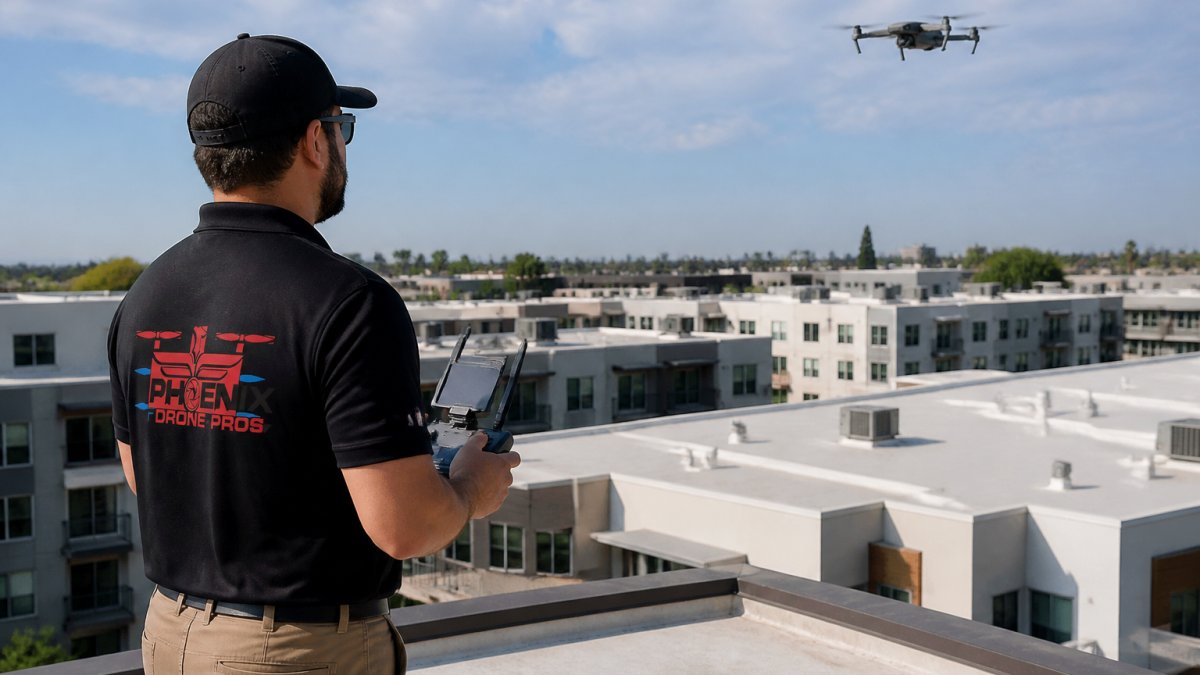
Commercial drone services deliver specialized aerial perspectives that transform decision-making across industries. At Phoenix Drone Pros, we've seen how aerial imagery enhances real estate marketing, construction management, and facility inspections. The scope extends far beyond simple photography to encompass specialized applications that deliver measurable business value.
Aerial Photography and Videography
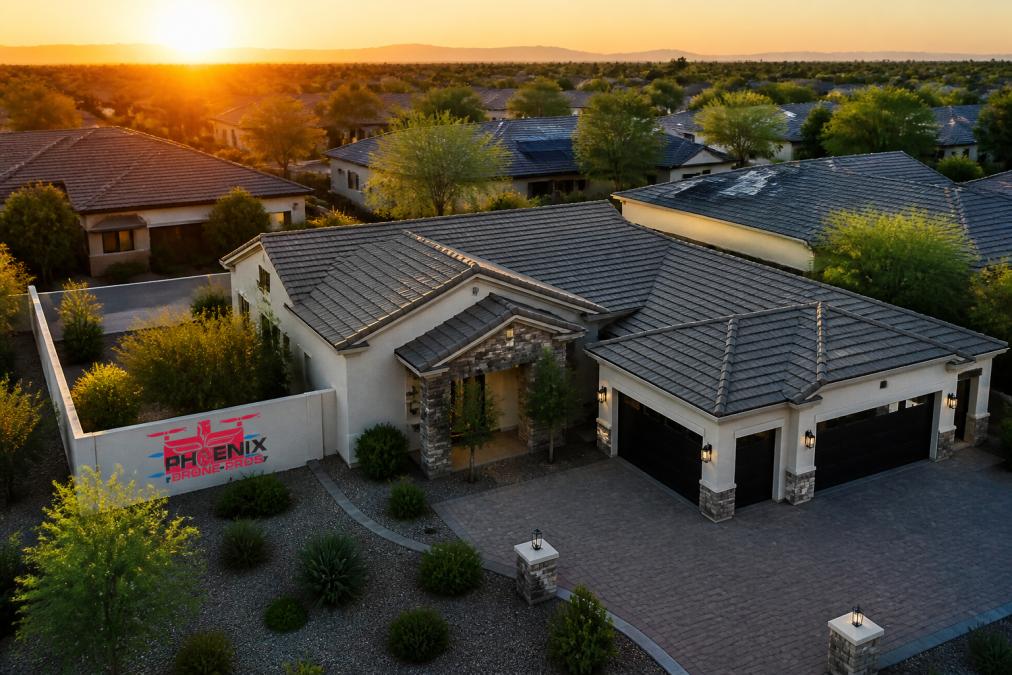
Aerial photography captures property and landscapes from perspectives impossible to achieve from the ground. High-resolution drone cameras deliver stunning visual documentation that enhances real estate listings, marketing materials, and promotional content. Professional aerial videography adds motion and storytelling, creating cinematic content that engages viewers and communicates property features more effectively than static photos.
For real estate agents, aerial photography showcases property boundaries, landscaping, lot size, and surrounding context, details that drive buyer interest and justify premium pricing. The 4K video capability of modern commercial drones captures roof condition, exterior maintenance, and neighborhood characteristics that influence purchase decisions. Event organizers and film production companies rely on drone cinematography for establishing shots and dynamic movement that would require expensive equipment or helicopter rentals in previous decades.
Construction Progress Monitoring and Mapping
Construction sites benefit from regular aerial documentation. Project managers use drone imagery to track progress week-to-week, compare planned layouts against actual construction, and identify potential delays before they become costly problems. This visual documentation creates a clear record for stakeholders, insurance purposes, and project accountability.
Mapping services using drone technology generate orthomosaic imagery, perfectly aligned aerial photos stitched together to create accurate, scale-correct representations of large properties or construction sites. This data feeds directly into project management workflows, allowing teams to measure distances, calculate areas, and plan future work with precision. 3D modeling derived from drone imagery provides even deeper insight, allowing project managers to visualize completed work, plan logistics, and coordinate between trades.
Industrial and Roof Inspections
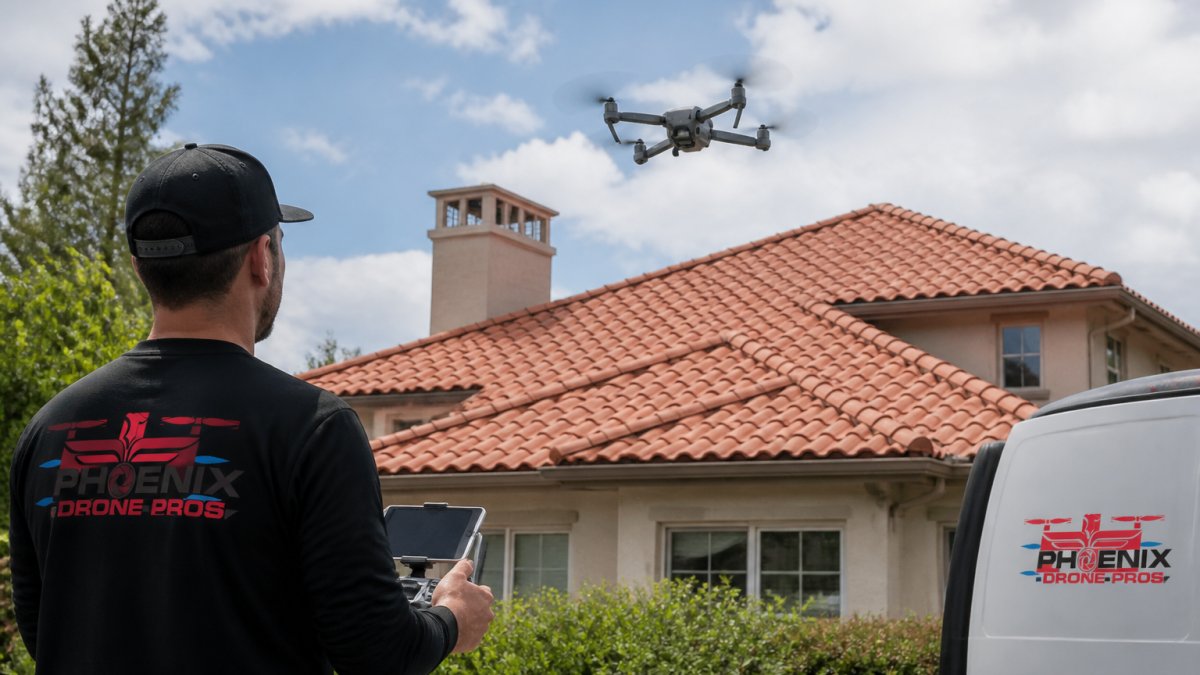
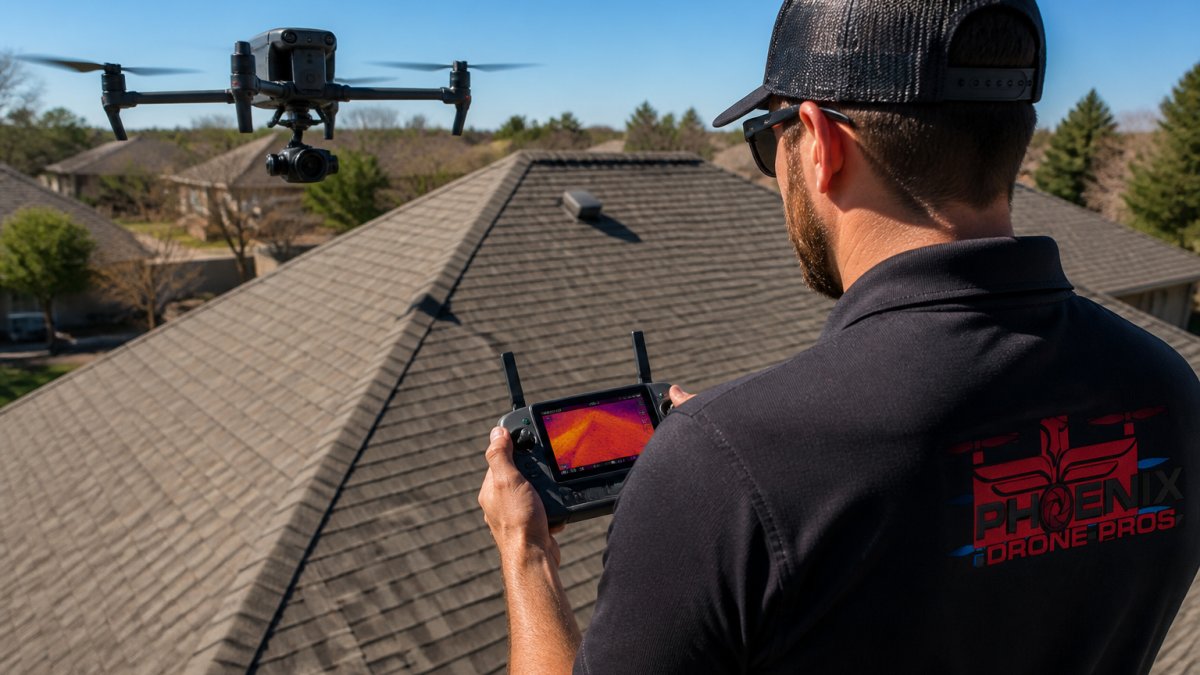
Roof inspections represent one of the highest-value applications for commercial drone services. Rather than sending technicians up ladders or onto steep pitches, drone operators capture detailed imagery from the air, eliminating significant safety and liability concerns. Thermal imaging detects heat loss patterns that indicate insulation problems or moisture intrusion invisible to visual inspection alone (peer-reviewed research).
Industrial inspections extend beyond roofing. Facilities managers use drones to inspect building facades, HVAC equipment, solar installations, and infrastructure without disrupting operations or exposing workers to fall hazards. Wind turbine blade inspections, power line surveys, and bridge assessments all rely on commercial drone services to deliver detailed data safely and efficiently.
Insurance companies increasingly request drone-based roof inspections as part of claim evaluation. The detailed imagery provides objective evidence of damage and repair scope, reducing disputes and accelerating claim resolution. For property managers overseeing multiple buildings, regular drone inspections create a maintenance baseline and track deterioration over time.
FAA Part 107 Certified Drone Pilot Requirements
Operating a commercial drone legally requires FAA Part 107 certification. Understanding this requirement protects clients as much as it protects operators.
What Part 107 Certification Means
The FAA Remote Pilot Certificate demonstrates that an operator has passed a knowledge test covering airspace regulations, flight restrictions, safety protocols, and operational limitations (faa.gov). This is not optional for commercial work, operating commercially without Part 107 certification exposes both the operator and the client to federal penalties and civil liability. The FAA can impose civil penalties up to $27,500 for unauthorized commercial drone operations (faa.gov).
The certification process requires studying FAA regulations, understanding airspace classifications, weather considerations, and emergency procedures. Operators must demonstrate knowledge of restricted airspace, temporary flight restrictions (TFRs), and altitude limitations that vary by location and change frequently.
What Clients Should Verify
Before hiring a drone service provider, ask to see their Remote Pilot Certificate. A legitimate operator provides this documentation without hesitation. The certificate shows the operator's name, certificate number, and expiration date. Verify that the certificate is current, expired certifications mean the operator is working illegally.
Ask whether the operator has any special waivers or authorizations. The FAA issues waivers for operations that would normally violate Part 107 rules, such as flying beyond visual line of sight (BVLOS), flying at night, or flying over people. If your project requires any of these capabilities, the operator must have explicit FAA authorization.
Local Airspace Restrictions and Your Project
Part 107 establishes baseline rules, but local airspace restrictions often impose additional limitations. The airspace around airports, military installations, and certain government facilities is restricted or requires special authorization. Many commercial properties fall within Class B or Class C airspace (near major airports), which requires coordination with air traffic control before drone operations can begin.
Before scheduling work, ask your drone operator to conduct an airspace check for your property. Professional operators use tools like the FAA's B4UFLY app or commercial airspace-analysis software to identify restrictions specific to your location. This check reveals whether your project requires additional FAA authorization, which can add weeks to the timeline if not planned in advance.
Temporary Flight Restrictions (TFRs) also affect drone operations. The FAA issues TFRs for special events and emergency response. Your operator should monitor TFR notices and alert you if restrictions affect your scheduled work.
Insurance and Regulatory Compliance
Part 107 certification is necessary but not sufficient for safe, compliant operations. Professional operators also carry liability insurance, maintain detailed flight logs, and follow internal safety protocols that exceed regulatory minimums. When evaluating operators, ask about their insurance coverage and pre-flight safety procedures. Operators who take compliance seriously document their processes and can explain how they verify airspace, check weather, and conduct equipment inspections before every flight.
Commercial Drone Roof Inspection Cost and Value
Roof inspections represent significant value for property owners, facility managers, and insurance companies. Understanding the cost-benefit relationship helps stakeholders make informed decisions about when drone inspections make sense.
The cost of a professional drone roof inspection depends on property size, complexity, accessibility, and required deliverables. A straightforward residential inspection costs less than a complex commercial facility with multiple roof sections, skylights, and equipment. Thermal imaging adds to the cost but provides valuable data about insulation integrity and moisture problems invisible to standard photography.
Value emerges in several forms. First, safety, eliminating the need to send workers onto steep or fragile roofs reduces fall risk and workers' compensation exposure. Second, accuracy, drone imagery captures conditions that ground-level inspection misses, from shingle deterioration to flashing integrity to debris accumulation in gutters. Third, documentation, detailed aerial photos create an objective record for insurance claims, maintenance planning, and liability protection.
For insurance purposes, drone inspections often pay for themselves through faster claim resolution and reduced dispute. For property managers, regular drone inspections establish baseline conditions and track deterioration, enabling proactive maintenance that extends roof life and prevents emergency repairs. professional photography services.
Drone Liability Insurance for Contractors and Operators
Liability insurance is non-negotiable for professional drone services. Understanding what coverage actually protects you, and what it doesn't, is essential before hiring.
What Commercial Drone Liability Insurance Covers
Professional drone operators carry comprehensive liability coverage that protects against property damage, bodily injury, and related claims. Coverage typically ranges from $1 million to $10 million in liability limits, depending on the operator and the types of work they perform. The policy covers legal defense costs, settlement payments, and judgments if a covered incident occurs.
However, standard commercial drone liability policies have exclusions and limitations. Most policies exclude coverage for damage caused by operator negligence, intentional acts, or violations of Part 107 rules. If an operator flies illegally and causes damage, their insurance may deny the claim, leaving you unprotected.
What Clients Should Verify Before Work Begins
Before hiring a drone operator, request a Certificate of Insurance showing current liability coverage. The certificate should list:
- Coverage limits: Verify that the limits are adequate for your project. For residential roof inspections, $1 million is typically sufficient. For large commercial projects or industrial inspections, higher limits ($2-5 million) are more appropriate.
- Policy effective dates: Confirm that coverage is active on the date work will be performed.
- Named insured: The operator's business name should match the entity you're contracting with.
- Additional insured endorsement: For commercial projects, ask whether the operator can add you as an additional insured.
Do not accept verbal assurances about insurance. Request written documentation and verify the policy is active by contacting the insurance company if necessary. A professional operator provides this documentation without hesitation.
Coverage Gaps and What They Mean for You
Standard commercial drone liability policies typically exclude certain high-risk activities. If your project involves BVLOS (Beyond Visual Line of Sight) operations, night operations, flights over people, thermal or specialized sensor operations, or flights in adverse weather, verify that the operator's policy covers them or that they carry additional specialized coverage.
If your project requires any of these activities, ask your operator whether their policy covers them. If not, they should carry a rider or supplemental policy that does. Operating outside policy coverage means any incident is uninsured.
Your Liability Exposure Without Verification
If you hire an operator without verifying insurance and they cause damage during work, you may be held liable. Without proof that the operator carried adequate coverage, you assume the financial risk. In some cases, your own property insurance may deny claims related to drone operations, arguing that you hired an uninsured contractor.
Verifying the operator's insurance before work begins closes this liability gap.
Insurance Requirements for Different Project Types
Insurance expectations vary by project scope and client type:
- Residential projects (roof inspections, real estate photography): $1 million liability is standard and typically adequate.
- Commercial real estate: $2-5 million coverage is common.
- Construction sites: General contractors often require drone operators to carry $5 million or more in coverage and to name the contractor as additional insured.
- Industrial inspections: Facilities with critical infrastructure may require $10 million or higher coverage due to potential for catastrophic damage.
Ask your drone operator what coverage they carry and whether it meets your project's requirements.
How to Choose a Professional Drone Service Provider
Selecting the right commercial drone service provider requires evaluating several critical factors. The cheapest option is rarely the best option when professional results and legal compliance matter.
Verify Certifications and Insurance Coverage
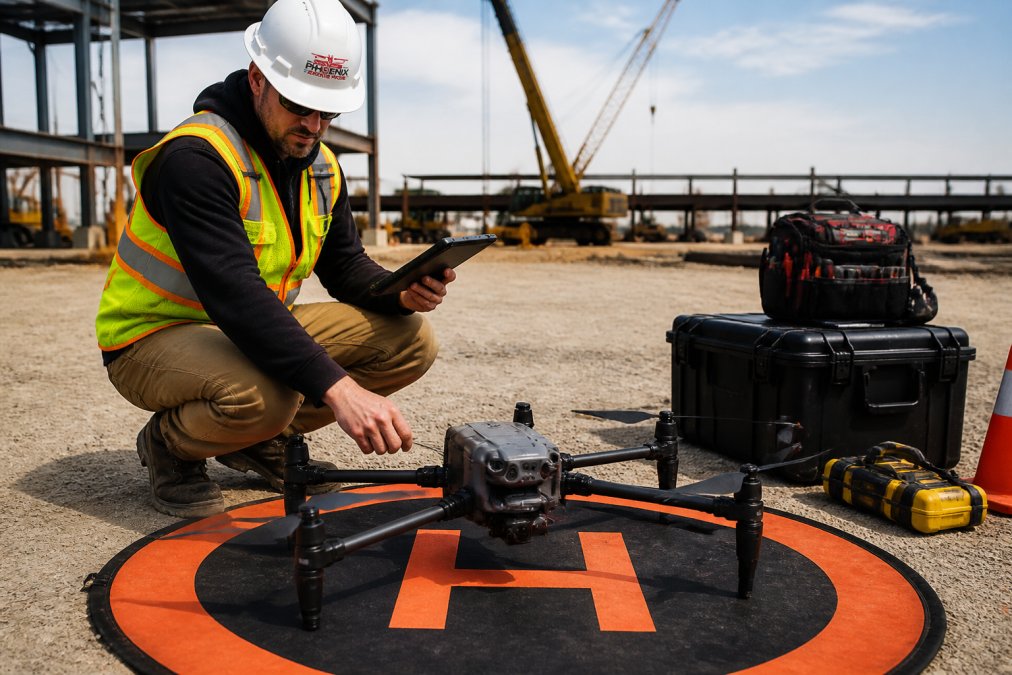
The first step is confirming FAA Part 107 certification. Ask for proof of the Remote Pilot Certificate and verify that it's current. Insurance verification is equally important. Request a certificate of insurance showing current liability coverage and the coverage limits. Verify that the coverage is active and adequate for your project scope.
Beyond basic certifications, some operators pursue additional training and specializations. Thermal imaging certification, advanced flight training, and specialized equipment endorsements indicate commitment to professional excellence.
Review Portfolio and Turnaround Times
A professional portfolio demonstrates the quality of work and range of experience. Review actual project examples relevant to your needs. Ask how quickly the operator delivers final deliverables after the shoot. Turnaround times depend on project scope and the provider's workflow; anything longer may indicate the operator is handling too many projects or lacks efficient post-processing workflows.
Ask about the post-processing workflow. Raw drone footage requires editing, color correction, and sometimes stitching. Operators with in-house editing capabilities typically deliver faster. Clarify what's included in the deliverables, raw files, edited video, still photos, or all of the above.
Common Mistakes When Hiring Drone Operators
The biggest mistake is prioritizing price over credentials. The cheapest operator may lack proper certification, insurance, or experience. This false economy creates liability exposure, poor-quality deliverables, and potential legal complications.
Another frequent error is failing to clearly define project requirements before hiring. Vague specifications lead to mismatched expectations and disappointing results. Specify exactly what you need: still photography, video, thermal imaging, orthomosaic mapping, or 3D models. Clarify deliverable formats, editing expectations, and timeline requirements.
Hiring operators without reviewing their portfolio is risky. Some operators have minimal experience despite holding certifications. A strong portfolio demonstrates consistent quality across multiple projects.
Overlooking insurance verification creates unprotected liability. Always request and verify current insurance before work begins. A professional operator provides this documentation without pushback.
Failing to communicate site-specific constraints causes problems. Weather conditions, airspace restrictions, property access, and safety hazards all affect drone operations. Discuss these details with your operator before the scheduled work date.
Choosing a professional drone service provider requires diligence, but the investment pays dividends in quality results and legal protection. Phoenix Drone Pros brings over a decade of commercial experience, FAA certification, comprehensive liability insurance, and expertise in aerial inspections across multiple industries. When professional standards and proven results matter, experienced operators deliver the quality and reliability your project demands. Contact Phoenix Drone Pros today to discuss your commercial drone service needs and receive a customized quote for your project.
Frequently Asked Questions
What certifications should a commercial drone services provider have?
Any professional offering commercial drone services must hold an FAA Part 107 Remote Pilot Certificate. This certification requires passing an FAA knowledge test and demonstrates the pilot understands airspace regulations, safety protocols, and flight operations. Verify the certificate is current and ask for proof. Additionally, confirm they carry liability insurance to protect your property during operations. Legitimate providers will gladly share this documentation.
How much does commercial drone roof inspection cost?
Pricing for commercial drone roof inspection varies based on property size, roof complexity, inspection type (visual only or thermal imaging), and turnaround time. Factors like orthomosaic mapping, 3D modeling, or specialized thermal analysis increase cost. Rather than assuming a fixed price, request a detailed quote from providers based on your specific project requirements. Most professional services operate on a quote basis tailored to your scope.
Do drone operators need liability insurance?
Yes. Professional drone operators must carry drone liability insurance for commercial work. This protects you if equipment damages property or causes injury. Verify insurance is active before hiring and confirm it covers your specific use case. This is not optional for legitimate commercial drone services and should be a basic requirement in any contract.
How quickly can I expect drone footage after my project is completed?
Turnaround time depends on project scope and the provider's workflow. Discuss expected delivery dates upfront and confirm the provider can meet your timeline before booking. Reliable providers will commit to specific deadlines in writing.
This article was written using GrandRanker