 how-to
How to Scale Property Inspections Across Portfolios
Table of Contents
- Why Portfolio Growth Breaks Manual Inspection Workflows
- Step 1: Set Growth Goals and Assess Inspection Readiness
- Step 2: Build a Property Inspection Checklist That Scales
- Step 3: Set Rental Property Inspection Frequency by Risk Tier
- Step 4: Choose Property Inspection Software and Integrate Data
- Step 5: Standardize Property Inspection Reporting Across the Portfolio
- Step 6: Staff, Schedule, and Measure Inspection Capacity
- Frequently Asked Questions
Last Updated: October 13, 2026
Why Portfolio Growth Breaks Manual Inspection Workflows
Scaling a real estate portfolio often breaks the inspection process long before it breaks anything else. A workflow that works for five rental properties falls apart at fifty, because manual inspections depend on one person's calendar, memory, and stamina. This guide from Phoenix Drone Pros breaks down how to scale property inspections across portfolios using a repeatable, risk-based system.
The math is simple. Every new property adds inspection hours, travel time, and paperwork. Most owners hit a wall somewhere between 20 and 40 units, when drive-by checks stop being realistic and start being a liability.
Property inspections are the scheduled reviews of a building's condition, safety systems, and compliance status. Done well, they catch small problems before they become expensive repairs.
Here's what most guides miss: scaling inspections is not about inspecting faster. It is about inspecting smarter, with tiers, checklists, and software that do the remembering for you.
Step 1: Set Growth Goals and Assess Inspection Readiness
Define your portfolio growth target first, then work backward to inspection capacity. If you plan to add 30 units this year, you need an inspection program that can absorb 30 more properties without adding 30 more hours of your time.
Ask three questions:
- How many properties can one inspector realistically cover per month?
- Which properties are highest risk and need the most attention?
- What tools do you already have for scheduling and reporting?
A common mistake is buying software before defining the process. Fix the workflow first, then automate it.
Step 2: Build a Property Inspection Checklist That Scales
A property inspection checklist is a standardized list of items every inspector reviews, from roof condition to lease-file accuracy. Standardization is what makes scaling possible, because it removes guesswork.
Build one master checklist, then create tier-specific versions:
- Exterior: roof, siding, drainage, parking, signage
- Interior: HVAC, plumbing, electrical, appliances
- Safety: smoke detectors, fire extinguishers, egress paths
- Compliance: permits, occupancy limits, lease-file audits
Step 3: Set Rental Property Inspection Frequency by Risk Tier
Rental property inspection frequency should match each property's risk level, not a one-size-fits-all calendar. The tier table below is the output; the scoring model behind it is what makes the cadence defensible when an owner, lender, or insurer asks why one building gets quarterly walkthroughs and another gets an annual visit.
Score each property before you assign a cadence
Build a simple 0-100 risk score from weighted inputs. A common pattern is to score five categories and weight them by how much each one has historically driven losses in your portfolio:
- Asset condition (25%), age of roof, HVAC, and plumbing; deferred maintenance backlog; last capital event.
- Tenant and turnover profile (20%), average tenure, turnover rate, share of units on month-to-month leases.
- Occupancy density (15%), units per building, occupants per unit, shared utility metering.
- Compliance exposure (20%), local rental licensing, lead-based paint disclosure obligations under the EPA's Renovation, Repair and Painting Rule, fire and life-safety systems, elevator and boiler certificates.
- Loss history (20%), water damage, fire, liability claims, and code violations in the trailing 36 months.
Sum the weighted scores. Properties landing above 70 are Tier 1, 40-70 are Tier 2, and below 40 are Tier 3. Recalculate the score at every inspection and after every claim, turnover, or capital project, a property that just replaced its roof and re-tenanted with two-year leases should not stay in Tier 1 by inertia.
Cadence by tier
| Tier | Typical Profile | Inspection Cadence | Risk Level |
|---|---|---|---|
| Tier 1 | Student housing, high-turnover units, buildings with open code items | Quarterly, plus a move-out inspection on every turnover | High |
| Tier 2 | Standard multifamily properties, mixed-tenure buildings | Twice yearly | Medium |
| Tier 3 | Stable single-family rentals with long-term tenants | Annually | Low |
Tier 1 properties turn over fast, so damage accumulates quickly and small issues compound between visits. Tier 3 properties with long-term tenants need less frequent checks, but "annual" is a floor, not a ceiling, a Tier 3 property that generates a water-damage claim should be re-scored and likely promoted to Tier 2 for the next 12 months.
Revise tiers on a schedule, not on a hunch
Run a formal tier review quarterly. Pull the risk scores, flag any property whose score moved more than 15 points, and document the reason for every promotion or demotion. This audit trail is what lets you defend a reduced cadence on a low-risk asset, and it is the difference between a risk-based program and an arbitrary one.
Step 4: Choose Property Inspection Software and Integrate Data
Property inspection software stores checklists, schedules inspections, and generates reports automatically. The right tool connects inspection data to your property management system so findings trigger work orders. Centralizing these workflows ensures that every inspection result aligns with broader compliance management standards to mitigate long-term operational risk.
Look for these features:
- Mobile checklists with photo capture
- Automated scheduling by tier
- Report templates you can share with owners
- Integration with maintenance and accounting tools
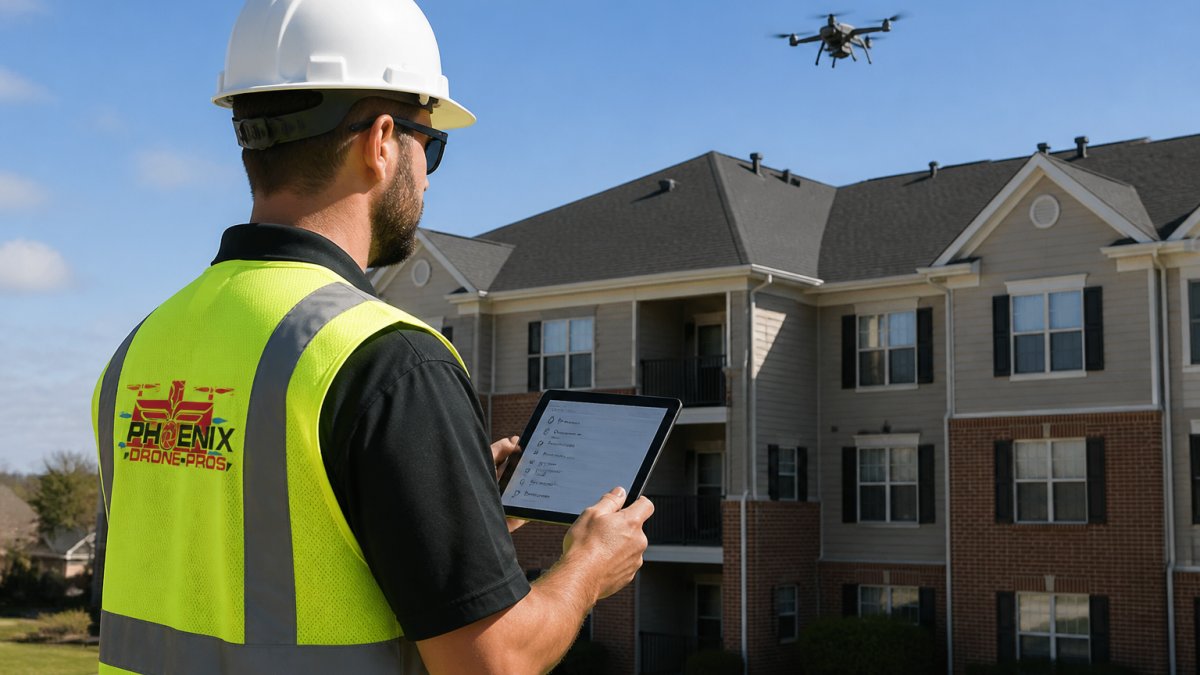
For roof and exterior inspections, aerial services add a layer software alone cannot provide. FAA Part 107 commercial drone rules govern how drone inspections are conducted, which matters when you hire a vendor. If you plan to bring that work in-house, Done flight training covers the certification groundwork your team needs to fly legally and safely.
Step 5: Standardize Property Inspection Reporting Across the Portfolio
Property inspection reporting turns raw findings into decisions. Standard reports use the same categories, severity ratings, and photo formats every time, so you can compare properties side by side.
A useful report includes:
- Property address and inspection date
- Inspector name and tier
- Findings sorted by severity
- Photos with timestamps
- Recommended actions and deadlines
Step 6: Staff, Schedule, and Measure Inspection Capacity
Inspection capacity is the number of properties your team can inspect per month without cutting corners. As a portfolio grows, capacity stops being a scheduling question and becomes a forecasting one, you need to know how many inspector-hours the portfolio will demand next quarter before you sign the next acquisition.
Forecast workload from the tier mix
Start with a per-tier time standard. Most practitioners find a Tier 1 walkthrough with photo documentation and a written report runs 60-90 minutes on site plus 30-45 minutes of report and follow-up; Tier 2 runs 45-60 minutes plus 20-30 minutes; Tier 3 runs 30-45 minutes plus 15-20 minutes. Multiply each standard by the number of properties in that tier and by the annual cadence, then divide by the working hours one inspector can realistically deliver.
A worked example: 40 Tier 1 properties at quarterly cadence is 160 inspections per year. At 2 hours of total inspector time each, that is 320 hours. Add 120 Tier 2 properties at twice yearly (240 inspections × 1.25 hours = 300 hours) and 200 Tier 3 properties annually (200 × 0.9 hours = 180 hours). Total demand is roughly 800 inspector-hours per year. One full-time inspector delivering about 1,400 productive field hours after travel, training, and admin covers that portfolio with headroom, but the same portfolio with 80 Tier 1 properties would need a second inspector or a vendor relationship.
Set completion targets and a service level
Define a service level for each tier and publish it internally:
- Tier 1 inspections completed within 5 business days of the scheduled date.
- Tier 2 within 10 business days.
- Tier 3 within 20 business days.
- Any inspection more than 30 days past due escalates to the portfolio manager.
Track these numbers monthly:
- Inspections completed per inspector per month
- Average time per inspection by tier, compared to the time standard
- Findings converted to completed work orders
- Overdue inspections as a percentage of total, by tier
- First-pass report acceptance rate (reports returned for rework)
Decide between in-house and vendor coverage
In-house inspectors give you consistency and lower marginal cost per inspection once volume is high enough to keep them busy. Third-party vendors give you surge capacity for acquisitions, geographic spread, and specialty work, roof, structural, and aerial. A common hybrid is in-house coverage for Tier 1 and Tier 2 in your core metro, with a vetted vendor panel for Tier 3 and out-of-market assets. Whichever mix you choose, hold vendors to the same checklist, photo standards, and report template as your in-house team, or the data will not be comparable.
For roof and exterior work that ground inspectors cannot safely reach, aerial services add a layer software alone cannot provide. FAA Part 107 commercial drone rules govern how drone inspections are conducted, which matters when you hire a vendor. As noted in HUD guidance on property condition standards, documented condition assessments support compliance and funding decisions.
Frequently Asked Questions
How often should rental properties be inspected across a large portfolio?
Frequency should follow risk, not a single calendar. A workable model is annual full inspections for stable, low-turn properties, twice yearly for mid-tier units with moderate maintenance history, and quarterly or after every turn for high-risk assets such as student housing or older apartment buildings. Pair that cadence with drive-by or aerial checks between full visits so property condition stays visible without multiplying labor costs.
What should a property inspection checklist include for portfolio-wide use?
A scalable checklist covers exterior and roof condition, structural and foundation observations, plumbing and HVAC function, electrical and life-safety items, moisture or leak indicators, and unit-level turnover damage. Add lease-file verification, photo capture requirements, and a severity rating for each finding. Keep the same checklist across every property so results can be compared, trended, and handed to maintenance without translation.
How can inspection software help manage multiple properties?
Property inspection software centralizes scheduling, stores photos and findings against each address, and flags overdue visits automatically. The practical gain is comparability: you can see which buildings generate repeat findings, which vendors close work orders fastest, and where risk exposure is climbing. Look for tools that export data into your property management system so inspection results feed maintenance and compliance workflows instead of sitting in a separate file.
When should property managers use aerial or drone inspections?
Aerial inspections make sense for steep or fragile roofs, multi-building commercial sites, and any property where ground access is slow, unsafe, or expensive. They also work well for tracking construction progress and confirming roof condition after storms. Pair drone imagery with your standard checklist so findings land in the same reporting system. FAA-certified operators with insurance keep the program defensible and reduce liability exposure.
Scaling property inspections across a portfolio comes down to systems, not heroics. Phoenix Drone Pros supports that system with FAA-certified pilots, full insurance, and more than a decade of commercial drone experience, delivering detailed aerial views for roof inspections and construction progress documentation. Get started with Phoenix Drone Pros and turn inspection findings into maintenance and compliance actions you can act on.