 comparison
Corporate Capture Alternative for Construction: A Practical Guide
Table of Contents
- Why Construction Needs a Corporate Capture Alternative
- What Is the Corporate Capture Model in Drone Services?
- Construction Drone Service Benefits of a Local Team
- Aerial Construction Progress Documentation: What to Demand
- FAA Part 107 Drone Requirements for Construction Compliance
- How to Choose a Provider: Transparency Over Sales Pitch
- Conclusion: Reclaim Accountability on Your Site
- Frequently Asked Questions
Last Updated: September 5, 2026
Why Construction Needs a Corporate Capture Alternative
Construction project managers often inherit aerial documentation workflows designed around a corporate capture model, where a large provider controls the equipment, the pilots, and the data pipeline from a distant headquarters. This prioritizes the provider's internal efficiency over your project's needs. A corporate capture alternative shifts that balance, placing accountability and local oversight directly on your site.
The core problem is a misalignment of incentives. When oversight is impersonal and routed through call centers and generic email queues, response times stretch and site-specific context gets lost. This guide from Phoenix Drone Pros explains why a local, transparent provider delivers more reliable construction progress documentation and how to vet one properly.
The construction drone service benefits of a local team are measurable: faster rescheduling when weather shifts, pilots who understand local airspace and permitting quirks, and a direct line to the person flying your mission rather than a dispatcher. The corporate model often fails not on technical capability, but on communication and accountability.
What Is the Corporate Capture Model in Drone Services?
A corporate capture model in drone services describes a structure where a national or multinational firm dominates the market and the regulatory process that governs it, prioritizing scale and standardized contracts over the specific interests of individual clients. In practice, your construction site becomes one of thousands managed through a centralized system, with progress photos, thermal data, and mapping requests funneled through impersonal oversight and rigid service tiers.
This concentration carries real risks. When a provider controls a large share of the market, they can influence rulemaking and shape standards to favor their operational model. For a project manager, the consequence is practical: less flexibility, slower adaptation to site conditions, and a transactional procurement process.
The Mechanisms of Undue Influence in Construction Procurement
The academic literature on regulatory capture, as documented in sources like the Harvard Kennedy School's Ash Center report on regulatory capture, identifies several specific mechanisms that play out in the construction and aerial services sector. These are not abstract theories; they are structural realities that affect your project's cost and timeline.
- Revolving Door Hiring: A dominant provider hires former regulators or public works officials who understand the procurement system's inner workings, creating an informational asymmetry that lets them structure bids to win on familiarity, not merit.
- Comment Period Dominance: When the FAA or state transportation departments open rulemaking on drone operations, a large provider can flood the comment period with standardized submissions, drowning out smaller operators and shaping regulations to favor their fleet size.
- Standard-Setting Capture: Industry standards for data formats, mapping accuracy, or safety protocols are often written by committees dominated by large incumbents, who can set the bar so high that only their scale can meet it cost-effectively.
- Bundled Contracting: Public agencies often bundle all aerial documentation for a multi-year infrastructure program into a single contract, meaning a local firm with superior site knowledge never gets a seat at the table.
How This Model Fails Your Construction Site
The corporate capture model is not just a governance problem; it is a project delivery problem. When a provider's primary loyalty is to its shareholders, your site's needs become secondary. The risks translate directly:
- Delayed responses: Centralized scheduling means a weather delay in your region does not trigger a quick local reschedule. You wait for the next available slot in a national queue.
- Standardized deliverables: You get what the system produces, not what your site requires. A complex urban infill project with tight airspace constraints gets the same treatment as a wide-open rural highway corridor.
- Limited accountability: Your account manager changes quarterly, and institutional memory is lost. The person who understood your site's unique challenges is replaced by someone who has only read the file.
- Data hostage situations: A corporate provider may store your site data on their proprietary platform, making it difficult to switch providers mid-project without losing access to your historical documentation.
The Alternative: A Sector-Specific, Localized Approach
A corporate capture alternative for construction is not just about choosing a smaller provider. It is about restructuring the relationship to prevent capture dynamics from emerging. This means:
- Procurement transparency: Demanding open, itemized pricing that separates pilot time, data processing, and equipment costs, so you can see exactly what you are paying for.
- Local oversight: Ensuring that the person who flies your mission also reviews the data and is accountable for its quality, rather than a distant quality assurance team.
- Data portability: Requiring that all raw data is delivered in open, standard formats (like GeoTIFF and LAS) that you own outright, so you are never locked into a single vendor's ecosystem.
This sector-specific alternative is a blue-ocean opportunity that most policy-focused articles miss. They diagnose corporate capture in the abstract but never provide a practical playbook to resist it. That playbook starts with understanding the mechanisms above and demanding a different structure from your provider.
Construction Drone Service Benefits of a Local Team
A local provider answers the accountability problem by design. Their pilots are neighbors, their reputation is tied to regional performance, and their response time is measured in hours, not days. For a construction site with tight deadlines, this is the decisive advantage.
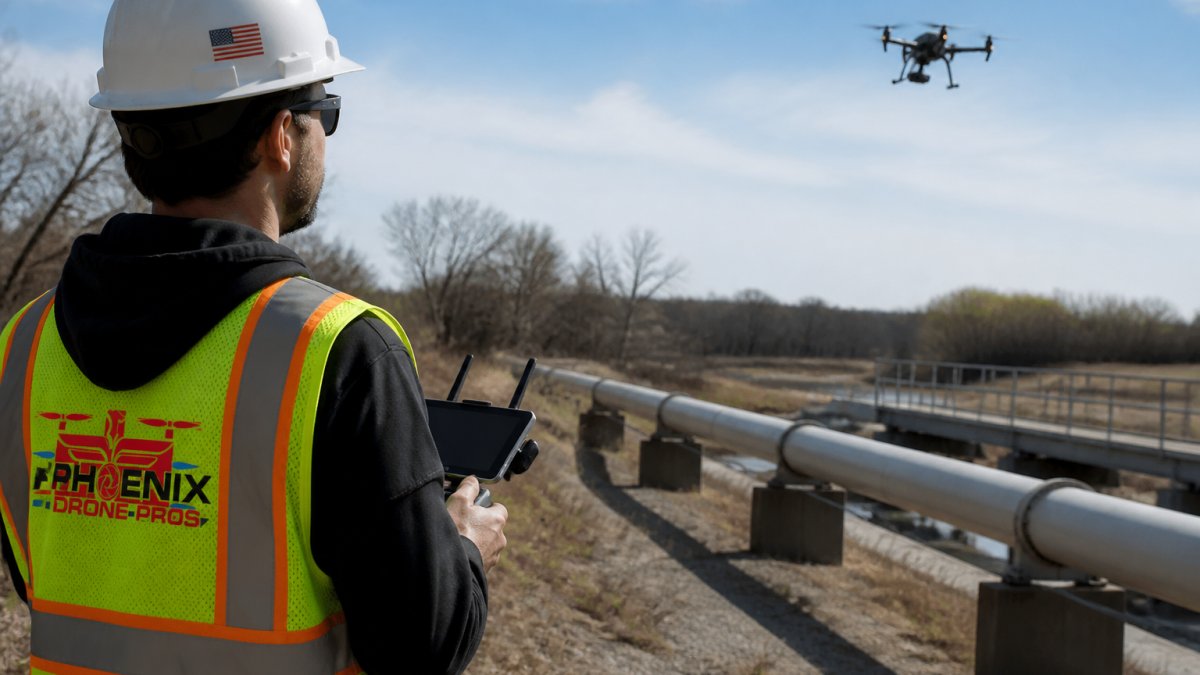
The construction drone service benefits extend beyond scheduling. Local pilots typically hold FAA Part 107 certification, but they also carry tacit knowledge of local airspace, temporary flight restrictions, and seasonal weather patterns that affect flight windows. They know which days the dust will ruin a photogrammetry pass and which hours offer the clearest light for orthomosaic capture.
A national provider may batch your site into a regional route, flying your progress documentation whenever they are already in the area. A local team treats your site as the priority, not an add-on. This distinction becomes critical when you need a quick turnaround for a lender draw inspection or a dispute resolution document.
Aerial Construction Progress Documentation: What to Demand
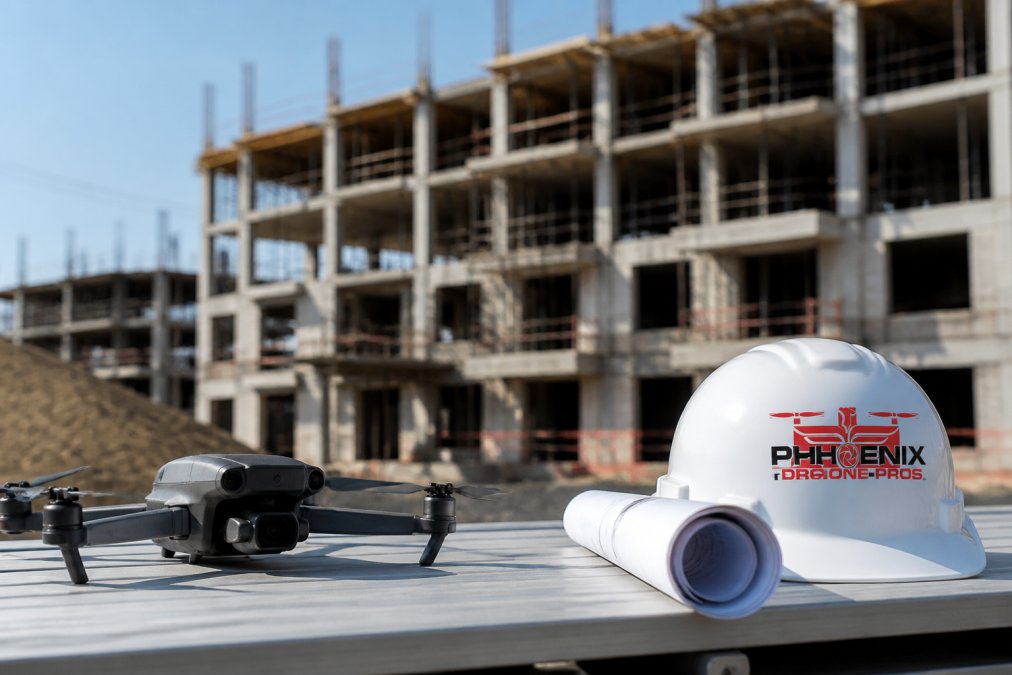
Aerial construction progress documentation is the systematic capture of site conditions from above at scheduled intervals, creating a visual and measurable record of work completed. It is a data asset that supports payment applications, schedule validation, and claims protection.
Before you sign a contract, demand clarity on these deliverables:
- Resolution and format: Confirm minimum capture resolution and whether you receive orthomosaic TIFFs, georeferenced point clouds, and web-optimized video in addition to raw stills.
- Flight frequency and triggers: Define the schedule, but also agree on trigger events, such as after major concrete pours or steel erection, that warrant an off-cycle flight.
- Turnaround time: Get a written commitment for data delivery, typically within 24 to 48 hours for standard progress sets.
- Data ownership: Verify that you own the raw data and that the provider cannot resell or repurpose your site imagery.
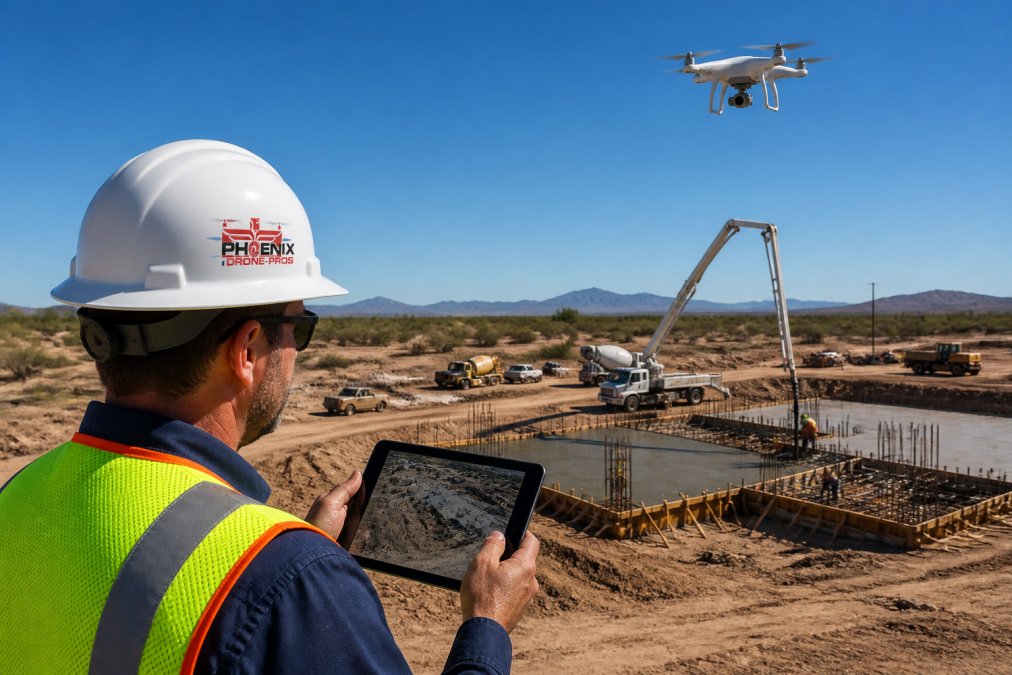
The right provider treats your documentation as a legal and financial record. They maintain consistent flight paths and overlap settings between visits so that week-over-week comparisons are meaningful. This consistency separates professional documentation from amateur footage.
FAA Part 107 Drone Requirements for Construction Compliance
FAA Part 107 drone requirements for construction flights are the regulatory baseline that every commercial operator in the United States must meet. These rules govern who may fly, what the aircraft must have, and how operations are conducted. Understanding them helps you verify that your provider is legitimate.
The core requirements include:
- Pilot certification: The remote pilot in command must hold a current Part 107 certificate.
- Aircraft registration: The drone must be registered with the FAA and display its registration number.
- Visual line of sight: The pilot must maintain unaided visual contact with the aircraft during the flight.
- Operational limits: Flights are generally limited to 400 feet above ground level and must yield to manned aircraft (faa.gov).
A provider that is FAA certified and fully insured offers a baseline of professionalism. For complex construction sites, ask whether they operate under Part 107 waivers for operations like flights over people or beyond visual line of sight, which may require additional FAA approval.
How to Choose a Provider: Transparency Over Sales Pitch
Choosing between a corporate provider and a corporate capture alternative comes down to how they answer your questions. A transparent local provider will discuss limitations openly; a sales-driven operation will promise anything to close the deal. Beyond standard vetting questions, you need a framework that actively resists the capture dynamics described earlier.
The Transparency Audit: A Practical How-To Guide
Most selection processes focus on price and capability. A capture-resistant process focuses on structural transparency. Here is a practical audit you can run on any potential provider to expose hidden dependencies and misaligned incentives.
Step 1: Map the Ownership and Subcontracting Chain
Ask for a full organizational chart, including any parent companies, sister brands, or subcontractors who will touch your data. A national provider may outsource your actual flight to a local subcontractor while keeping the contract and the data, creating a three-way misalignment: the subcontractor has no direct relationship with you, and the prime contractor has no direct control over flight quality. Insist on knowing exactly who will be at your site and who holds their contract.
Step 2: Demand a Data Portability Clause
Your project's aerial data is a legal and financial record. Before signing, require a contractual clause stating you own all raw data and that the provider must deliver it in open, non-proprietary formats (e.g., GeoTIFF, LAS, and standard video codecs) within a defined timeframe after each flight. Also require that the provider cannot store your data on a platform that restricts your access or makes export difficult. This single clause dismantles the data-hostage dynamic that locks you into a corporate ecosystem.
Step 3: Test Their Rescheduling Protocol
Do not ask how they handle weather delays; ask to see their rescheduling protocol in writing. A corporate provider will route you through a regional dispatch center. A local provider will have a direct line to the pilot. Ask for a specific example of how they handled a last-minute cancellation in the past 90 days. The specificity of the answer will tell you more than any marketing claim.
Step 4: Verify Their Regulatory Engagement
Ask whether the provider participates in FAA rulemaking comment periods or industry standard-setting bodies. If they do, ask what positions they advocate for. A provider that advocates for higher barriers to entry or standardized deliverables that favor scale is part of the capture problem. A provider that supports open data standards and streamlined Part 107 waivers for small operators is aligned with your interests.
Case Study: How a Mid-Sized General Contractor Resisted Capture
A common pattern among successful resistance is the formation of a buyer's consortium. In one documented example from the Pacific Northwest, a group of five mid-sized general contractors collectively negotiated a shared aerial documentation contract with a local provider. By pooling their volume, they achieved pricing comparable to a national provider while retaining local accountability and data ownership. The contract included a joint data-sharing agreement that allowed each contractor to benchmark their site's progress against regional averages. This consortium model is a practical, sector-specific alternative to the corporate capture model.
The Assessment Framework
Use this expanded framework when evaluating a provider, with a focus on structural transparency rather than just surface-level credentials:
| Evaluation Criteria | What to Ask | Why It Matters |
|---|---|---|
| Ownership and Subcontracting | Who exactly will fly my site, and who holds their contract? | Exposes hidden layers that dilute accountability |
| Data Portability | Will I own all raw data in open formats, and can I export it freely? | Prevents vendor lock-in and protects your legal record |
| Rescheduling Protocol | Can you show me your written policy for weather delays? | Reveals whether you get direct access or a call center |
| Regulatory Engagement | Do you participate in FAA rulemaking or standards bodies, and what do you advocate for? | Identifies whether the provider is part of the capture problem |
| Certification and Insurance | Request proof of Part 107 certificates and liability coverage | Protects you if an incident occurs on site |
| Local Presence | Confirm pilots are based in your metro area | Ensures fast rescheduling and site knowledge |
| Deliverable Specifics | Ask for a sample orthomosaic or point cloud file | Verifies data quality before you commit |
| Turnaround Commitment | Get a written SLA for data delivery | Prevents delays in payment applications |
:::takeaway The most effective defense against corporate capture is not a single contract clause but a procurement strategy that actively structures the relationship to prevent capture dynamics. A buyer's consortium, a data portability clause, and a transparency audit are three concrete tools that put you in control.
A provider's willingness to answer these questions directly is a stronger signal than their marketing materials. The right partner treats your site's data with the same care they would their own and is willing to put structural guarantees in writing.
Conclusion: Reclaim Accountability on Your Site
The case for a corporate capture alternative for construction is not ideological; it is practical. You need documentation you can defend, a partner who answers the phone, and a pilot who understands your site. A corporate provider may offer scale, but scale does not equal accountability.
Phoenix Drone Pros brings over a decade of commercial experience to every flight, with FAA-certified and fully insured pilots based locally in Phoenix and San Antonio. We provide the detailed, accurate property views and reliable construction progress documentation that your project demands, with a direct line to the team flying your missions. Get started with Phoenix Drone Pros and put a local partner in control of your site's aerial record.
=== FAQ ANSWERS (ARTICLE CONTENT, AUDIT EACH ONE SEPARATELY, SAME RULES) ===
Frequently Asked Questions
Is the corporate capture model illegal in construction drone services?
The corporate capture model itself isn't illegal, but it creates risks of regulatory capture and conflicts of interest. Undue influence over procurement or rulemaking processes can violate procurement integrity standards. For construction managers, the concern is less about legality and more about accountability. A local, FAA-certified provider like Phoenix Drone Pros avoids these risks by offering transparent, project-specific oversight without the influence of large-scale corporate structures.
How do local drone providers differ from national corporate capture models?
Local drone providers offer direct communication with the pilot who actually flies your site. National corporate models often route requests through sales teams and account managers, creating a disconnect between the decision-making apparatus and the field work. This distance reduces accountability. With a local team, you get consistent personnel who understand your project's specific constraints and can adjust documentation priorities week to week.
Why is personalized aerial documentation better for construction progress tracking?
Personalized aerial documentation captures what matters for your specific project, not just generic flyover footage. A local provider learns your site layout, critical path items, and compliance requirements. They can focus on areas where subcontractor coordination is tight or where safety conditions change frequently. This tailored approach produces more useful progress data than standardized packages from large corporate providers.
What should construction managers look for in a drone service provider?
Look for FAA Part 107 certification, verifiable insurance, and experience with construction-specific documentation. Ask about turnaround times for deliverables and whether pilots are local or flown in from another region. Check if the provider offers thermal imaging or 3D mapping if your project needs them. Finally, request references from similar construction projects to confirm the provider understands site safety protocols and progress reporting requirements.
Are there regulatory advantages to using local, FAA-certified drone teams?
Yes. Local teams maintain familiarity with airspace restrictions and temporary flight restrictions in your immediate area. They also understand state-level construction compliance requirements. A local FAA-certified team can respond quickly to changing site conditions, which supports better legislative oversight readiness. This proximity reduces the risk of missed documentation windows that can create compliance gaps on active projects.
This article was written using GrandRanker
Frequently Asked Questions
Q: Is the corporate capture model illegal in construction drone services?
A: The corporate capture model itself isn't illegal, but it creates risks of regulatory capture and conflicts of interest. Undue influence over procurement or rulemaking processes can violate procurement integrity standards. For construction managers, the concern is less about legality and more about accountability. A local, FAA-certified provider like Phoenix Drone Pros avoids these risks by offering transparent, project-specific oversight without the influence of large-scale corporate structures.
Q: How do local drone providers differ from national corporate capture models?
A: Local drone providers offer direct communication with the pilot who actually flies your site. National corporate models often route requests through sales teams and account managers, creating a disconnect between the decision-making apparatus and the field work. This distance reduces accountability. With a local team, you get consistent personnel who understand your project's specific constraints and can adjust documentation priorities week to week.
Q: Why is personalized aerial documentation better for construction progress tracking?
A: Personalized aerial documentation captures what matters for your specific project, not just generic flyover footage. A local provider learns your site layout, critical path items, and compliance requirements. They can focus on areas where subcontractor coordination is tight or where safety conditions change frequently. This tailored approach produces more useful progress data than standardized packages from large corporate providers.
Q: What should construction managers look for in a drone service provider?
A: Look for FAA Part 107 certification, verifiable insurance, and experience with construction-specific documentation. Ask about turnaround times for deliverables and whether pilots are local or flown in from another region. Check if the provider offers thermal imaging or 3D mapping if your project needs them. Finally, request references from similar construction projects to confirm the provider understands site safety protocols and progress reporting requirements.
Q: Are there regulatory advantages to using local, FAA-certified drone teams?
A: Yes. Local teams maintain familiarity with airspace restrictions and temporary flight restrictions in your immediate area. They also understand state-level construction compliance requirements. A local FAA-certified team can respond quickly to changing site conditions, which supports better legislative oversight readiness. This proximity reduces the risk of missed documentation windows that can create compliance gaps on active projects.