 Listicle
Do Licensed Drone Photographers Deliver Better Results?
Last Updated: November 16, 2026
Quick Summary
Licensed drone photographers deliver better results because their license shows a baseline of FAA-tested knowledge, including airspace checks and flight rules. The certificate is a starting point, not a guarantee, so you should also verify insurance, past work and how the pilot plans flights before booking.
- Commercial drone flights generally require a Part 107 Remote Pilot Certificate from the FAA.
- Confirm the certificate number through the FAA's online airmen inquiry tool before booking.
- Ask for a current certificate of insurance that names your property or project.
- Check that the certificate holder matches the pilot actually flying your property.
- Ask how the operator checks airspace, weather and site hazards before each flight.
Table of Contents
- What Licensed Drone Photographers Bring to a Property Shoot
- Benefits of Hiring a Licensed Drone Photographer
- FAA Part 107 Certification: What It Does and Does Not Guarantee
- Insurance and Liability: Protecting Your Property and Your Project
- Licensed vs. Unlicensed Operators: A Side-by-Side Comparison
- How to Choose a Drone Pilot for Roof Inspection Safety
- Scheduling Your Licensed Drone Shoot With Phoenix Drone Pros
- Frequently Asked Questions
Do Licensed Drone Photographers Deliver Better Results? The short answer is yes, but only when you know what the license actually proves. Most property owners, agents and project managers hire on price or portfolio alone. That misses the point. A licensed operator has shown a baseline of knowledge, and that baseline changes how a shoot runs from the first call to the final delivery.
Here's the part most buyers overlook. A license is a starting line, not a guarantee of quality. This guide explains what a licensed drone photographer brings to a property shoot, what the certification covers and what it leaves out, and how to verify credentials before you book. It also covers insurance, roof inspection safety and what to expect when you schedule with us.
What Licensed Drone Photographers Bring to a Property Shoot
A licensed drone photographer brings regulatory knowledge and flight discipline to the job. Commercial drone flights in the United States generally require the operator to hold a Remote Pilot Certificate under 14 CFR Part 107, issued by the Federal Aviation Administration.
For a property shoot, that knowledge matters in practical ways. A pilot who understands airspace will check for restricted areas, nearby airports and temporary flight restrictions before launch. Airspace near busy metro areas can be complex, and a pilot who skips that check risks ending a shoot before it starts.
Many agents assume the drone is the expensive part of the job. In reality, the pilot's judgment is. Shooting a listing at golden hour means managing wind, glare and battery life while keeping the frame clean. A trained operator plans the route, the altitude and the number of passes before the drone leaves the ground. For listings that need polished motion footage, a dedicated Video Offering Memorandum package can bring that same planning discipline to the whole marketing package.
Benefits of Hiring a Licensed Drone Photographer
The practical advantages of hiring a licensed operator fall into a few clear categories. Each one affects the finished work or your risk exposure.
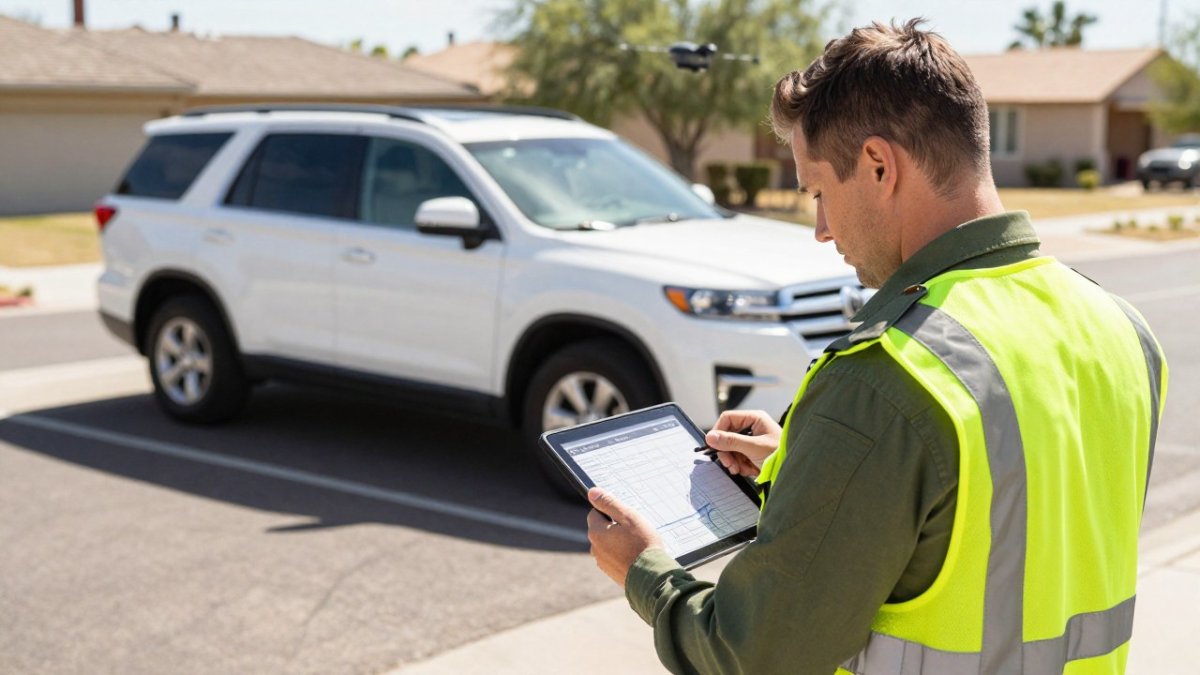
- Compliance with federal rules. A licensed pilot operates within Part 107 limits, including visual line-of-sight requirements and altitude caps. Unlicensed flying for paid work can expose the client to fines and liability.
- Safer flight planning. Licensed operators assess wind, weather and obstacles before each flight.
- Consistent image and video quality. Certification alone doesn't create good footage, but experienced pilots know how to set exposure and hold steady framing.
- Access to difficult viewpoints. A qualified operator can capture rooflines, lot boundaries and site layouts that ground photography cannot reach.
- Documentation you can use. For construction teams, consistent flight paths and timestamps make week-to-week progress comparisons far easier.
- Clearer accountability. A licensed business can show proof of coverage, which matters if something goes wrong on your property.
Each of these benefits depends on the operator actually following through. Ask how they plan flights, not just whether they hold a certificate.
FAA Part 107 Certification: What It Does and Does Not Guarantee
The Part 107 certificate confirms that a pilot passed the FAA knowledge exam and holds a current remote pilot certificate. The FAA FAA Part 107 small unmanned aircraft rules sets those requirements and lists the operating limits that apply to commercial flights.
What the certificate does not guarantee matters just as much. It does not prove that the pilot has shot real estate, handled a tight construction site or delivered footage that looks professional. It also says nothing about photo editing skill, turnaround speed or how the pilot communicates with clients.
Think of the certificate as a floor. It shows the pilot understands the rules. Your decision should rest on the rest of the picture: portfolio, insurance, experience with your property type and a clear scope of work. That broader vetting is what separates a reliable operator from one who simply passed a test.
How to Verify Licensing Before You Book
Verifying a drone operator is quick and prevents many common problems. Work through these checks before you sign anything.
- Ask for the certificate number. A legitimate Part 107 pilot can provide it on request. Check the FAA's online airmen inquiry tool to confirm the certificate is active.
- Confirm the pilot's name matches the business. Make sure the person flying your property is the certificate holder, or is operating under the company's authorized arrangement.
- Request proof of insurance. Ask for a current certificate of insurance that names your property or your project.
- Review recent work. Look for aerial footage shot in conditions similar to yours, not just a highlight reel.
- Ask about flight planning. A qualified operator can describe how they check airspace, weather and site hazards before launch.
- Confirm the delivery timeline. Get the editing turnaround and file formats in writing.
Insurance and Liability: Protecting Your Property and Your Project
Insurance is the part of hiring a drone operator that is easy to overlook, and it is the part that protects you when a flight goes wrong.
Commercial drone insurance generally falls into two buckets. Liability coverage responds to third-party claims, property damage or bodily injury the flight causes to someone else or their property. Hull coverage pays to repair or replace the aircraft itself.
Within liability coverage, the limits and structure vary widely. A policy might carry a per-occurrence limit and an aggregate limit, and some policies exclude certain activities such as thermal inspection, mapping or flights over people.
Ask whether your property or project can be named as an additional insured. Additional-insured status can mean the operator's policy responds to a claim involving you rather than leaving you to pursue the operator separately.
Watch out: a certificate of insurance is not proof that the policy is current or that it covers the flight you hired.
A license does not transfer liability. If an unlicensed or uninsured operator causes damage, you may find yourself defending a claim with no insurer behind it.
For construction and commercial work, check whether the operator's policy covers multi-site projects and the specific activities you need, such as thermal inspection or 3D mapping.
A practical vetting checklist for coverage:
- Request the certificate of insurance and the declarations page, and confirm the effective dates.
- Ask for the per-occurrence and aggregate liability limits in dollars.
- Confirm the specific activity you need, real estate video, roof inspection, thermal imaging, mapping, is not excluded.
- Ask whether additional-insured status is available for your property or project.
- Confirm the pilot flying the job is covered under the policy, including any subcontractors.
- Get the answers in writing before you book.
A coverage conversation before the shoot can help prevent disputes that surface after an incident. The goal is not the cheapest policy; it is a policy that responds to the work you actually hired.
Licensed vs. Unlicensed Operators: A Side-by-Side Comparison
The table below summarizes the practical differences, but the rows deserve explanation because the consequences are not always obvious to a buyer comparing quotes.
| Factor | Licensed Operator (Part 107) | Unlicensed Operator |
|---|---|---|
| Federal certification | Holds a current FAA Remote Pilot Certificate | No FAA certificate for commercial flight |
| Airspace checks | Required knowledge, documented before flights | Often skipped or unverified |
| Insurance | Typically carries commercial liability coverage | Frequently uninsured |
| Liability for damage | Insurer can respond to claims | You may carry the risk |
| Flight planning | Trained in weather, wind and obstacle assessment | Varies widely |
| Accountability | Identifiable, certificate on file with the FAA | Hard to verify or hold responsible |
A licensed operator has passed the FAA's aeronautical knowledge exam and holds a current Remote Pilot Certificate under 14 CFR Part 107. That certificate is tied to a specific person, and the FAA maintains a public record of it.
The practical difference shows up before the drone leaves the ground. A licensed pilot checks for restricted airspace, nearby airports and temporary flight restrictions as a matter of routine.
Watch out: not every unlicensed operator is a hobbyist who decided to charge. Some are foreign pilots flying on a recreational basis, some hold expired certificates, and some operate under a business name while the certificate belongs to someone else.
Verification is straightforward. Ask for the certificate number and confirm it through the FAA's online airmen inquiry tool. Confirm the name on the certificate matches the pilot or the company's authorized arrangement.
The comparison is not really about paperwork.
How to Choose a Drone Pilot for Roof Inspection Safety
Roof inspections are where licensing and experience matter most. A drone can inspect a steep or fragile roof without anyone climbing onto it. That safety benefit only holds if the pilot flies with care.
When you evaluate an operator for roof work, ask about their experience with your roof type, how they handle wind and their approach to low-altitude flights near structures. Ask whether they use thermal imaging and how they report findings. A good inspection produces clear images tied to specific roof sections, not a folder of random shots.
Our thermal roof inspection service covers steep and fragile roofs with a non-invasive approach, and we can walk you through what the report will show before you commit. If your crew or team is building in-house capability, our drone training program is available.
Scheduling Your Licensed Drone Shoot With Phoenix Drone Pros
Phoenix Drone Pros is FAA certified and fully insured, with more than ten years of commercial drone experience. Our team serves Phoenix and San Antonio. Pricing depends on property size, shoot type, deliverables and turnaround, so the most accurate way to see your cost is a direct quote.
If you're planning a shoot in the Phoenix area, you can review our Phoenix drone photography services to see what we cover and how we schedule. For professional property media, our commercial real estate offering includes aerial listing footage built around your project goals. Properties with solar arrays may be interested in our drone solar panel cleaning service.
When you book, expect us to confirm airspace, weather and site access before we launch.
Best for: Agents, developers and property owners who need insured, compliant aerial work with clear documentation.
Skip if: You only need a quick phone snapshot of a yard and don't need insurance or deliverables.
Frequently Asked Questions
Do drone photographers make good money?
Earnings vary widely with market, client mix, and how much work a pilot books. Real estate, construction documentation, and roof inspection work are common commercial niches. Pricing for any given project depends on the scope, number of flights, deliverables, and turnaround time, so request a written quote that lists those items. Phoenix Drone Pros publishes current pricing and scheduling details on its website and can provide a project-specific quote.
Is having a drone license worth it?
For commercial work, yes. Operating a drone for compensation or business purposes in the United States generally requires FAA Part 107 certification. The certificate shows a pilot passed the aeronautical knowledge test and follows FAA airspace and operating rules. It does not guarantee insurance, photography skill, or good judgment on a specific job, so it works best alongside a portfolio review and proof of coverage.
What insurance should a professional drone photographer have?
At minimum, a professional drone operator should carry commercial general liability insurance that covers aircraft operations and third-party property damage or injury. Ask for a certificate of insurance naming your company as certificate holder before the flight date. Confirm the policy limits and that the coverage is active for the dates of your shoot. Phoenix Drone Pros is fully insured.
How can I verify that a drone photographer is licensed?
Ask for the pilot's FAA Part 107 remote pilot certificate number and check it against the official FAA records. Confirm the name on the certificate matches the person who will fly your job. Also ask whether the company holds a current certificate of insurance and how many commercial flights the team has completed. Verifying these details before you sign a contract protects you from unqualified operators.