 how-to
Drone Roof Inspection Insurance Requirements 2026
Table of Contents
- Why Drone Roof Inspection Insurance Matters
- FAA Part 107 Insurance Requirements for Commercial Drone Operations
- Commercial Liability Insurance Minimums for Roof Inspections
- How to Verify Drone Operator Insurance Before Hiring
- Understanding Drone Roof Inspection Liability Waivers
- Homeowner Rights and Protection During Aerial Assessments
- What Happens if Property Damage Occurs During Inspection
- Conclusion
Last Updated: August 23, 2026
Why Drone Roof Inspection Insurance Matters
Property damage liability is one of the most overlooked risks in commercial drone operations. A single incident, drone malfunction, unexpected wind gust, or operator error, can result in tens of thousands of dollars in damages, injuries, or legal claims. Drone roof inspection insurance isn't optional for professional operators; it's foundational to responsible service delivery and legal compliance.
When you hire a drone operator for roof inspections, you're trusting them with access to your property and exposure to potential liability. The operator's insurance protects both parties. Without proper coverage, a single incident could leave homeowners financially responsible for damages and operators facing lawsuits that could end their business. Understanding drone roof inspection insurance requirements ensures you're protected before work begins.
At Phoenix Drone Pros, we understand how critical proper insurance is. Many property managers and homeowners assume that a drone operator's general liability coverage is sufficient. It isn't. Aerial operations carry unique risks that require specialized commercial liability insurance tailored to drone operations. This guide walks you through the specific insurance requirements, how to verify coverage, and what protections you need in place before hiring any drone operator for roof inspections.
FAA Part 107 Insurance Requirements for Commercial Drone Operations
Commercial drone operations in the United States are governed by the Federal Aviation Administration's Part 107 regulations (faa.gov). While the FAA doesn't explicitly mandate insurance as a licensing requirement, it's practically mandatory for any legitimate commercial operator. Operators must carry proof of financial responsibility to legally operate commercially, and insurance fulfills that requirement.
Most insurance carriers require proof of Part 107 certification before issuing a commercial drone liability policy. If you're hiring a drone operator for roof inspections, verify that they hold an active Remote Pilot Certificate. This certification demonstrates that the operator has passed FAA knowledge tests and understands airspace regulations, safety protocols, and operational limitations.
The FAA Part 107 framework establishes operational safety standards, altitude limits, line-of-sight requirements, no-fly zones, that reduce accident risk and lower insurance premiums (faa.gov). Operators who strictly follow these regulations present lower risk to insurers, which translates to more affordable coverage. When evaluating a drone operator's qualifications, ask for their Remote Pilot Certificate number and verify it through the FAA's database if needed.
Commercial Liability Insurance Minimums for Roof Inspections
Commercial liability insurance for drone operations typically starts at $1 million in coverage for general property damage and bodily injury (faa.gov). This is the baseline that most reputable drone operators carry. However, the appropriate coverage level depends on the scope of your project and the value of the property being inspected.
For residential roof inspections, $1 million in coverage is generally sufficient. This amount covers most property damage scenarios, a drone striking a gutter, damaging a skyllight, or causing minor structural damage. For commercial properties with higher values, larger roofs, or multiple buildings, verify that the operator carries higher limits of $2 million or more.
The insurance policy must specifically cover unmanned aircraft operations. General commercial liability policies often exclude drone operations, so standard business insurance won't suffice. The operator's policy must explicitly state that it covers aerial photography, videography, and inspection services using unmanned aircraft.
Most drone operators will provide a Certificate of Insurance (COI) upon request. Before any work begins, request and review the COI to confirm that the operator's policy covers the type of inspection you need.
How to Verify Drone Operator Insurance Before Hiring
Verification starts with a direct request. Ask the operator: "Can you provide proof of commercial liability insurance for drone operations?" A legitimate, professional operator will have this documentation ready.
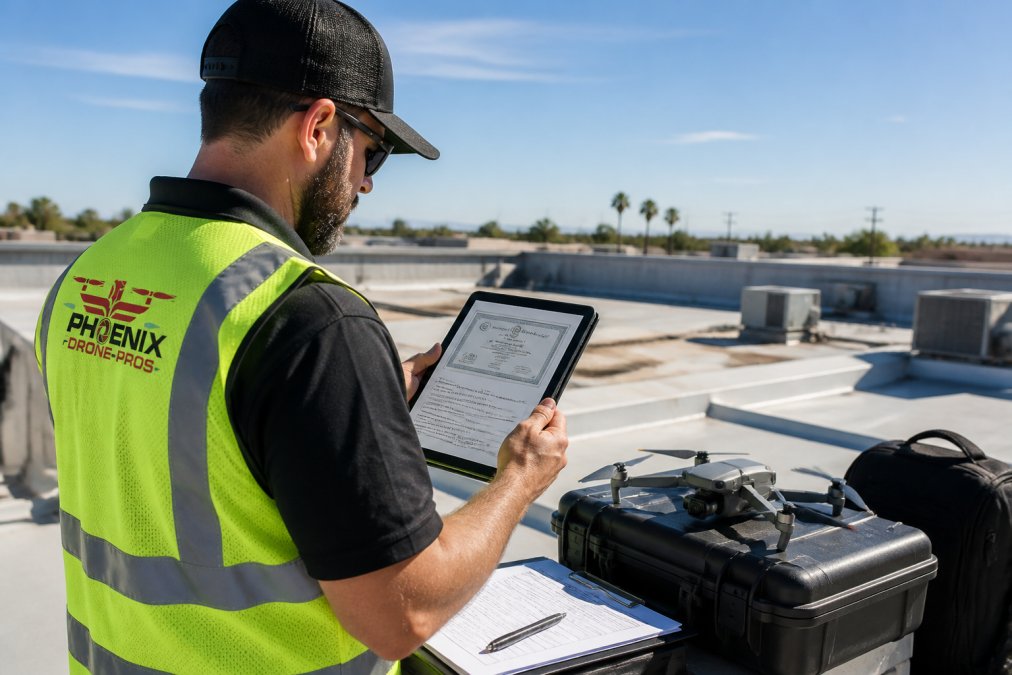
When you receive the Certificate of Insurance, check these specific details:
- Policy holder name: Matches the operator's business name
- Coverage type: Explicitly states "unmanned aircraft" or "drone operations"
- Liability limits: At least $1 million for property damage and bodily injury
- Policy dates: Currently active (not expired)
- Insurer information: Name and contact details of the insurance company
You can also contact the insurance company directly to verify coverage. Call the number listed on the COI and confirm that the policy is active and covers the specific services you're requesting.
Request that you be named as an additional insured on the operator's policy. This is standard practice in commercial drone work. As an additional insured, you receive direct protection from the operator's liability coverage if something goes wrong during the inspection.
Verify the operator's Remote Pilot Certificate through the FAA's database. Visit the FAA's website and search for the operator's name or certificate number. An operator without a valid certificate is operating illegally, and their insurance may not cover illegal operations.
Understanding Drone Roof Inspection Liability Waivers
A liability waiver is a legal document that attempts to shift responsibility for accidents or property damage from the drone operator to the property owner. However, waivers have limits. They cannot eliminate liability for gross negligence, willful misconduct, or violations of law. They also cannot waive liability for bodily injury in most jurisdictions.
The waiver protects the operator from claims arising from normal operational risks, equipment malfunction, weather changes, or minor accidents that occur despite proper precautions. What a waiver does NOT do: it doesn't replace the need for insurance. Even with a signed waiver, the operator's liability insurance is the actual financial protection if something goes wrong. residential roof inspection.
Before signing any liability waiver, review it carefully. Look for overly broad language that attempts to waive all liability, unclear terms, or requests to waive liability for injuries. A legitimate waiver should be balanced, acknowledging operational risks while still holding the operator accountable for professional standards and insurance requirements.
Homeowner Rights and Protection During Aerial Assessments
As a homeowner, you have the right to understand what data is being collected during a drone roof inspection and how it will be used. You also have the right to verify that the operator is properly insured and licensed before allowing them on your property.
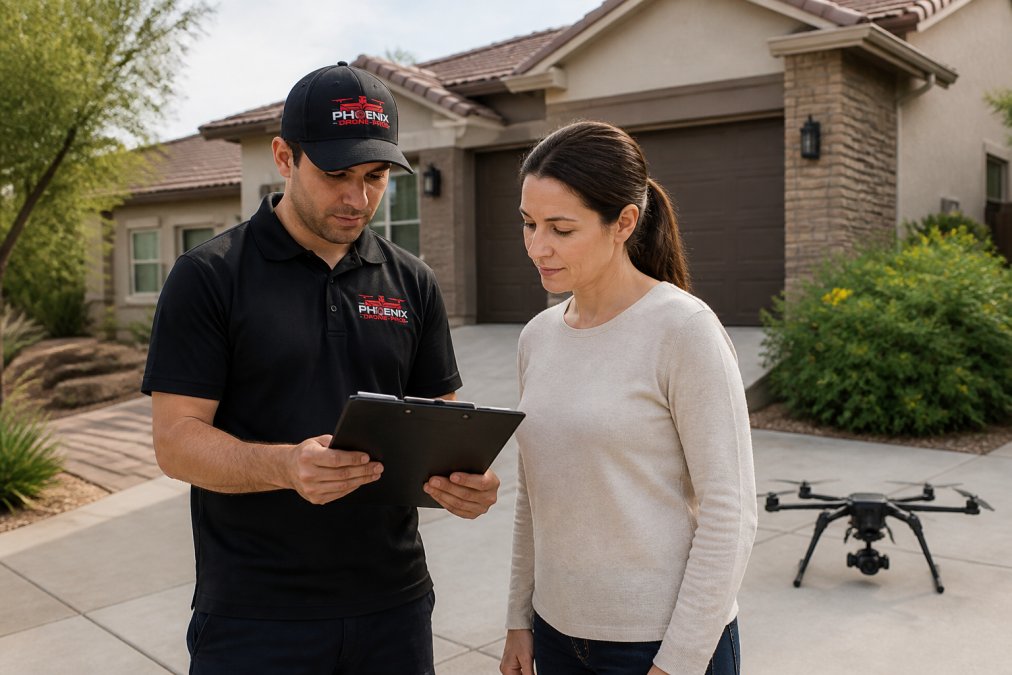
Before work begins, you should have a written agreement that specifies:
- The scope of work (what areas will be inspected, what data will be collected)
- The operator's insurance coverage and limits
- Timeline and schedule for the inspection
- What happens to the footage or data after the inspection
- Any privacy considerations
Request that the operator provide a detailed quote and scope of work in writing. This protects you by creating a clear record of what was agreed upon.
Verify that the operator carries property damage liability insurance specifically. This is your protection if something goes wrong. Ask about data privacy and storage to ensure you know how the inspection results will be used.
What Happens if Property Damage Occurs During Inspection
If a drone causes property damage during an inspection, document it immediately. Take photos and videos of the damage, note the date, time, and exact location. If anyone was injured, seek medical attention and document that as well.
Contact the drone operator immediately and report the damage. A professional operator will take this seriously and begin the claims process with their insurance company. They should provide you with their insurance company's contact information and claim procedures.
File a claim with the operator's insurance company. You'll need to provide documentation of the damage, repair estimates, proof of the incident, and the Certificate of Insurance showing the operator's coverage.
The insurance company will investigate the claim. If the damage was caused by operator error or equipment failure during normal operations, the claim should be covered under the operator's commercial liability policy.
| Scenario | Coverage Type | Typical Limit | Your Protection |
|---|---|---|---|
| Minor property damage (gutter, trim) | Property damage liability | $1M | Covered for repairs under $50K |
| Significant structural damage (roof penetration) | Property damage liability | $1M | Covered for repairs under $100K+ |
| Bodily injury to bystander | Bodily injury liability | $1M | Covered for medical expenses and liability |
| Commercial property damage | Property damage liability | $2M+ | Covered for repairs under $200K+ |
Hiring a drone operator for roof inspections requires verification at every step. Start by confirming FAA Part 107 certification, then request proof of commercial liability insurance with adequate limits for your property. Review the liability waiver carefully and ensure it complements the insurance coverage rather than replacing it. Ask to be named as an additional insured on the operator's policy. Document everything in writing before work begins.
At Phoenix Drone Pros, we maintain comprehensive commercial liability insurance and carry Remote Pilot Certifications that meet all FAA requirements. Our team provides detailed scope-of-work agreements and Certificates of Insurance before any inspection begins. We understand that drone roof inspection insurance requirements exist to protect both operators and property owners, and we treat those requirements as non-negotiable standards. When you need a professional, fully insured drone operator for residential or commercial roof inspections, we're equipped to deliver the expertise and protection your property deserves. Contact us for a consultation and insurance verification today.
Frequently Asked Questions
Do I need a Part 107 license to perform roof inspections for insurance purposes?
Yes. The FAA requires any commercial drone operation, including roof inspections for insurance companies or property owners, to be conducted by a remote pilot certificate holder under FAA Part 107. This certification confirms the operator has passed knowledge tests and understands airspace regulations, operational safety, and risk mitigation protocols. Without this license, drone operations are illegal and leave you and the operator liable for violations.
What level of liability insurance is required for commercial drone roof inspections?
Commercial liability insurance for drone roof inspections typically requires a minimum of $1 million in coverage, though many insurance companies and property managers request $2 million or higher. The exact amount depends on the property value, the scope of work, and your client's underwriting requirements. Verify the specific limit required by your client before scheduling the inspection, and confirm the operator's policy covers property damage liability and bodily injury.
How do I verify a drone operator has proper insurance before hiring them?
Request a Certificate of Insurance (COI) directly from the operator or their insurance broker. The COI should list your property or your business as an additional insured party, specify the coverage limits, and confirm the policy is active. Verify the policy covers aerial photography, roof inspections, and commercial drone operations specifically. Do not rely on verbal assurance; always obtain written proof before work begins. Check that the expiration date extends beyond your project completion date.
What should a drone roof inspection liability waiver include?
A comprehensive liability waiver should address property damage, bodily injury, data privacy, flight risk assumptions, and dispute resolution procedures. It should specify what the drone operator is and is not responsible for, clarify who owns the aerial imagery, and outline how data will be stored and protected. The waiver should also define the scope of the inspection and any limitations on what the drone can assess. Both parties should sign and retain copies before the inspection begins.
This article was written using GrandRanker