 comparison
Drone vs Manual Roof Inspection Costs: Complete 2026 Guide
Table of Contents
- Drone vs Manual Roof Inspection: Cost and Method Comparison
- Average Cost of Drone Roof Inspection
- Manual Roof Inspection Safety Risks and Labor Costs
- FAA Part 107 Requirements for Roof Inspections
- Benefits of Thermal Drone Roof Inspections
- Factors Influencing Inspection Pricing and ROI
- Choosing Between Drone and Manual Inspection Methods
- Frequently Asked Questions
Last Updated: September 2, 2026
Drone vs Manual Roof Inspection: Cost and Method Comparison
When Phoenix Drone Pros evaluates roof inspection methods, the choice between drone and manual approaches fundamentally shapes project timelines, safety outcomes, and total cost. This comparison examines both methods across pricing, efficiency, and risk factors to help property managers, contractors, and homeowners make an informed decision.
The shift toward drone-based inspections reflects a broader industry movement driven by safety concerns and operational efficiency. Manual roof inspections carry inherent risks, ladder falls, worker injuries, and liability exposure, while drone inspections eliminate ground-based hazards. Yet cost considerations remain complex. Understanding the true expense of each method requires looking beyond surface pricing to labor costs, equipment overhead, and long-term ROI.
Comparison Table: Drone and Manual Inspection Methods
| Factor | Drone Inspection | Manual Inspection |
|---|---|---|
| Setup Time | 15-30 minutes | 1-2 hours |
| Safety Risk | Minimal (no personnel on roof) | High (ladder/fall hazards) |
| Data Delivery | High-resolution imagery, thermal maps, 3D models | Visual assessment, photos, basic notes |
| Weather Dependency | Wind limits flight operations | Can proceed in light rain |
| Equipment Cost | $5,000+ for professional-grade drone | Ladders, harnesses, safety gear |
| Labor Intensity | One certified pilot required | 2-3 workers typically needed |
| Inspection Duration | 20-45 minutes per property | 1-3 hours per property |
| Data Processing | Software-driven (SkyeBrowse, DroneDeploy) | Manual documentation, estimates |
| Best For | Complex roofs, steep pitches, large commercial buildings | Small residential properties, simple structures |
Average Cost of Drone Roof Inspection
Drone roof inspection pricing depends on property size, roof complexity, and deliverable requirements. For residential properties, pricing typically reflects the scope of aerial coverage needed. Commercial inspections often command higher fees due to larger roof areas and more detailed data processing requirements.
The actual expense extends beyond flight time to include pilot certification, insurance, equipment maintenance, and software licensing. A FAA Part 107-certified pilot represents a significant credential investment, training and certification require specialized coursework and testing (faa.gov). Professional liability insurance protects both the operator and the property owner, adding to operational overhead.
Data processing represents another cost layer often overlooked in initial quotes. Software platforms like SkyeBrowse convert raw drone footage into measurable 3D models and orthomosaic imagery within minutes, enabling contractors to generate precise roof measurements for repair estimates. This processing capability justifies higher drone inspection fees compared to simple visual assessments.
Phoenix Drone Pros offers thermal drone roof inspection services that capture both visible and infrared data, identifying moisture intrusion, heat loss, and structural concerns invisible to the naked eye. The thermal imaging component adds analytical depth to standard visual inspections, supporting preventative maintenance planning and insurance claim documentation.
Turnaround time for drone inspections typically ranges from same-day delivery for basic imagery to 48-72 hours for processed 3D models and thermal analysis. Rush processing may be available depending on scheduling and data complexity.
Manual Roof Inspection Safety Risks and Labor Costs
Manual roof inspections expose workers to significant hazards that directly impact project costs and liability exposure. Falls from height remain the leading cause of serious construction injuries, and residential roofs present particular risk due to pitch, surface conditions, and limited access points (the CDC).
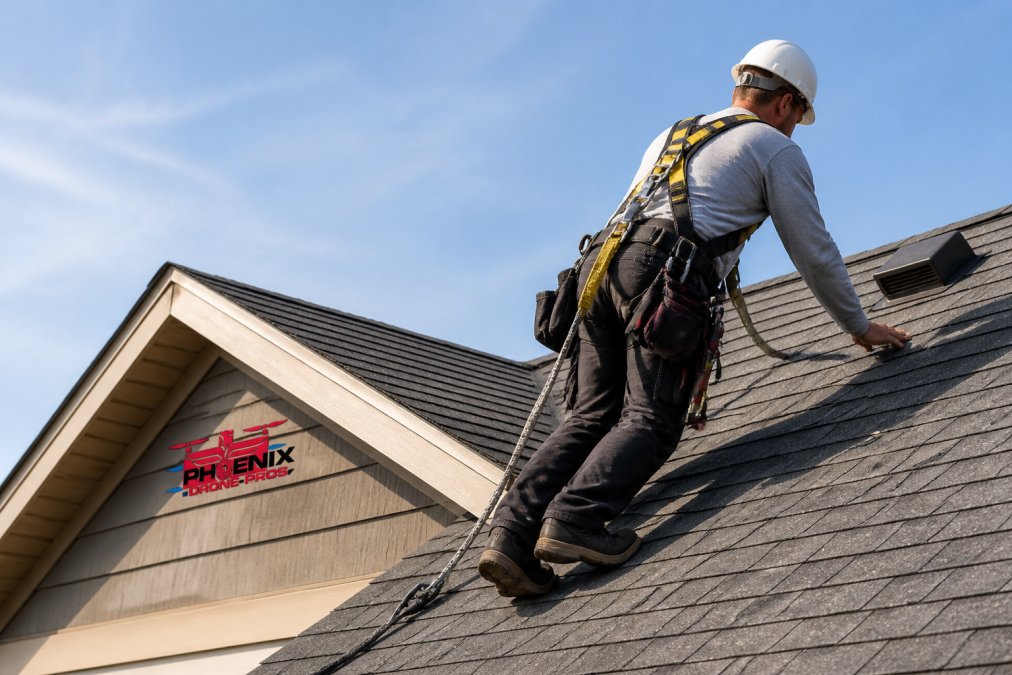
Setting up for manual inspection requires multiple safety measures: ladder stabilization, fall protection harnesses, safety lines, and spotters. A single residential inspection typically requires two to three workers, one performing the inspection, one managing equipment and safety systems, and potentially a third spotting from ground level. Labor costs scale quickly with crew size and inspection duration.
Weather constraints limit manual inspection windows. Rain, wind, and low temperatures create unsafe conditions that delay projects. A commercial property with multiple roof sections may require several visits across weeks to complete a thorough assessment, extending labor costs and project timelines.
Property liability increases during manual inspections. If a worker is injured on your roof, workers' compensation claims, medical expenses, and potential legal liability fall to the property owner. Insurance requirements often mandate specific safety certifications and protocols that add compliance costs.
The physical toll of manual inspection work also affects labor availability. Experienced roofing contractors command premium rates, and finding crews willing to work at height becomes increasingly difficult. Many contractors now prioritize drone-based assessments specifically to reduce worker injury risk and insurance exposure.
Manual inspections generate limited documentation. Inspectors typically provide written notes and basic photographs, leaving subjective interpretation of findings. This creates challenges for insurance claims, contractor estimates, and preventative maintenance planning.
FAA Part 107 Requirements for Roof Inspections
Operating a drone for commercial roof inspections requires FAA Part 107 Remote Pilot Certification (faa.gov). This federal requirement applies to any drone operation conducted for business purposes, including property inspections, construction documentation, and real estate photography.
The Part 107 certification process involves studying federal aviation regulations, passing a written examination, and maintaining currency through recurrent training. Certified pilots must understand airspace restrictions, weather limitations, and operational safety protocols. The certification confirms that operators understand how to conduct flights safely within designated airspace and comply with federal regulations.
Airspace restrictions vary by location. Urban areas, airports, and controlled airspace require special authorization from the FAA before conducting drone operations. Some properties fall within restricted zones that demand additional clearance paperwork, extending project timelines and potentially increasing costs. Phoenix Drone Pros maintains current airspace knowledge for service areas, ensuring compliance with all local and federal restrictions.
Insurance requirements complement Part 107 certification. Most property owners require proof of commercial liability insurance before allowing drone operations on their premises. This insurance protects against potential damage to property or injury to bystanders, a critical safeguard for commercial and residential inspections.
Drone pilots must maintain flight logs documenting each operation, including location, duration, weather conditions, and any incidents. This regulatory documentation protects both the operator and the property owner by creating an official record of inspection activities.
Benefits of Thermal Drone Roof Inspections
Thermal imaging reveals roof conditions invisible to standard visual inspection. Infrared cameras detect temperature variations caused by moisture intrusion, missing insulation, and structural defects, problems that develop long before visible damage appears.
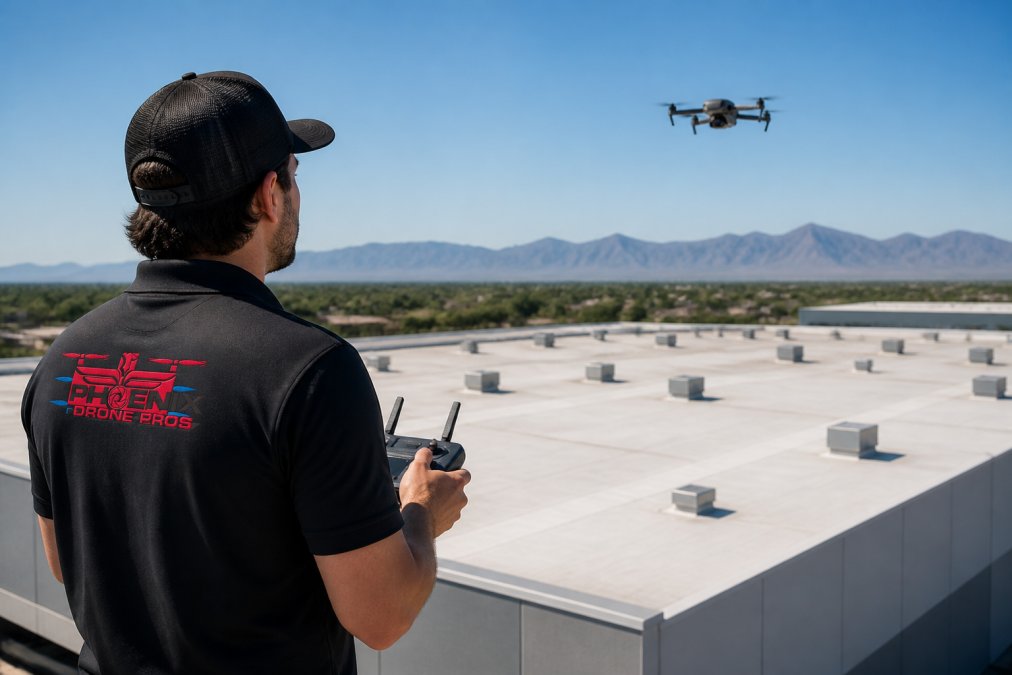
Moisture detection represents the primary advantage of thermal imaging. Water trapped beneath roofing materials creates temperature anomalies that thermal cameras capture with precision. Early detection of moisture allows property managers to address leaks before they cause structural damage, mold growth, or interior water damage. This preventative capability directly reduces long-term maintenance costs.
Thermal data supports insurance claims. When hail, wind, or storm damage occurs, thermal imagery documents the extent of damage in quantifiable terms. Insurance adjusters use this data to assess claim validity and determine settlement amounts. Properties with thermal inspection documentation often experience faster claim processing and higher settlement values. roof cleaning costs.
High-resolution aerial imagery from drone inspections creates detailed visual records of roof condition. Orthomosaic mapping stitches thousands of individual images into a single georeferenced map, allowing contractors to measure distances, identify problem areas, and plan repairs with precision. This level of detail surpasses traditional manual inspection photographs.
3D modeling from drone data enables roof measurement without manual access. Contractors can calculate square footage, slope angles, and material quantities directly from digital models, reducing estimation errors and improving bid accuracy. This capability proves especially valuable for complex roof geometries and large commercial properties.
Construction progress documentation benefits from drone thermal and visual data. Multi-week or multi-month projects can be tracked through sequential thermal inspections, documenting work completion and identifying emerging issues before they escalate. This documentation supports project management, contractor accountability, and timeline verification.
Factors Influencing Inspection Pricing and ROI
Roof size and complexity drive the primary cost variables. A simple rectangular residential roof requires less flight time and data processing than a complex commercial structure with multiple levels, skylights, and mechanical systems. Steep pitch roofs demand more careful flight planning and potentially longer processing times.
Property location affects accessibility and airspace restrictions. Urban properties may require special FAA authorization, extending timeline and adding cost. Rural properties with open airspace typically process faster. Service area coverage matters, local drone operators like Phoenix Drone Pros reduce travel time and mobilization costs compared to distant contractors.
Deliverable scope determines final pricing. Basic visual imagery costs less than comprehensive thermal analysis with 3D modeling. Insurance claims often require specific documentation standards, while construction projects may demand weekly progress tracking. Customized deliverables reflect the specialized data processing and analysis required.
Equipment overhead influences long-term pricing. Professional-grade drones like the DJI Mavic 3 Enterprise represent significant capital investment, with maintenance, software subscriptions, and equipment replacement costs distributed across projects. Operators factor equipment depreciation into pricing models.
Labor efficiency directly impacts ROI. A drone inspection that completes in 30 minutes versus a manual inspection requiring 3 hours represents substantial labor savings. When multiplied across dozens of properties annually, these time savings generate measurable cost reduction. For contractors managing multiple properties, drone efficiency compounds into significant operational savings.
Insurance and liability costs factor into true pricing. Manual inspections carry higher insurance premiums due to worker injury risk. Drone operations reduce liability exposure, potentially lowering insurance costs for property owners who adopt this method. This hidden cost reduction represents genuine ROI that doesn't appear in direct inspection fees.
Data retention and reusability add long-term value. Drone-generated 3D models and thermal maps serve as baseline documentation for future inspections, enabling comparison across years. This historical data supports preventative maintenance planning and property valuation assessments.
Choosing Between Drone and Manual Inspection Methods
The decision between drone and manual inspection depends on property characteristics, budget constraints, and specific inspection objectives.
Choose drone inspection when: the roof is steep or difficult to access safely, you need thermal analysis or 3D mapping, the property is large or commercially significant, you require detailed documentation for insurance or contractor estimates, or you prioritize worker safety and liability reduction. Drone inspections excel at capturing comprehensive data quickly, making them ideal for complex properties and time-sensitive projects.
Choose manual inspection when: the roof is simple and easily accessible, you need only basic visual assessment, the property is small, or weather conditions prevent drone operations. Manual inspections work adequately for straightforward residential properties where detailed thermal or 3D analysis isn't required.
In practice, many contractors now use drone inspections as the primary method, reservting manual inspection for specific follow-up work or close-range detail assessment. This hybrid approach combines drone efficiency with targeted manual verification, optimizing both cost and thoroughness.
For property managers overseeing multiple buildings, drone inspections create standardized documentation that enables portfolio-wide condition assessment. This systematic approach supports preventative maintenance planning and capital budgeting far more effectively than inconsistent manual inspection notes.
Phoenix Drone Pros specializes in thermal roof inspections and aerial assessments that provide the detailed data commercial property managers and contractors need for informed decision-making. Our FAA-certified pilots deliver professional-grade thermal imaging and high-resolution photography, with processed data available within 48 hours for most projects. With over a decade of commercial drone experience, we understand how to capture inspection data that supports insurance claims, contractor estimates, and long-term facility planning.
Roof inspections directly impact property maintenance budgets and safety outcomes. The method you choose, drone or manual, shapes both immediate costs and long-term value. Thermal drone inspections identify moisture and structural issues before they become expensive problems, while manual inspections work for straightforward assessments of simple properties. For most commercial properties and complex residential roofs, drone technology delivers superior documentation, faster turnaround, and measurable safety advantages. Get in touch with Phoenix Drone Pros to discuss your specific inspection needs and receive a professional assessment tailored to your property's requirements.
Frequently Asked Questions
How much does a drone roof inspection cost compared to manual inspection?
Drone roof inspections can offer efficiencies compared to manual methods by reducing labor-intensive setup, ladder safety equipment, and extended on-site time. Manual inspections require roofing contractors to spend hours climbing, positioning ladders, and managing fall protection. Drone inspections capture high-resolution imagery and thermal data in a fraction of the time. Exact pricing depends on roof size, complexity, and whether thermal imaging is included. Contact Phoenix Drone Pros for a custom quote based on your property's specific needs.
Do I need an FAA Part 107 license to perform roof inspections with a drone?
Yes. The FAA requires any commercial drone operation, including roof inspections, to be conducted by a pilot holding an FAA Part 107 Remote Pilot Certificate. This certification ensures the operator understands airspace regulations, safety protocols, and operational limitations. Professional drone inspection companies like Phoenix Drone Pros maintain current Part 107 certifications and liability insurance, protecting your property and ensuring compliance with federal regulations.
What are the safety benefits of drone roof inspections over manual methods?
Drone inspections eliminate fall risks, ladder accidents, and exposure to extreme heights that manual roof inspections create. Workers performing manual inspections face hazards including slip-and-fall injuries, equipment failures, and fatigue-related mistakes on steep slopes. Drones capture detailed imagery from a safe distance, reducing worker injury risk and liability exposure for property owners. This is especially critical for commercial buildings, steep-pitch residential roofs, and properties with structural concerns that make physical access dangerous.
What deliverables do I receive from a professional drone roof inspection?
Professional drone inspections provide high-resolution aerial imagery, orthomosaic maps showing the entire roof surface, and detailed damage reports. Many services include thermal imaging to detect moisture, heat loss, and structural issues invisible to the naked eye. Cloud-based software platforms organize data for easy access, measurement, and future reference. These deliverables support insurance claims, contractor estimates, preventative maintenance planning, and property valuation decisions.
This article was written using GrandRanker