 how-to
How to Hire Professional Drone Pilots: 2026 Buyer's Guide
Table of Contents
- What You'll Need Before You Hire Professional Drone Pilots
- Why Hiring a FAA Part 107 Certified Drone Pilot Matters
- Commercial Drone Insurance Requirements Every Client Should Verify
- Step-by-Step: How to Hire Professional Drone Pilots for Your Project
- Drone Photography Pricing Guide: What Drives Your Quote
- Red Flags and the Pilot-in-Command vs. Visual Observer Distinction
- Post-Flight Data Workflows: What Happens After the Drone Lands
- Frequently Asked Questions
Last Updated: September 12, 2026
What You'll Need Before You Hire Professional Drone Pilots
Hiring a drone operator without a checklist is how projects stall. Before contacting anyone, gather four things: a written project scope, a deliverable format, a budget range, and your site address with any airspace concerns.
This guide from Phoenix Drone Pros covers the full vetting process, from FAA Part 107 verification to insurance checks, so you can hire professional drone pilots without guessing.
The gap between a hobbyist and a commercial operator is larger than most clients expect. A commercial operator holds a Remote Pilot Certificate, carries liability coverage, maintains flight logs, and understands airspace authorization, a distinction that matters the moment something goes wrong.
Most guides treat hiring as a price comparison. It is a risk management decision: the operator you choose either protects your project or exposes it.
Why Hiring a FAA Part 107 Certified Drone Pilot Matters
A FAA Part 107 certified drone pilot holds a Remote Pilot Certificate issued under the FAA's small unmanned aircraft systems rule, which governs commercial drone operations in the United States (faa.gov). Flying commercially without it violates federal regulation.
Certification requires passing an aeronautical knowledge exam covering airspace classes, weather, loading, and emergency procedures, and certified pilots know when they need airspace clearance through systems like LAANC (faa.gov). If you are considering earning that certificate yourself, done flight training walks you through the process from start to finish.
If you hire an uncertified operator, you carry legal exposure: the FAA can fine commercial operators flying without certification, and your project insurance may not cover an incident involving an unlicensed pilot.
Verification is straightforward. Ask for the pilot's Remote Pilot Certificate number and confirm it through the FAA Airman Certification database. Any legitimate operator provides this without hesitation.
Commercial Drone Insurance Requirements Every Client Should Verify
Commercial drone insurance requirements vary by project, but two coverages matter most: general liability (bodily injury and property damage on the ground) and aviation-specific liability (the aircraft and operations in flight). Most clients require a Certificate of Insurance before work begins, naming your company as an additional insured for the project duration.
What most clients miss is the difference between "insured" and "adequately insured." A policy with minimal limits satisfies the requirement but leaves you exposed on high-value projects. Match coverage to what you are protecting, not the lowest number a pilot can produce.
What Coverage Limits Actually Mean for Your Project
There is no federally mandated liability minimum for commercial drone operations, so limits are set by the client, the contract, and the site's risk profile. A common pattern is $1 million per occurrence and $2 million aggregate, with aviation liability at a comparable or higher limit for higher-risk operations. Treat those as reference points, your contract and risk tolerance set the floor.
Match the limit to the exposure:
- Residential real estate stills: modest limits are usually sufficient because the flight is short, the site is low-traffic, and the deliverable is low-value.
- Construction progress documentation: higher limits are warranted because the site has workers, equipment, and third-party property in the flight path.
- Infrastructure and utility inspections: the highest limits, because a single incident near energized equipment or a roadway can produce claims far above a standard policy.
- Events and populated areas: confirm the policy does not exclude operations over people, which many standard aviation policies do.
The Certificate of Insurance Checklist
Use this before you countersign anything:
- Confirm the policy is active on the scheduled flight date, not just the date the certificate was issued
- Verify the certificate lists aviation liability, not just general liability
- Check that your company appears as an additional insured for the project duration
- Confirm the per-occurrence and aggregate limits match your project's risk profile
- Check for an operations-over-people endorsement if the flight path crosses crowds
- Request a waiver of subrogation if your contract requires it
- Note the certificate holder's name and address, it should be your entity, not a broker
- Call the insurance carrier directly to confirm the policy is in force
That last step catches more problems than any other. Certificates can be altered, policies can lapse, and a broker-issued certificate is not proof the carrier will pay a claim. A two-minute call to the carrier confirms everything.
A certificate of insurance is evidence of coverage, not a guarantee of payment. If the named insured on the policy is not the entity you hired, for example, a sole proprietor operating under a different business name, the carrier may dispute the claim. Confirm the legal name on the policy matches the name on your contract.
Questions to Ask Before You Accept a Certificate
- Who is the named insured, and does that name match the contract?
- Is the policy written on an admitted carrier, or a surplus-lines carrier? Admitted carriers offer state guaranty fund protection; surplus-lines carriers do not.
- Does the policy cover the specific operation, mapping, thermal, over-people, or only general flight?
- What is the deductible, and who pays it if there is a claim?
- Will the pilot add your entity as an additional insured for the project, or only provide a certificate holder designation? These are not the same thing.
A pilot who answers these without hesitation has read their policy; a pilot who deflects is one whose coverage you should not rely on.
Step-by-Step: How to Hire Professional Drone Pilots for Your Project
The hiring process follows four stages: scope definition, project posting, credential vetting, and contract execution. Each stage filters out operators who cannot deliver.
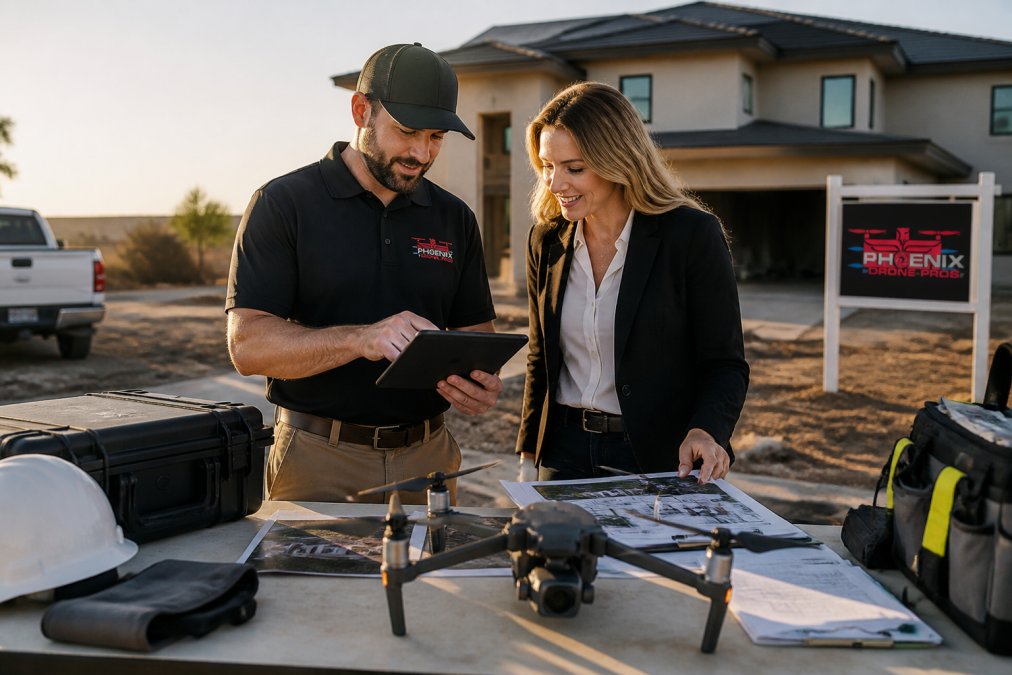
Step 1: Define Your Project Scope and Deliverables
Write down exactly what you need before contacting anyone: the deliverable format (raw footage, edited video, stills, orthomosaic maps, or 3D models), turnaround time, and resolution standards.
A vague request attracts vague bids. A precise scope attracts operators who can actually do the work.
Step 2: Post Your Project and Collect Bids
Post to drone service marketplaces, regional operator directories, or established firms directly. Include your scope, site location, and timeline. Expect bids to vary widely, pricing depends on flight complexity, editing time, and travel distance.
Step 3: Vet Credentials, Portfolio, and Communication
This is where most clients rush. Do not.
Verify the Part 107 certificate. Confirm insurance. Review the portfolio for work similar to your project, not just impressive scenery. Then evaluate communication: response time, question quality, and whether the operator asks about your goals or just quotes a price.
Red flags in pilot communication include vague answers about certification, reluctance to provide insurance documentation, and pressure to skip contracts. A professional operator welcomes scrutiny.
Step 4: Compare Bids and Lock In a Contract
A contract should specify deliverables, timeline, payment terms, insurance requirements, and data ownership. Clarify who owns the footage and whether the operator retains portfolio rights.
| Stage | What You Do | What to Watch For |
|---|---|---|
| Scope | Define deliverables and format | Vague requests attract vague bids |
| Posting | List project on marketplaces or direct | Bids vary by complexity and travel |
| Vetting | Verify Part 107, insurance, portfolio | Missing credentials, evasive answers |
| Contract | Specify terms and data ownership | Unclear usage rights, no timeline |
Drone Photography Pricing Guide: What Drives Your Quote
A drone photography pricing guide cannot give a single number because none exists. Quotes reflect flight complexity, deliverable type, site conditions, travel distance, and turnaround speed.
Simple aerial stills for a residential listing cost less than a full 3D mapping package for a construction site. Thermal inspections require specialized equipment and interpretation skills, which command higher rates.
Pricing depends on quantity, dates, and delivery requirements. Phoenix Drone Pros provides quotes based on your specific project scope rather than flat rates. Request pricing through our scheduling and pricing page for an accurate estimate.
The cheapest bid is rarely the best value. An operator who undercuts everyone else is often cutting corners on insurance, equipment, or post-processing time.
Red Flags and the Pilot-in-Command vs. Visual Observer Distinction
The Remote Pilot in Command holds legal responsibility for the flight and must be Part 107 certified. A Visual Observer watches for hazards the pilot cannot see but needs no certification and cannot operate the aircraft.
Some operations require both roles. Complex sites with obstructions, populated areas, or multiple aircraft benefit from a dedicated visual observer. If an operator claims to fly solo in conditions that warrant a second set of eyes, ask why.
Red flags to watch for:
- Cannot produce a Part 107 certificate number
- Avoids questions about insurance or provides only verbal confirmation
- No contract or written agreement offered
- Portfolio contains only generic stock-style footage
- Delivers excuses instead of timelines
- Pushes to skip airspace authorization for convenience
Any one of these warrants caution. Two or more means walk away.
Post-Flight Data Workflows: What Happens After the Drone Lands
Post-flight processing separates professional operators from hobbyists. Raw footage is not a deliverable, the workflow after landing determines whether you receive usable data or a folder of unedited files.
A professional workflow includes data backup, image processing, color correction, and format conversion; mapping adds photogrammetry software for orthomosaics and 3D models, and inspection work adds thermal analysis and annotated reports. But "we process the data" is not an answer, ask for specific steps, software, and deliverable format.
What Each Deliverable Type Actually Requires
Aerial stills and video. The workflow is capture, cull, color grade, and export. Ask what resolution and codec you will receive, whether the files are delivered as RAW or compressed, and whether the pilot retains the original files. A pilot who delivers only a compressed MP4 has given you a finished product, not an asset you can re-edit.
Orthomosaic maps. The pilot flies a grid pattern with sufficient overlap, commonly 70 to 80 percent forward overlap and 60 to 70 percent side overlap, then runs the images through photogrammetry software such as Pix4D, Agisoft Metashape, or DroneDeploy. The output is a georeferenced, stitched image with a known ground sample distance. Ask for the ground sample distance in centimeters per pixel; that number tells you whether the map is precise enough for your use case.
3D models and point clouds. The same photogrammetry pipeline produces a dense point cloud, a mesh, and often a textured model. Deliverables are typically OBJ, LAS, or LAZ files. Ask whether the model is georeferenced to a known coordinate system and whether ground control points were used. Without ground control, absolute accuracy is limited to the drone's GPS, which is often several meters.
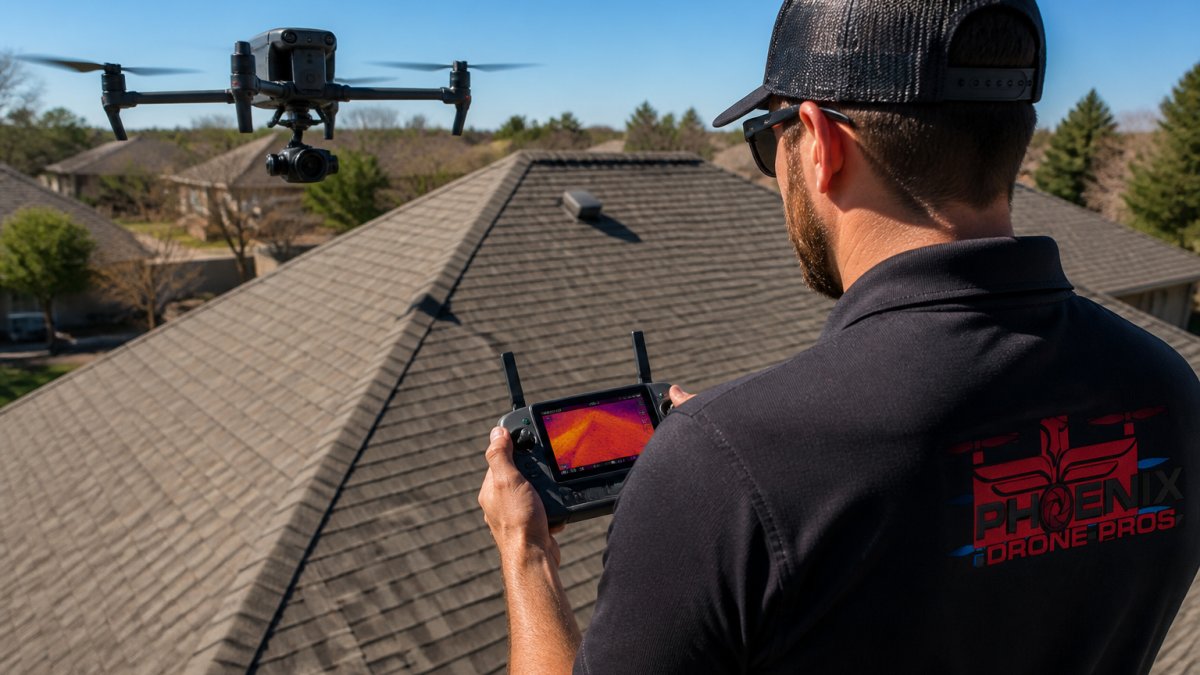
Thermal inspection reports. The pilot captures radiometric thermal images, then analyzes them in software such as FLIR Thermal Studio or a manufacturer-specific tool. The deliverable should be an annotated report identifying anomalies with temperature readings, not just a folder of thermal JPEGs. Ask whether the images are radiometric, meaning temperature data is embedded and can be re-analyzed, or only visual. Thermal drones also power specialized work like search and rescue, where the same radiometric data locates people or heat anomalies in the field.
How to Evaluate a Pilot's Workflow Before You Hire
Ask these questions and listen for specifics, not generalities:
- What software do you use for processing, and what file formats do you deliver?
- How do you back up footage in the field and in the office?
- What is your standard turnaround time, and what triggers a rush fee?
- Can you provide a sample deliverable, a short clip, a sample orthomosaic, or a sample inspection report, from a comparable project?
- Who owns the raw data, and will you retain it for future re-processing?
A pilot who cannot describe their workflow clearly will not deliver consistent results. A pilot who can walk you through the pipeline, name the software, and show a sample deliverable is a pilot who has done this before.
Turnaround and Data Ownership
Turnaround time matters too: some projects need footage within 24 hours, others allow a week. Confirm the timeline in writing before the flight. Processing often takes longer than the flight itself, a 30-minute flight can produce hundreds of images that take hours to stitch and georeference.
Data ownership is a separate negotiation. Clarify in the contract who owns the raw files and processed deliverables, and whether the pilot retains portfolio rights. Many pilots grant full ownership of deliverables while retaining portfolio rights; others charge more for a full buyout. Decide which you need before you sign.
Frequently Asked Questions
How much do professional drone pilots charge?
Pricing depends on project scope, location, deliverables, and turnaround time. A simple real estate shoot costs less than a multi-building construction mapping job with 3D outputs. Request quotes from several FAA Part 107 certified pilots and compare what is included, not just the bottom line. Ask whether editing, data processing, and licensing are part of the fee. For current rates, contact Phoenix Drone Pros directly.
What certifications should I look for when hiring a drone pilot?
Look for a current FAA Part 107 remote pilot certificate. You can verify it through the FAA's online airman registry using the pilot's name or certificate number. Ask about liability insurance and, for complex sites, whether the pilot holds additional waivers such as night operations or operations over people. A pilot who volunteers this information without prompting is a good sign.
Are drone pilots required to have liability insurance?
The FAA does not require liability insurance for most commercial drone operations, but many clients and venues do. Commercial drone insurance requirements vary by project: real estate brokerages, construction sites, and event organizers often set minimum coverage limits. Always request a certificate of insurance naming you or your company as additional insured, and verify the policy is active before the flight date.
How do I verify a drone pilot's FAA Part 107 certification?
Ask for the pilot's certificate number and check it in the FAA's online airman registry. The record shows the certificate type and whether it is current. You can also request a copy of the pilot's remote pilot certificate and a government-issued ID. For team operations, confirm which crew member is the remote pilot in command for your flight, since that person is legally responsible for the mission.