 comparison
Looking for an Iskyfilms Alternative for Aerial Photography?
Table of Contents
- Why Look Beyond Iskyfilms for Aerial Photography?
- Comparing Your Options for Aerial Photography Services
- Option 1: Hiring a Local, FAA-Certified Commercial Drone Photography Service
- Option 2: Tapping Into a National On-Demand Drone Pilot Network
- Option 3: Buying Your Own Drone for Aerial Photography
- Understanding FAA-Certified Drone Pilot Rates
- Specialized Needs: Drone Roof Inspection Services
- Which Aerial Photography Alternative Is Right for You?
- Frequently Asked Questions
Last Updated: September 9, 2026
Why Look Beyond Iskyfilms for Aerial Photography?
Aerial photography captures images or video from an elevated position, typically using drones, to provide a perspective unavailable from the ground. Many buyers initially discover platforms like Iskyfilms, but the real challenge is finding a provider who delivers consistent quality, holds proper certifications, and understands local conditions.
The core problem isn't finding someone with a camera and a drone; it's finding a partner who treats your project with professional rigor. An iskyfilms alternative for aerial photography should offer accountability, regulatory compliance, and a proven track record.
Below, we'll compare the primary routes for securing aerial imagery: local certified services, national pilot networks, and self-operation.
Comparing Your Options for Aerial Photography Services
Your decision hinges on three main factors: quality control, liability, and cost. Each option below handles these differently.
| Option | Best For | Key Advantage | Main Drawback |
|---|---|---|---|
| Local FAA-Certified Service | High-end real estate, complex construction | Direct communication, tailored results | May have limited availability |
| National Pilot Network | Multi-site enterprise projects | Scalability across locations | Less control over individual pilot quality |
| Buying Your Own Drone | Frequent, simple captures | Long-term cost control | Requires licensing, training, and insurance |
The choice comes down to whether you need a partner or just a pilot.
Option 1: Hiring a Local, FAA-Certified Commercial Drone Photography Service
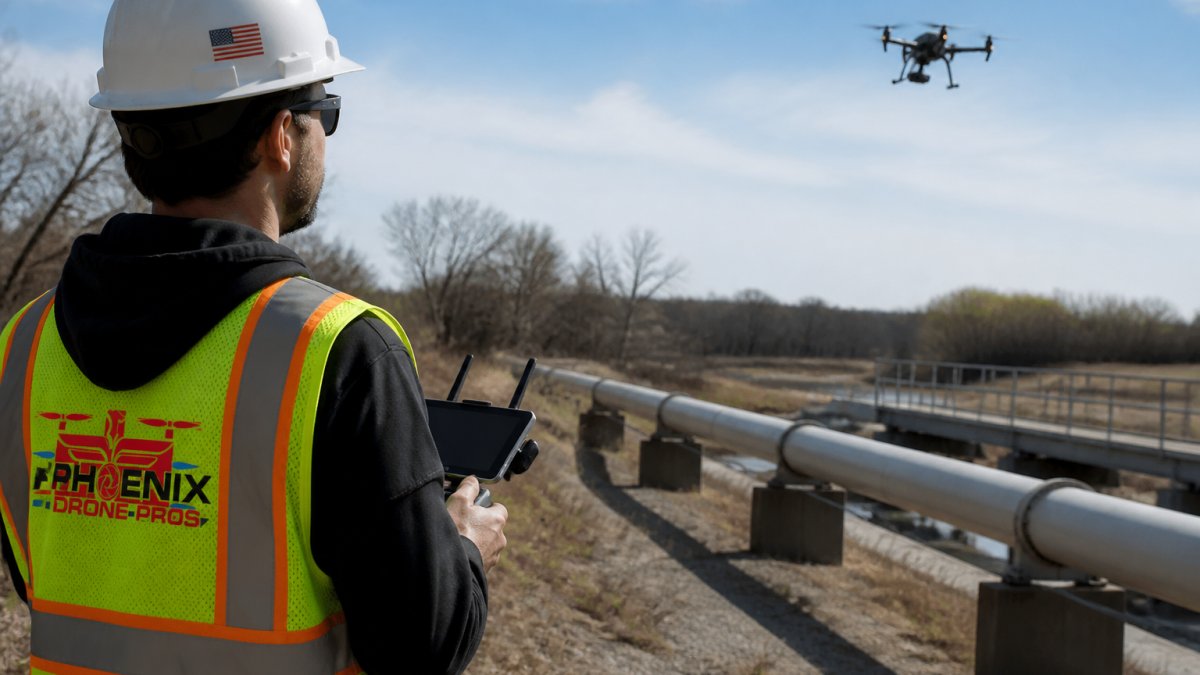
For most real estate agents, property managers, and construction firms, a local, FAA-certified commercial drone photography service offers the best balance of quality, communication, and accountability. A dedicated local team can pre-plan the shoot, adapt to site-specific challenges, and deliver a final product that matches your brand's standards.
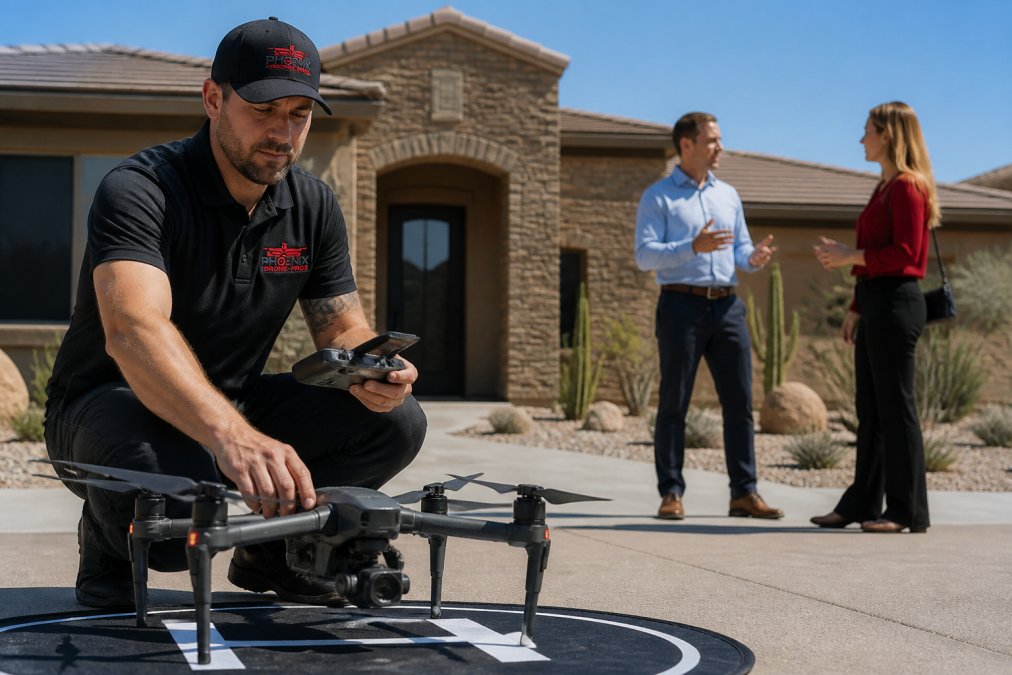
Working with a local provider means you get a direct line to the person flying the mission, allowing you to discuss specific shots like the pool or a tricky roof line. Their local knowledge of airspace and weather reduces the risk of a wasted flight.
The primary trade-off is availability. A high-quality local team may be booked during peak seasons, so planning ahead is essential.
Option 2: Tapping Into a National On-Demand Drone Pilot Network
If you manage properties or projects across multiple states, a national on-demand drone pilot network provides a scalable solution. These platforms maintain a vetted roster of independent pilots, making it easier to request a flight in a city where you have no existing contacts.
Networks excel at standardizing data delivery for enterprise clients needing consistent documentation across dozens of sites, and they handle pilot vetting and insurance compliance.
However, since you are hiring an individual contractor through a platform, you may have less control over their equipment or creative style, a risk for a single, high-stakes listing.
- Pros: Scalable for multi-location projects; standardized reporting.
- Cons: Less control over pilot selection; communication is often mediated through the platform.
- Best For: Businesses needing consistent coverage across a wide geographic area.
The cost-benefit analysis depends on volume: for one-off shoots the bidding process is time-consuming, but for ongoing needs the efficiency is hard to beat.
Option 3: Buying Your Own Drone for Aerial Photography
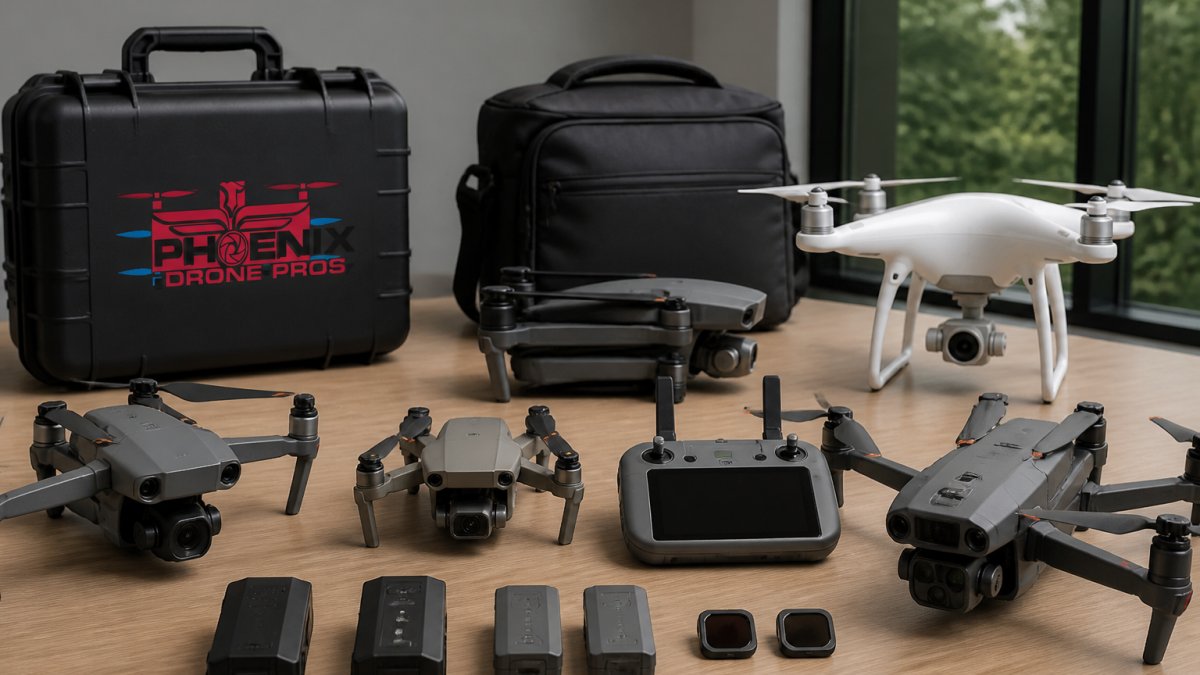
Some businesses consider purchasing a drone to handle imagery in-house. A high-end model like the DJI Mavic 4 Pro offers excellent image quality with a multi-camera system and omnidirectional obstacle sensing, but it represents a significant investment.
The financial commitment goes beyond the aircraft. For commercial use, you must obtain an FAA Part 107 certification, which requires passing a knowledge test (faa.gov). You also need liability insurance and should budget for ongoing maintenance and eventual replacement. If you'd rather not take on that learning curve, done flight training can help you get up to speed efficiently.
While having a drone on demand is appealing, photography is a skill. Capturing a listing that sells a home requires an eye for composition, an understanding of lighting, and the ability to plan a shoot that meets a specific purpose.
For most, the math doesn't work unless you are flying weekly. The opportunity cost often outweighs the direct savings.
Understanding FAA-Certified Drone Pilot Rates
Most buyers ask about pricing early, but the real question is the ROI compared to alternatives. A cost-benefit analysis of hiring a licensed pilot versus poles, kites, or stock imagery reveals why professional aerial capture remains the standard for high-value assets.
The True Cost of a Licensed Pilot
FAA-certified drone pilot rates are rarely published as a flat fee because the mission scope drives the price. Pricing depends on the mission scope, required deliverables, and post-processing needs.
What you are paying for breaks down into four components:
- Flight operations, The pilot's time, travel, and on-site risk management.
- Regulatory compliance, Part 107 certification, airspace authorizations (LAANC), and adherence to FAA waivers when needed.
- Insurance, Commercial liability policies that protect you if something goes wrong.
- Post-production, Color grading, editing, annotation, or data processing that turns raw footage into a usable deliverable.
The Hidden Costs of DIY Alternatives
A common pattern is a client comparing the pilot fee against the cost of a consumer drone and concluding self-operation is cheaper. That math misses the full picture:
- Part 107 certification requires passing a knowledge test and paying the $175 FAA exam fee, plus ongoing recency requirements.
- Commercial liability insurance for a small operation typically runs $500 to $1,500 per year.
- Equipment depreciation, a capable drone loses value quickly, and a crash or flyaway can mean a $1,000+ repair bill.
- Your time, flight planning, obtaining airspace authorization, waiting for weather windows, and editing footage can consume 4-6 hours per shoot. At a typical billable rate, that represents significant opportunity cost per project.
When the Math Flips
For a single high-stakes listing, hiring a licensed pilot is almost always better: the pilot absorbs regulatory risk, brings professional equipment, and delivers a finished product without consuming your team's time.
The math only flips in favor of self-operation when flying at least twice per month consistently, allowing fixed costs to amortize. Even then, you trade capital for convenience and accept the liability yourself.
The ROI of Professional Imagery
A real estate listing captured by a licensed pilot can justify a higher asking price, and a construction firm using drone data to catch a grading error saves thousands in rework. In both cases, the flight fee is trivial compared to the value it protects.
Pricing models typically fall into three categories:
- Per-Project: A flat fee for a defined deliverable, such as a listing video or a roof inspection report.
- Hourly: For ongoing documentation where flight time is variable, typically $150-$300 per hour.
- Retainer: For regular, scheduled flights, such as weekly construction progress updates, which can reduce per-flight costs by 10-20%.
When evaluating costs, consider the value of the imagery: a high-quality aerial perspective can justify a higher asking price, and that return separates a vendor from a partner.
Specialized Needs: Drone Roof Inspection Services
Beyond marketing, drone roof inspection services offer a safe, non-invasive way to assess damage without putting a person on a steep or fragile roof, valuable for documenting conditions for insurance claims or maintenance planning.
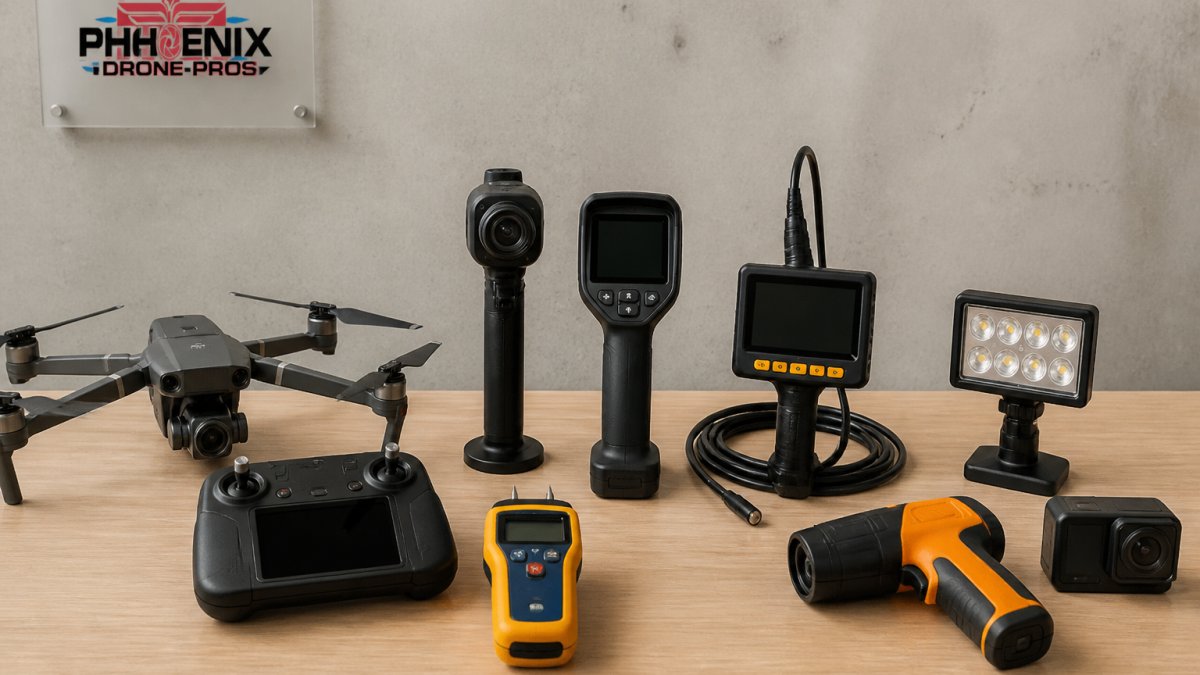
A thermal drone can detect moisture intrusion or insulation gaps invisible to the naked eye, transforming a visual check into a diagnostic tool that catches structural issues before costly repairs (energy.gov). For critical situations like locating a missing person or assessing a hazardous scene, search and rescue operations with a thermal drone can provide life-saving situational awareness.
For complex commercial properties, a professional operator plans the flight path to ensure complete coverage, catching issues that matter rather than providing "pretty pictures."
Which Aerial Photography Alternative Is Right for You?
Choosing the right iskyfilms alternative for aerial photography depends on your project's scale, risk tolerance, and quality needs. But beyond the service model, a legal and liability dimension often determines which option is truly viable.
Legal and Liability Comparison
The FAA regulates all commercial drone operations under Part 107, regardless of whether you hire a pilot, use a network, or fly yourself. The difference lies in who bears the compliance burden and the liability exposure.
Hiring a licensed pilot transfers most regulatory risk to the operator, who carries Part 107 certification, insurance, and responsibility for airspace authorizations and safe operations. If something goes wrong, the pilot's insurance protects you from most claims. Your contract should specify current certification and insurance; a reputable provider will provide certificates upon request.
Using a national network shifts vetting to the platform, but you have limited recourse if a pilot performs poorly. Coverage quality varies, so read the terms carefully to understand whether you are protected or the platform merely facilitates a contract with an independent contractor.
Flying yourself places all liability on your business. Your commercial general liability policy may exclude drone operations, requiring a separate aviation policy. Any Part 107 violation, even unintentional, can result in FAA fines up to $27,500 for civil penalties and $250,000 for criminal penalties in egregious cases (ecfr.gov).
A Decision Framework Based on Risk and Reward
| Scenario | Recommended Option | Why |
|---|---|---|
| Single high-value real estate listing | Local certified pilot | Quality control and liability transfer justify the fee |
| Multi-site enterprise documentation | National network | Scalability with standardized deliverables |
| Weekly construction progress updates | Local certified pilot on retainer | Consistent quality with predictable pricing |
| Internal marketing team flying 2+ times per month | Self-operation | Volume amortizes fixed costs of certification and insurance |
| One-off event or simple capture | Local certified pilot | Avoids capital investment and regulatory burden |
The Quality Benchmark No One Talks About
There is a measurable difference between drone-captured imagery and alternatives like telescopic poles, kites, or AI-generated perspectives. A drone provides full three-dimensional control over camera position, allowing for smooth orbital shots and dynamic angles that poles cannot replicate. AI-generated perspectives still lack the real-world accuracy required for marketing or construction documentation.
For marketing, the benchmark is whether the imagery sells the property; for inspection, it is accuracy, geo-referenced data, measurable dimensions, and thermal readings that a pole cannot deliver.
For most real estate professionals and project managers, the decision comes down to whether you want to manage a vendor or manage your business. A local certified service is the safest bet for quality and compliance; a national network provides scale; and owning your own drone is viable if you have the time, volume, and risk tolerance.
Frequently Asked Questions
What should I look for when hiring a commercial drone photography service?
Verify the pilot holds a valid FAA Part 107 certificate and carries liability insurance. Review their portfolio for image resolution and editing quality relevant to your project type, such as real estate or construction. Ask about their experience with similar properties and their turnaround time for delivering finished photos and video. A local service with a proven track record often provides more personalized attention and a faster response than a national network.
How do FAA-certified drone pilot rates compare between local services and national networks?
Rates vary based on project scope, location, and required deliverables. National networks often use a bidding system, which can yield competitive pricing but requires you to vet individual pilots. A local commercial drone photography service typically provides a flat quote after a site assessment, which simplifies budgeting. Compare the final cost against the pilot's experience, insurance coverage, and the specific services included, such as editing or 3D mapping.
What are the benefits of hiring an FAA-certified pilot for aerial photography?
An FAA-certified pilot has passed the Part 107 knowledge test, proving they understand airspace rules, safety procedures, and weather factors. This reduces legal and operational risks on your property. They are also required to keep their drone registered and inspected. For commercial projects like real estate listings or construction monitoring, hiring a certified pilot ensures the work is compliant, professional, and safe, protecting you from liability.
Is buying my own drone a cost-effective alternative to hiring a professional service?
Buying a drone involves a significant upfront cost, plus ongoing expenses for accessories, software, and training. You must also pass the FAA Part 107 exam to use it for any commercial purpose. While owning a drone offers flexibility, professional services provide certified pilots, high-end equipment, and editing expertise. For one-off projects or high-stakes shoots, hiring a professional is often more reliable and delivers superior results.
Why would I need specialized drone roof inspection services instead of standard aerial photography?
Drone roof inspection services use specific flight patterns, sensors, and software to capture detailed imagery of shingles, flashing, and gutters. Standard aerial photography is designed for visual appeal, not technical analysis. A professional inspection can identify thermal anomalies, moisture intrusion, and structural damage that are invisible to the naked eye. This provides property managers and homeowners with a documented report to guide maintenance decisions or insurance claims.
Choosing the right provider for your aerial photography needs comes down to balancing quality, cost, and accountability. For projects where the visual result directly impacts your bottom line, working with an experienced, fully insured team makes the difference. Phoenix Drone Pros offers FAA-certified pilots, a decade of commercial experience, and a commitment to detailed, accurate property views. Get started with Phoenix Drone Pros and capture the aerial perspective that sets your work apart.