 How-to
7 Steps to Hiring a Professional Drone Roof Inspector
Last Updated: November 14, 2026
Quick Summary
Hiring a professional drone roof inspector means booking an FAA Part 107 certified pilot who carries aviation liability insurance and provides a written inspection report. Professional drone roof inspection services run $120 to $600, averaging $350, and a fair price should include flight planning, image review, and a written report.
- Verify the pilot's FAA Part 107 certificate number against their name before booking.
- Confirm the drone's FAA registration number matches the aircraft that will fly your roof.
- Request a certificate of insurance showing aviation liability limits and the policy period.
- Ask for two or three sample roof-inspection reports, not real estate aerials.
- Get a written scope naming roof coverage, deliverables, and a firm delivery date.
Table of Contents
- Why Hire a Drone Roof Inspector Instead of Climbing Up Yourself
- What a Drone Roof Inspection Cost Should Cover
- Drone Roof Inspection Certification and Credentials to Verify
- Finding Drone Roof Inspections Near Me: Vetting Local Pilots
- What to Request in a Written Scope of Work
- Drone Roof Inspection Software and Deliverables to Expect
- Drone Inspection Limitations and When to Escalate
- Scheduling Your Drone Roof Inspection
- Frequently Asked Questions
Why Hire a Drone Roof Inspector Instead of Climbing Up Yourself
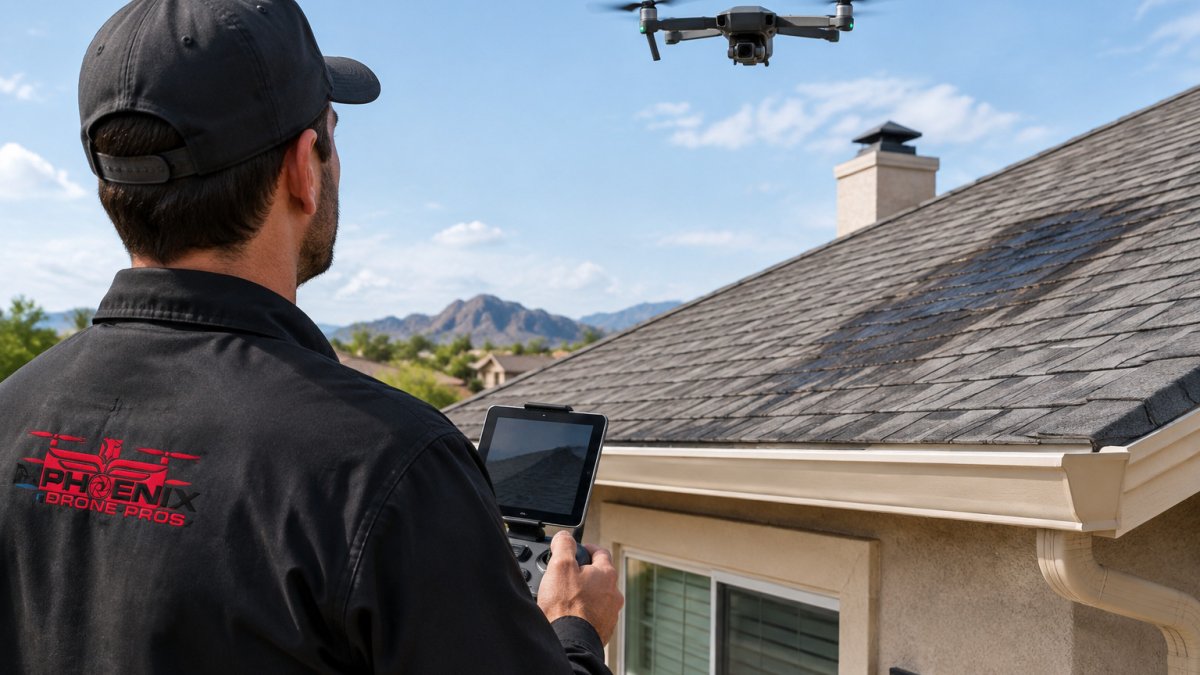
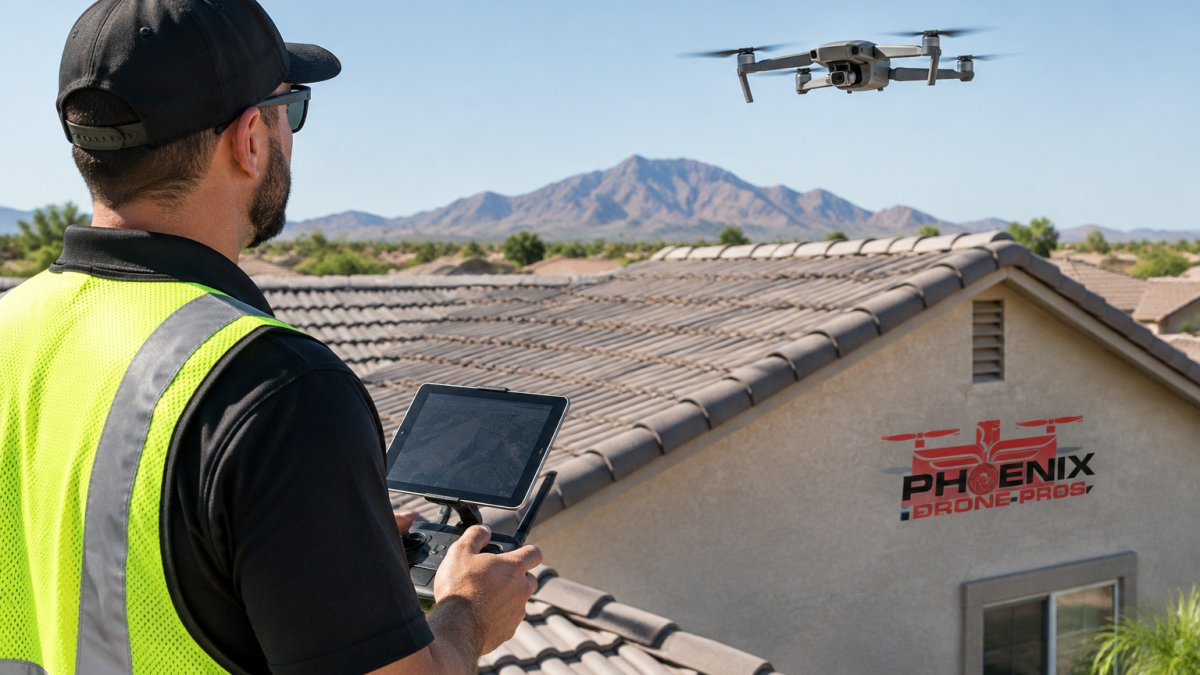
Hiring a professional drone roof inspector costs far less than a fall. According to Angi's drone roof inspection cost data, professional drone roof inspection services run $120 to $600, with an average of $350, while a single emergency room visit for a ladder fall can dwarf that figure. At Phoenix Drone Pros, we have flown inspections over steep pitches, fragile tile, and storm-damaged shingles that no sensible person should walk. Hiring a professional drone roof inspector keeps feet on the ground and eyes on the roof.
The safety case is only half of it. A drone gets close enough to read granule loss, lifted flashing, and cracked sealant without a single foot touching the roof surface.
- No ladder, no harness, no fall risk
- No foot traffic that cracks aging shingles or tile
- High-resolution imagery of hard-to-reach areas: valleys, chimneys, dormers
- Faster turnaround than a manual roofing inspection
For the fuller case, read our breakdown of the benefits of using a drone for roof inspections.
What a Drone Roof Inspection Cost Should Cover
A fair drone roof inspection cost covers more than flight time. According to UAV Coach's 2026 drone roof inspection guide, a professional inspection for an average home runs $150 to $400, with pilots charging $80 to $250 per hour. Those figures should include flight planning, on-site capture, image review, and a written report.
Watch out: quotes that only mention "flight time" often exclude the report, which is the part you actually use.
Ask what the price includes before you compare bids:
- Pre-flight planning and weather check
- Aerial photos and video of the full roof surface
- Thermal imaging, if offered
- A written inspection report with annotated findings
- Turnaround time for deliverables
For a closer look at thermal pricing, see how much a drone thermal roof inspection costs.
Drone Roof Inspection Certification and Credentials to Verify
Drone roof inspection certification starts with one document: an FAA Part 107 remote pilot certificate. Any commercial drone pilot flying for pay in the U.S. must hold it, and you can verify it directly through the FAA. Ask for the certificate number and confirm it before booking.
The FAA's Part 107 rules for small UAS set the operating limits pilots must follow, including altitude and line-of-sight requirements. If a pilot cannot produce a certificate number on request, walk away.
Here are the credentials to verify before booking a drone roof inspector.
| Credential | What to verify | Note |
|---|---|---|
| FAA Part 107 remote pilot certificate | Certificate number matched to pilot's name | Required for commercial drone pilots flying for pay |
| Drone registration | Registration number matches the aircraft | Required for commercial drones over 0.55 lb |
| Liability insurance | COI showing aviation liability limits and policy period | Generic liability line may exclude aviation |
| Roof-inspection experience | Two or three sample roof-inspection reports | Real estate aerials do not count |
| Airspace clearance | Method explained for your address | Controlled airspace may need LAANC or a waiver |
Finding Drone Roof Inspections Near Me: Vetting Local Pilots
Searching "drone roof inspections near me" returns plenty of names. Fewer survive a real vetting process. A local commercial drone pilot should be able to show certification, insurance, and a portfolio of roof work, not just real estate flyovers.
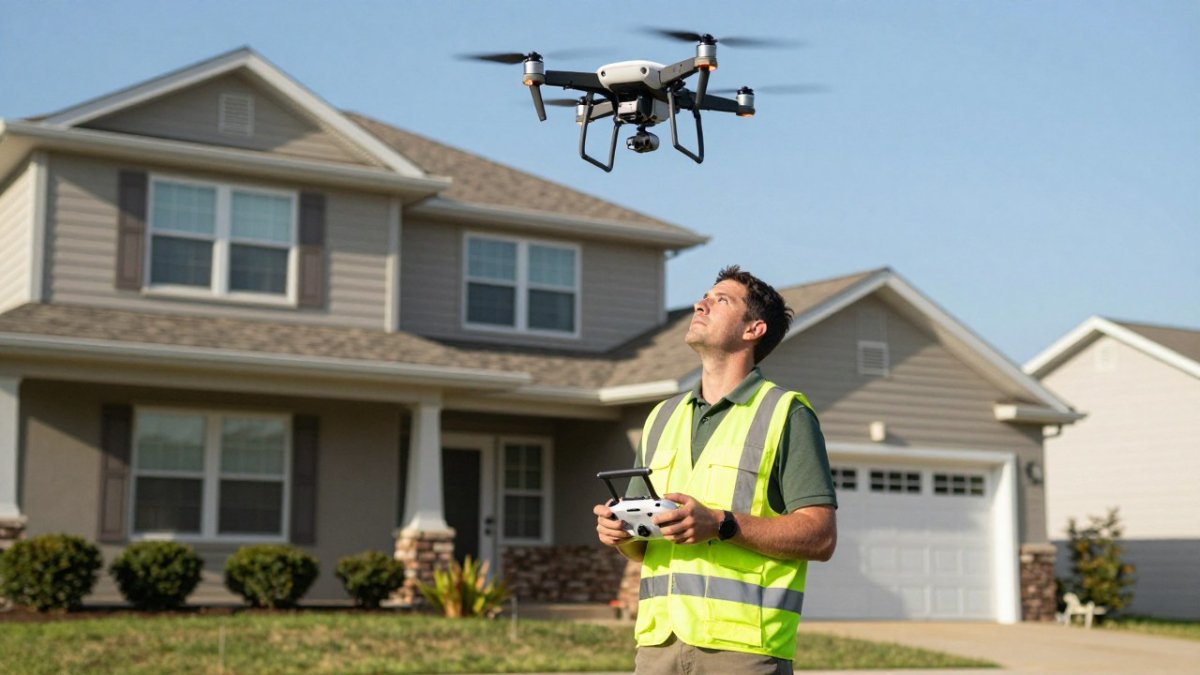
The difference between a marketplace listing and a qualified inspector is verification, not a star rating. Work through these checks in order before you book.
1. Confirm the Part 107 certificate directly. Ask for the pilot's FAA Part 107 remote pilot certificate number and the name on the certificate. You can look up an airman's certificate status through the FAA's public airman inquiry.
2. Verify the aircraft is registered. Any drone flown for commercial work and weighing more than 0.55 lb must be registered with the FAA, and the registration number should be displayed on the aircraft.
3. Read the liability insurance certificate, not just the word "insured." Request a certificate of insurance (COI) naming the general liability coverage limit, the policy period, and whether aviation liability is included.
4. Ask who owns the damage risk. Confirm in writing who is responsible if the drone strikes the roof, a gutter, a skylight, or a vehicle, and whether the pilot's insurance is primary.
5. Check roof-inspection experience, not just flight hours. Ask for two or three sample reports from roof inspections, not real estate aerials, and look for labeled defects, roof-section coverage, and a written summary.
6. Confirm local operating permissions. Ask whether the pilot has checked airspace restrictions for your address. Controlled airspace around airports may require FAA authorization through LAANC or a waiver, and some properties sit under temporary flight restrictions.
7. Coordinate property access and privacy. Confirm who will be home, where the pilot will stage, and how the pilot will avoid capturing neighbors' windows or bystanders.
Use this checklist before you book:
- FAA Part 107 certificate number verified against the pilot's name
- Drone registration number provided and matched to the aircraft
- Certificate of insurance showing aviation liability limits and policy period
- Written statement of who is responsible for property damage
- Two or three sample roof-inspection reports reviewed
- Airspace clearance method explained for your address
- Access, occupant, and privacy plan confirmed in writing
- Written quote with scope and deliverables
- Clear turnaround time in writing
Insurance deserves its own check. Our guide to drone roof inspection insurance requirements explains what coverage a local pilot should carry.
What to Request in a Written Scope of Work
A written scope of work is what separates a professional drone roof inspector from someone with a drone and a free afternoon. The scope should name every roof section to be captured, the deliverables, the deadline, and the standard the work will be judged against. Get it in writing before any flight.
Ask for these in the document:
- Roof-area coverage. Name the sections to be captured: field shingles, ridges, hips, valleys, flashing at chimneys and skylights, gutters and downspouts, and any dormers or additions. Ask for a simple roof diagram or address-level map with the captured areas marked so you can confirm nothing was skipped.
- Image and video resolution. Specify the minimum still-image resolution (for example, a stated megapixel count) and whether images will be delivered at full resolution or compressed. Ask for video resolution and frame rate if video is included. Resolution numbers in the scope let you compare bids on equal terms.
- Thermal imaging, if included. State whether thermal capture is part of the flight, what camera is used, and whether thermal images will be interpreted in the report or delivered raw.
- Report format and annotation level. Require a written report that labels each finding with its location on the roof, a description of the condition, a severity rating, and a recommended action. Ask whether annotated images will be marked with arrows, circles, or measurement callouts, and whether the report includes a summary page you can hand to a roofer or insurer.
- Deliverable formats and file-sharing. Confirm whether you receive PDF, JPEG, MP4, or a hosted report link, and how long the files stay accessible. Ask for the file-naming convention so you can match images to roof sections later.
- Turnaround time. Put a delivery date in the scope, not a range like "within a week or two." Ask what happens if weather delays the flight and how the delivery date shifts.
- Follow-up consultation. Ask whether the price includes a call to walk through the findings, and whether the pilot will answer follow-up questions from your roofer or insurance adjuster. A report without a walkthrough often leaves you guessing about severity.
- Change and cancellation terms. Confirm the rescheduling policy for weather, the cancellation window, and whether travel fees are refundable.
Vague scopes produce vague reports. If the quote says only "roof inspection," ask what that includes. A scope that names coverage, annotation, and delivery date is easier to enforce.
Drone Roof Inspection Software and Deliverables to Expect
Drone roof inspection software turns raw footage into something a roofer or insurer can act on. Expect photogrammetry or mapping tools that stitch aerial photos into a roof model, plus annotation software that marks damage. The deliverable matters more than the tool name.
You should receive:
- High-resolution aerial photos of the roof surface
- Inspection video of problem areas
- An inspection report flagging damage, wear, and leaks
- Annotated images pointing to specific defects
A report that only says "roof looks fine" is not an inspection. Demand specifics: location, condition, and recommended repair.
Drone Inspection Limitations and When to Escalate
Drone inspection limitations are real, and a good pilot will name them. A drone cannot lift a shingle, probe soft decking, or confirm the source of an interior leak. It documents what is visible from above.
Escalate to a hands-on roofer when:
- The report flags soft spots or possible structural damage
- Interior leaks need tracing to a source
- Repairs require physical access to the roof
- Storm damage needs a closer look for insurance claims
The drone is the first pass, not the final word. Pairing aerial documentation with a roofer's on-roof assessment gives you the full picture.
Scheduling Your Drone Roof Inspection
Book the flight on a clear, low-wind day. Weather conditions affect image quality and flight safety, so a professional pilot will reschedule rather than fly in poor visibility. Confirm the date, the scope, and the delivery window in writing.
Once booked, our guide on how to prepare for a drone roof inspection walks through the six steps that make the visit go smoothly. At Phoenix Drone Pros, our FAA-certified, fully insured pilots bring 10+ years of commercial drone experience to every roof, with local availability and detailed, accurate property views. If you would rather learn to fly and inspect on your own terms, we also offer Done flight training for pilots who want to build those skills firsthand.
Hiring a professional drone roof inspector protects your property and your safety, but only if you vet the pilot properly. Phoenix Drone Pros brings FAA certification, full insurance, and over a decade of commercial drone experience to every inspection, with thermal imaging and detailed aerial documentation that actually tells you what is happening on your roof. Get started with Phoenix Drone Pros and schedule an inspection that gives you clear, actionable answers.
Frequently Asked Questions
How much does a drone roof inspection cost?
Pricing depends on roof size, scope of work, and deliverables, so request a current quote from the provider. Ask for a written quote that itemizes flight time, image processing, and the inspection report so you can compare bids fairly.
Do you need a drone license to do roof inspections?
Yes. Anyone flying a drone for commercial purposes, including paid roof inspections, must hold a Remote Pilot Certificate under FAA Part 107. Ask to see the certificate and confirm it is current. A licensed pilot also carries liability insurance, which protects you if the drone damages property or injures someone during the flight.
Can a drone inspection identify roof damage?
High-resolution imagery can reveal missing shingles, cracked flashing, granule loss, storm damage, and debris in gutters. Thermal-equipped drones can also flag moisture intrusion and heat loss. A drone cannot test the structural integrity of a roof deck or replace a hands-on inspection, so serious findings should be confirmed by a licensed roofer before you authorize repairs.
What should a drone roof inspection report include?
A thorough report should include high-resolution aerial photos and video of every roof plane, labeled close-ups of any damage, a summary of findings by roof section, and recommendations for repair or escalation. Ask whether the pilot uses drone roof inspection software to annotate images and produce a shareable PDF, and confirm the turnaround time before you book.