 How-to
How to File a Commercial Drone Insurance Claim
Last Updated: November 20, 2026
Quick Summary
To file a drone insurance claim, secure the scene, document the damage, export your flight logs, and notify your insurer promptly. Submit a complete package, including your declarations page, photos, witness details, and repair estimates, and cooperate with the adjuster.
- Call your insurer promptly, since most policies require notice within a set window.
- Export flight logs and telemetry before they get overwritten.
- Photograph the drone and scene in place before moving anything.
- Do not repair or wipe damaged equipment before the adjuster inspects it.
- Submit the full documentation package at once to avoid resetting the review clock.
Table of Contents
- What a Commercial Drone Insurance Claim Covers
- Step-by-Step: Filing Your Drone Insurance Claim
- Drone Insurance Claim Documentation Checklist
- What Not to Say When Filing an Insurance Claim
- Drone Insurance Claim Timeline: From Incident to Settlement
- Stage 1: Incident and immediate notice (Day 0)
- Stage 2: Claim intake and assignment (Days 1-3)
- Stage 3: Adjuster review and evidence requests (Week 1)
- Stage 4: Inspection and damage assessment (Weeks 2-4)
- Stage 5: Coverage determination and settlement offer (Weeks 4-8)
- Stage 6: Payment and subrogation (after settlement)
- Stage 7: Follow-up and closure
- Handling Delays, Denials, and Disputes
- Get Your Drone Operation Covered Before the Next Incident
- Frequently Asked Questions
What a Commercial Drone Insurance Claim Covers
A commercial drone insurance claim is a request you file with your insurer after a drone incident causes a loss. Most claims fall into one of three buckets: liability for injury or damage to other people's property, physical damage to your own drone and camera gear, and business interruption while you are out of service.
Your policy only pays for what it names. Read the declarations page before an incident, not after one, so you know your limits and deductibles.
Liability, physical damage, and third-party injury
Liability coverage pays when your drone hurts someone or damages their property. Our explainer on drone liability insurance for business projects covers this exposure in more depth.
Physical damage coverage, often called hull coverage, pays to repair or replace your aircraft and payload. It usually covers crashes, flyaways, and sensor failures, but read the exclusions closely.
- Liability: third-party bodily injury and property damage
- Physical damage: the drone, cameras, and gimbals
- Business interruption: lost income while the aircraft is grounded
Commercial versus personal drone policies
A personal drone policy, often written as a hobby or recreational rider, may not cover paid work. Our guide to commercial drone insurance versus general liability coverage explains how the two policy types differ. If you fly for real estate photography, construction mapping, or roof inspections, you need a commercial policy.
Ask your broker to confirm in writing that your commercial operations are covered.
Step-by-Step: Filing Your Drone Insurance Claim
A clean, fast claim starts with the first hour after the incident. Follow these steps in order.
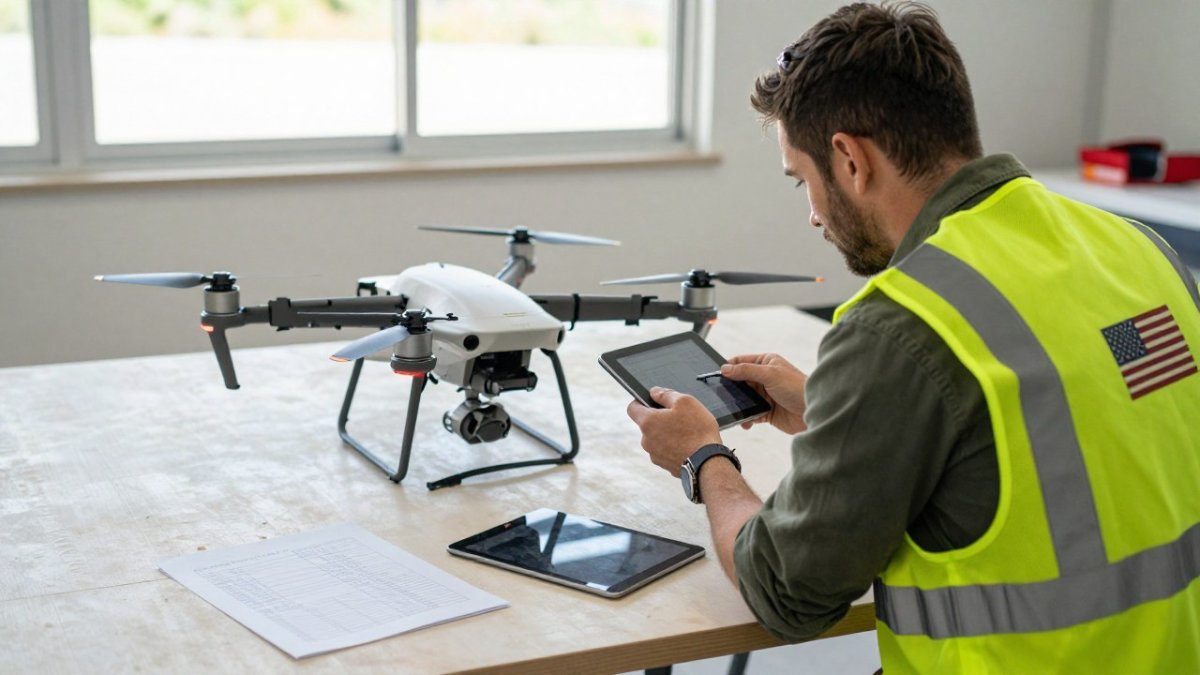
- Make the scene safe. Land or secure the drone, and check for injured people first.
- Call for help if needed. Contact emergency services for injuries or fire.
- Record the basics. Note the time, exact location (GPS if you have it), weather, and what the drone was doing.
- Document everything. Photograph the damage, the scene, and any third-party property. Take video if possible.
- Save flight data. Export your flight log and telemetry before it gets overwritten.
- Collect witness details. Get names and phone numbers from anyone who saw the incident.
- Notify your insurer promptly. Most policies require notice within a set window, so call or submit the claim as soon as you can.
- Complete the claim form. Answer every question with facts, not guesses.
- Submit supporting documents. Send the evidence checklist items listed below.
- Cooperate with the adjuster. Respond quickly and keep copies of everything you send.
Watch out: Do not repair or wipe the damaged drone before the adjuster sees it. Moving or altering evidence can give the insurer grounds to deny the claim.
Drone Insurance Claim Documentation Checklist
Good documentation is what separates a fast settlement from a long dispute. The items below are the core package most adjusters expect on a commercial drone claim. Gather them in one folder, label each file with the date and claim number, and submit the complete set rather than piecemeal.
- Policy number and declarations page showing limits, deductible, and named insured
- Date, time, and GPS coordinates of the incident
- Weather conditions at the time of flight, including wind and visibility
Why each item matters to the adjuster
The declarations page tells the adjuster what was actually insured, a policy that lists the aircraft but not the gimbal will not pay for the gimbal. The flight log is the closest thing to a black box: it shows altitude, speed, battery state, GPS track, and error flags, and it is usually the deciding evidence when the cause of loss is disputed.
Evidence to preserve at the scene
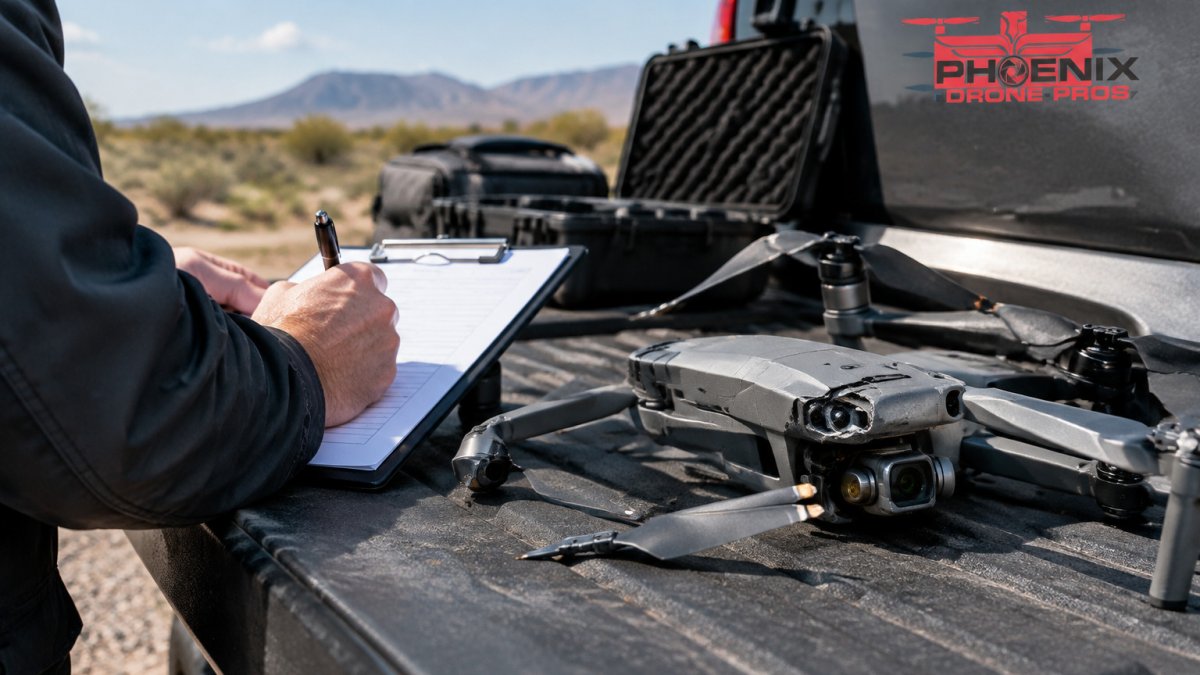
Preserve the scene before anything changes. Photograph the drone where it landed, the surrounding area, and any damaged property from several angles.
Note the position of nearby people, power lines, structures, and any temporary flight restrictions or airspace considerations.
Watch out: Do not move or pick up the aircraft until you have photographed it in place, unless it is creating a safety hazard or blocking traffic.
Handling damaged equipment and flight logs
Bag damaged components rather than discarding them. Keep batteries separate and stored safely, since damaged lithium batteries can be hazardous, and do not attempt to charge or discharge a damaged pack.
Keep the memory card and any removable storage intact, and do not delete footage from the controller or the aircraft. Label each item with the date and incident number, and store the physical evidence in a single box so nothing is lost between the scene and the adjuster's inspection.
Evidence specific to drone claims
Drone claims turn on data that ordinary property claims do not involve. Export the telemetry from both the aircraft and the controller, since the controller often retains a separate log. Preserve any screen recordings, app logs, and firmware version information. If the aircraft was operating under a Part 107 waiver or authorization, include that documentation.
What not to send
Send only what is requested and what supports the claim. Do not send speculative narratives, unverified estimates, or social media posts about the incident. Do not send the original memory card unless the adjuster specifically requests it, send copies and keep the originals.
What Not to Say When Filing an Insurance Claim
Your words can affect the outcome as much as your paperwork. Stick to facts and avoid these common mistakes.
- Do not guess at the cause. Say "the drone lost signal" only if the logs show it.
- Do not admit fault in writing. Describe what happened instead.
- Do not estimate damage costs before you have a repair quote.
A common mistake is speculating in an email to the adjuster. Keep messages short, factual, and dated.
Drone Insurance Claim Timeline: From Incident to Settlement
Timelines vary by insurer, policy form, and claim size, but the sequence of stages is consistent across most commercial drone claims. Knowing what happens at each stage, and what the insurer is waiting on, is the difference between a claim that closes in weeks and one that drags for months. The stages below reflect the common pattern most adjusters follow.
Stage 1: Incident and immediate notice (Day 0)
The clock starts when the incident occurs, not when you get around to reporting it. Most commercial policies require prompt notice, and check your policy for the specific reporting window that applies to you.
Watch out: Verbal notice to your broker is not the same as formal notice to the insurer. Confirm in writing that the claim has been opened and get a claim number.
Stage 2: Claim intake and assignment (Days 1-3)
The insurer opens a file, assigns a claim number, and routes it to an adjuster. For simple hull claims this may be a desk adjuster; for liability claims involving injury or significant third-party property damage, a field adjuster may be assigned. You will typically be asked to complete a proof-of-loss or claim form and to submit the documentation package.
Stage 3: Adjuster review and evidence requests (Week 1)
The adjuster reviews the policy, confirms coverage and limits, checks the deductible, and compares your narrative against the flight log and photos. Expect at least one round of follow-up questions. Respond in writing, answer only what is asked, and keep a dated log of every request and response. If the adjuster requests something you do not have, say so directly rather than substituting an estimate.
Stage 4: Inspection and damage assessment (Weeks 2-4)
For physical damage, the adjuster or a designated repair facility inspects the aircraft and payload. The insurer then makes one of three decisions:
- Repair: the damage is repairable and the estimate is within policy limits. The insurer may pay the repair shop directly or reimburse you.
- Replace: the aircraft is a constructive total loss, repair cost approaches or exceeds the insured value, and the insurer pays the insured value less the deductible.
- Salvage: on a total loss, the insurer may take ownership of the wreckage or deduct salvage value from the payout. Ask in writing how salvage will be handled before you agree to a settlement.
For liability claims, this stage includes investigation of the third-party injury or property damage, which usually takes longer than a hull claim because the insurer is assessing exposure to someone else.
Stage 5: Coverage determination and settlement offer (Weeks 4-8)
The adjuster issues a coverage determination, covered, covered in part, or denied, and, if covered, a settlement offer. Review the offer against your declarations page: confirm the limit applied, the deductible subtracted, and whether depreciation was applied to a repair or replacement. You are not obligated to accept the first offer; you can ask for the calculation in writing and dispute items you believe are wrong.
Stage 6: Payment and subrogation (after settlement)
Once you accept, payment typically issues within a stated period after the signed release. If a third party caused the loss, another aircraft, a contractor, a property owner, the insurer may pursue subrogation to recover what it paid. You may be asked to cooperate with that effort, which is another reason to keep your records intact after the claim closes.
Stage 7: Follow-up and closure
Ask the adjuster for a target decision date at the start and check in at reasonable intervals, roughly weekly on an active file. If the file goes quiet, a short written status request usually restarts it.
Simple physical-damage claims with complete documentation often move faster than liability claims, and claims with missing flight logs or unresolved fault questions move slower.
Handling Delays, Denials, and Disputes
Not every claim goes smoothly. If your claim stalls, ask the adjuster in writing what is missing and when they expect a decision. Keep a log of every call, including the date and the name of the person you spoke with.
If a claim is denied, request the denial in writing and read the specific policy language cited. When the dispute involves a different kind of loss, the same careful review of policy language and supporting evidence can help you handle an insurance claim denial.
Many disputes are resolved once the insurer receives the flight logs and a clear timeline. Keep your records organized so you can respond fast.
Get Your Drone Operation Covered Before the Next Incident
The best claim is the one you never have to file. Confirm that your commercial policy covers your actual work, including the specific services you offer. Keep your flight logs, pilot certifications, and maintenance records current.
When you hire a drone operator for your project, ask for proof of insurance and certification first. Our vetting guide for insured drone operators walks through the questions to ask before you book. You can also browse our insured drone operator for construction jobs to see how we work with project teams.
Frequently Asked Questions
How much does commercial drone insurance cost?
Commercial drone insurance premiums depend on the drone's value, how it is used, the coverage limits you select, your pilot experience, and where you fly. Compare coverage limits and exclusions, not only premiums, and ask each insurer exactly what is covered before you buy. For current pricing on drone services tailored to your project, contact Phoenix Drone Pros directly.
How soon should you report a drone accident to your insurer?
Report the incident as soon as you can after it happens, and follow the notice requirements in your policy. Delayed reporting can create disputes about when the loss occurred or whether evidence was lost. Record the time, GPS location, weather, and flight activity before anything changes, and save your flight logs. Notify your insurer first, then complete any required internal or regulatory reporting that applies to the incident.
Does commercial drone insurance cover a crashed or damaged drone?
Physical damage coverage, sometimes called hull coverage, can pay to repair or replace the drone and its payload if your policy includes it. Liability coverage does not pay for your own drone. Check whether your policy covers camera equipment, sets a deductible, and excludes certain causes of loss, such as operator error or flying outside authorized conditions. Keep repair estimates and proof of ownership ready when you file.
Does drone liability insurance cover damage to someone else's property?
Third-party liability coverage typically pays for bodily injury and property damage your drone causes to other people and their property, up to your policy limit. It usually does not cover damage to your own equipment. Confirm your policy limit, such as $1,000,000 in general liability, and whether the coverage applies to the specific type of work you perform, including aerial photography, inspection, or mapping.