 how-to
What an Aerial Property Inspection Means for Homeowners
Last Updated: November 4, 2026
Quick Summary
An aerial property inspection is a roof and exterior review conducted with a drone or satellite imagery instead of a ladder. A licensed pilot flies a planned path, captures high-resolution photography, and software turns those images into a report. It gives you visual proof of your roof's condition without anyone stepping on it.
- Automated satellite or AI flyovers can cost as little as $10 to $20 per property.
- Most homeowners booking a single manned flight with a written report land in the low hundreds of dollars.
- Commercial drone flights generally require a Remote Pilot Certificate under Part 107 from the FAA.
- Drone-assisted inspection can reduce loss adjustment expenses by 30% for carriers.
- Book when the forecast is clear and the roof is dry, since rain and high wind ground most flights.
Table of Contents
- How an Aerial Property Inspection Works
- What Drone Roof Inspection Cost Looks Like
- Why Drone Inspection Safety Beats Climbing a Ladder
- Checking Drone Roof Inspection Certification Before You Book
- Finding Drone Roof Inspections Near Me
- How Insurers Use Aerial Imagery and What Homeowners Can Do About It
- Reading Your Aerial Inspection Report Without a Roofing Background
- Scheduling Your Aerial Property Inspection
- Frequently Asked Questions
How an Aerial Property Inspection Works
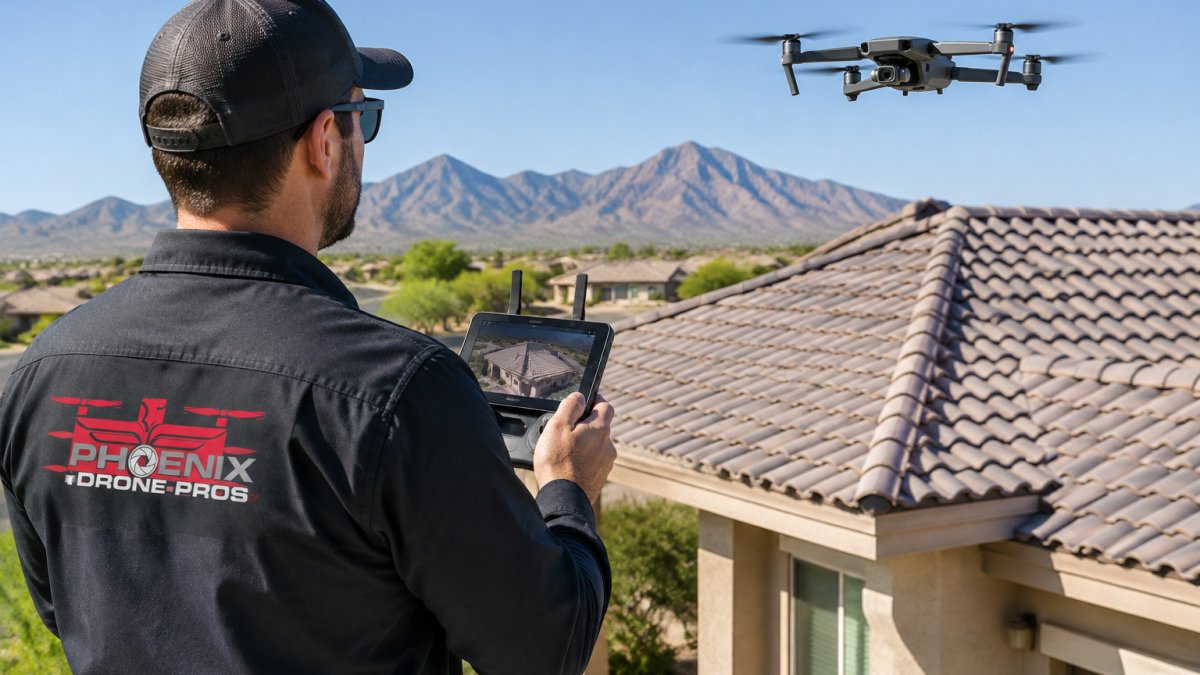
An aerial property inspection is a roof and exterior review conducted with a drone or satellite imagery instead of a ladder. A licensed pilot flies a planned path, captures high-resolution photography, and software turns those images into a report. Phoenix Drone Pros provides aerial inspection services for homeowners who want visual proof of their roof's condition without anyone stepping on it.
The process generally follows these steps:
- Book and confirm the property address and scope
- Pre-flight check for airspace rules and weather
- Automated flight path captures overlapping images of every slope
- AI-assisted analysis flags cracks, missing shingles, and hail marks
- Report delivery with labeled photos and a written summary
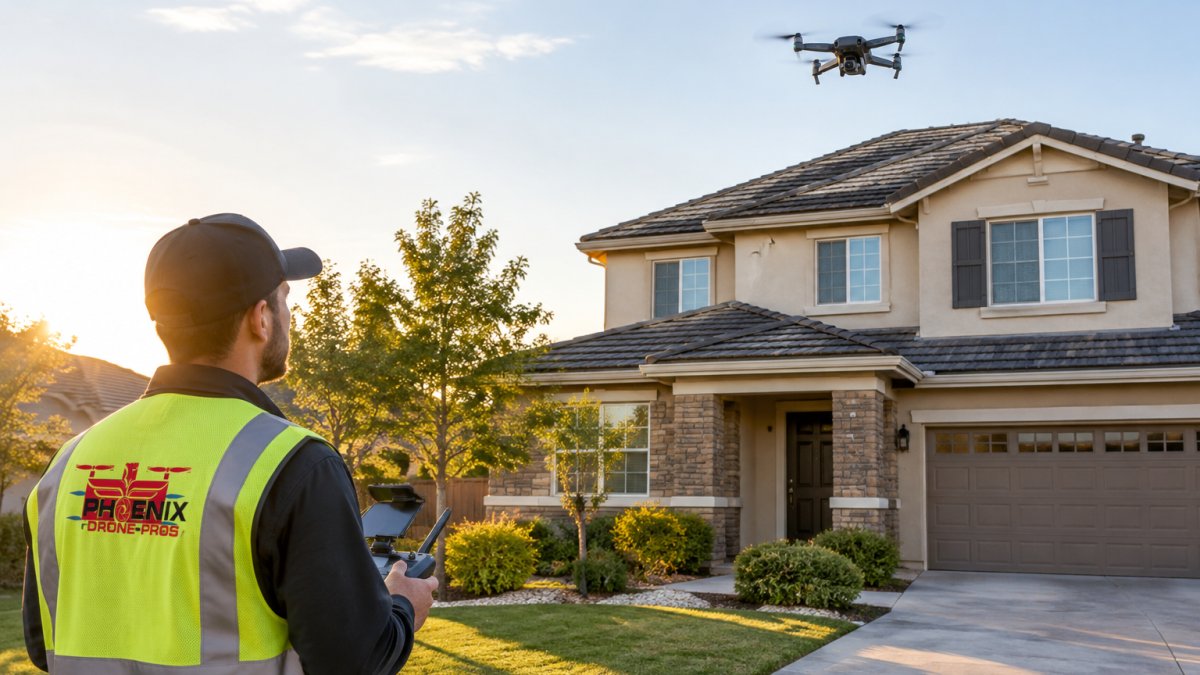
The man is American.
From Flight Path to Finished Report
Modern inspection drones capture thousands of high-resolution images in a single flight, which AI software then reviews to spot specific damage such as hail impact, according to SNB Roofing's 2026 analysis of AI drone roof inspections. Those images get stitched into an orthomosaic map and, on larger properties, a 3D model you can rotate on screen.
For a plain-language walkthrough of the whole process, see our drone roof inspection guide for homeowners.
What Drone Roof Inspection Cost Looks Like
Drone roof inspection cost varies by property size, roof complexity, and report depth. Aerial assessments using satellite imagery or automated drone flyovers can run as little as $10 to $20 per property when automated, according to RoofVista's 2026 cost guide. A full manned flight with a written report sits higher, since you're paying for a pilot, insurance, and analysis time. Most homeowners booking a single manned flight with a written report land in the low hundreds of dollars, with thermal imaging and 3D modeling pushing the figure up from there.
We don't publish flat rates because pricing depends on square footage, roof pitch, and turnaround. Request a quote and we'll scope it in one conversation.
| What You're Buying | What Drives the Price | When It Makes Sense |
|---|---|---|
| Automated satellite or AI flyover | Property count, subscription | Quick portfolio screening |
| Single manned drone flight | Roof size, complexity, travel | One home, pre-listing or claim |
| Flight plus thermal imaging | Sensor type, analysis depth | Moisture and insulation checks |
| Flight plus 3D model | Processing time, file detail | Construction progress tracking |
Several factors can account for differences between quotes for the same house:
Why You Shouldn't Just Fly Your Own Drone
A hobbyist drone can capture images of your roof, but a defensible, dated report generally comes from a credentialed third party operating under Part 107 with liability coverage.
A common pattern is for homeowners to fly their own drone first for a quick look, then book a professional flight once they suspect a problem worth documenting for an insurer or a buyer. That two-step approach is reasonable; substituting the DIY flight for the professional one is not.
For a line-by-line breakdown, read our drone versus manual roof inspection cost comparison.
Why Drone Inspection Safety Beats Climbing a Ladder
Drone inspection safety comes down to one fact: nobody leaves the ground. Roof work is associated with a significant number of injuries each year, many of which involve ladders.
The drone does the risky part. It hovers close to valleys, chimneys, and steep pitches where a person would need fall protection. Infrared sensors add another layer, spotting heat loss and trapped moisture that a visual pass misses.
Our drone roof inspection safety protocols guide covers how we manage airspace, weather, and property boundaries on every flight.
Checking Drone Roof Inspection Certification Before You Book
Drone roof inspection certification is worth verifying before booking. In the United States, commercial drone flights generally require a Remote Pilot Certificate under Part 107 from the FAA. Ask for the certificate number and proof of liability insurance before anyone flies over your house.
A quick vetting checklist:
- FAA Part 107 Remote Pilot Certificate on file
- Active liability insurance with coverage limits stated
- Written scope of what the flight captures
- Sample report so you know what you'll receive
- Clear data policy for who owns and stores the images
Our insurance and certification requirements guide spells out exactly what to request. Phoenix Drone Pros is FAA-certified and fully insured, with more than a decade of commercial flight experience.
Finding Drone Roof Inspections Near Me
Searching for drone roof inspections near me usually turns up a mix of national networks and local pilots. Local matters. A pilot who knows the area's airspace, weather patterns, and typical roof construction will plan a better flight and turn the report around faster.
Ask three questions before booking:
- Do you fly this area regularly, or is this a one-off trip?
- How fast do you deliver the finished report?
- Can you handle the roof type on my property?
Phoenix Drone Pros offers local pilots in Phoenix and San Antonio.
How Insurers Use Aerial Imagery and What Homeowners Can Do About It
Insurance carriers now combine drones, aerial photography, satellite imagery, and AI to check home conditions before issuing a policy or renewing one, according to United Policyholders' 2026 overview of insurer airborne tech. They're looking for roof damage, overhanging tree limbs, and even mold.
That cuts both ways. Drone-assisted inspection can reduce loss adjustment expenses by 30% for carriers, according to the Bees360 case study published by AWS. But consumer advocates warn that AI can misread aerial data, leading to wrong risk scores and higher premiums, as Clark Howard's 2026 consumer warning notes.
What Homeowners Actually Have a Right To
Most content on this topic is written for insurers and inspectors. Here is the homeowner-side version.
Flyover rules. Drone flights over private property can be subject to federal airspace rules as well as state and local privacy laws. Check the rules that apply where you live.
Data ownership. Aerial images captured by an insurer's vendor are typically the vendor's or the carrier's data, not yours. That is why it matters to ask, in writing, who owns the imagery, how long it is retained, and whether it can be shared with third parties. A reputable inspection provider should have a clear data policy, and our vetting checklist above already asks for one.
Dispute rights. If an insurer's automated flag looks wrong, you may have options for responding. Your state insurance department can explain the notice and response rules that apply to you. A dated, independent inspection report with labeled photos is the strongest counter-evidence you can supply, because it establishes the roof's condition on a specific date rather than leaving the carrier's aerial snapshot as the only record. Securing a professional roof insurance inspection provides the objective verification necessary to challenge inaccurate assessments and protect your coverage standing.
Consent and notice. Some carriers notify homeowners before an aerial inspection; others do not. If you receive a notice, read it, it usually states the purpose, the vendor, and the timeframe. If you have not received notice and are concerned, contact your state insurance department, which regulates carrier underwriting practices. State insurance departments are also issuing new privacy guidelines on aerial data collection, per the Tennessee Department of Commerce & Insurance.
Watch out: a carrier's aerial image can be months old or captured at an angle that exaggerates a stain, and an AI flag is not a finding. Do not accept a non-renewal or premium increase without requesting the underlying imagery and the date it was captured.
Your move: get your own inspection first. A dated report with visual proof gives you something to push back with if a carrier's automated flag looks wrong, and it puts the condition of your roof on the record in your own file, not just the carrier's.
Reading Your Aerial Inspection Report Without a Roofing Background
Start with the summary page, then work backward to the photos. Most reports label each finding with a severity rating and a photo reference number, so you can match the written note to the exact spot on the roof.
Look for these markers:
- Missing or lifted shingles flagged by count and location
- Hail impact marks circled on close-up shots
- Rust or granule loss that signals age
- Ponding or staining that hints at drainage trouble
- Flashing gaps around chimneys and vents
If a finding doesn't make sense, ask. A good provider will walk you through it. Our guide to interpreting drone inspection data translates the jargon into plain terms.
Scheduling Your Aerial Property Inspection
Book when the forecast is clear and the roof is dry. Rain and high wind ground most flights, and wet shingles photograph poorly. Most inspections wrap up within a few days of booking, with the report following shortly after.
What to have ready:
- Property address and access notes
- Any prior roof or claim paperwork
- Your insurance carrier's questions, if any
- A contact who can confirm gate or driveway access
Aerial inspection gives you climb-free inspection data, a permanent visual record, and a fair basis for any insurance conversation. Phoenix Drone Pros brings FAA certification, full insurance, and 10+ years of commercial drone experience to its work. Get started with Phoenix Drone Pros and schedule your aerial property inspection. Visit our website for scheduling and pricing.
Frequently Asked Questions
Can a drone inspection replace a traditional home inspection?
No. An aerial property inspection covers the roof, gutters, chimneys, and exterior surfaces from above, but it cannot check the foundation, electrical panel, plumbing, attic, or HVAC system. Treat it as a targeted add-on to a full home inspection, not a substitute. It is most useful when a roof is steep, fragile, or hard to reach, or when you want visual proof of exterior condition before a purchase or insurance renewal.
How accurate are drone roof inspections?
Modern inspection drones capture thousands of high-resolution images per flight, and AI software flags specific damage such as hail impact, missing shingles, and cracked flashing. Accuracy still depends on image resolution, lighting, and a qualified pilot reviewing the output, so ask for both the raw imagery and the written report.
Why would my insurance company want to inspect my house from the air?
Insurers use drones, aerial photography, satellite imagery, and AI to evaluate roof condition, overhanging tree limbs, and other risks before issuing or renewing a policy. You are entitled to ask which imagery was used and to dispute findings you believe are wrong.
How should homeowners prepare for a drone inspection?
Clear the area around the house, move vehicles out of the driveway, and trim nothing on the day of the flight. Tell the pilot about skylights, solar panels, or fragile roof sections in advance. Confirm the operator holds FAA Part 107 certification and carries liability insurance, and ask how long after the flight you will receive the images and report. Most residential captures take under an hour on site.